
TMC opts controlled churn, low star power as Mamata-Suvendu face-off in Bhabanipur
The Trinamool Congress (TMC) on Tuesday unveiled candidates for 291 of the 294 West Bengal Assembly seats, adopting a strategy of “controlled churn” and consciously limiting star power as it aims for a fourth consecutive term after nearly 15 years in office.
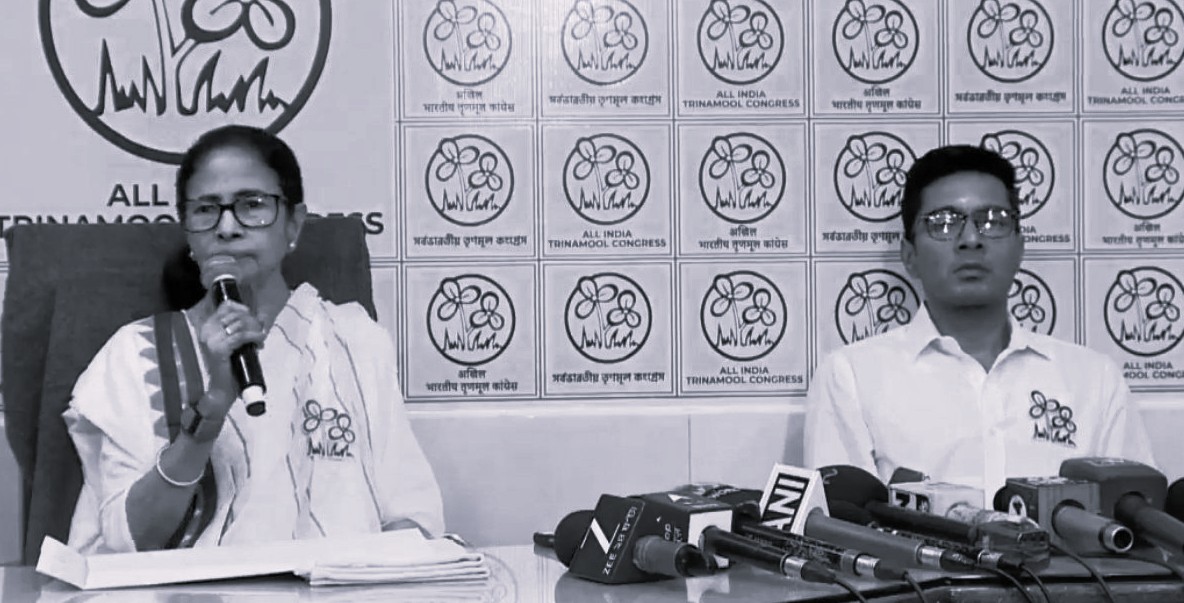
Chief Minister Mamata Banerjee announced the list from her Kalighat residence, asserting that the party would cross the 226-seat mark . The TMC has left three Darjeeling hills seats to ally BGPM led by Anit Thapa.
A key highlight of the election will be the Bhabanipur contest, where Banerjee will face BJP leader of opposition Suvendu Adhikari, renewing their high-profile rivalry after the 2021 Nandigram battle.
The candidate list reflects a calibrated attempt to manage anti-incumbency through selective replacement. Of the 291 candidates, 135 sitting MLAs have been retained, around 75 dropped, and 15 shifted, a move seen as a targeted correction rather than a sweeping overhaul. This approach seeks to address local dissatisfaction while preserving the party’s booth-level organisational strength , widely considered its biggest electoral asset.
Significantly, the TMC has avoided over-reliance on celebrity candidates, opting instead for leaders with strong grassroots presence. While a few recognisable faces such as Olympian Swapna Barman and actor Soham Chakraborty feature in the list, the broader emphasis is on organisational loyalty and ground connection .
Party leaders indicate that this marks a shift from earlier elections where star appeal was used to generate momentum. The current strategy reflects the understanding that elections are increasingly won through micro-level voter mobilisation , rather than large rallies or high-profile candidates.
The list also signals a controlled generational transition , with a mix of experienced leaders and younger entrants. Several senior ministers have been retained, ensuring continuity, while new faces have been introduced in select constituencies to project renewal without destabilising the party structure.
Social representation remains a key component, with 52 women, 95 SC/ST candidates and 47 minority nominees included, reinforcing the coalition that underpins TMC’s support base.
In politically significant seats such as Nandigram, the party has fielded candidates aimed at strengthening local networks, underlining the importance of constituency-level strategy in a closely fought election.
Overall, the TMC’s approach highlights a broader shift in Indian electoral politics from dependence on star power to organisational depth , where disciplined cadre networks, booth management, and leadership-centric campaigns play a decisive role in converting support into votes.