
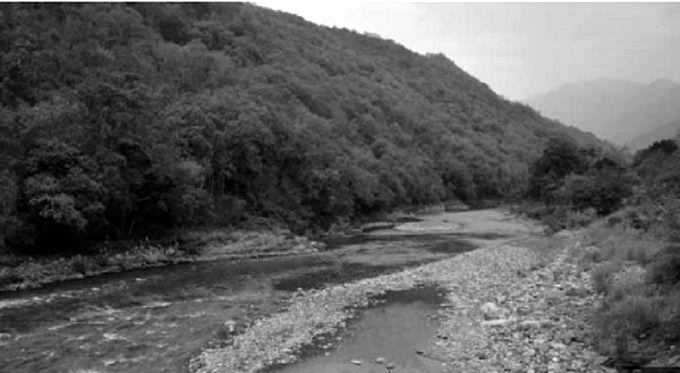
Tizu–Zungki National Waterway-101 to Boost Trade, Connectivity in Nagaland
The declaration of the Tizu–Zungki river as National Waterway-101 marks a major step towards strengthening inland water transport, regional connectivity, and cross-border trade in Nagaland and the North-Eastern region.
India currently has 111 notified national waterways spanning 20 states , which transport approximately 55–60 million tonnes of cargo annually , including coal, cement, fertilisers, food grains, petroleum products, and bulk goods . While inland waterways carry a smaller share of freight compared to road (1,200 million tonnes) and rail (1,200–1,300 million tonnes) , transport via waterways is considerably cheaper—50–70% less than road transport and 30–40% lower than rail especially for heavy and bulk cargo .
The Tizu–Zungki river system flows primarily through eastern and southern Nagaland , with the Tizu river originating in the Naga Hills and joining the Zungki river before eventually crossing into Myanmar , where it merges with the Chindwin river , a major tributary of the Irrawaddy river system . The waterway’s proximity to Assam, Manipur, Mizoram, Tripura, and the India–Myanmar border makes it strategically important for inter-state connectivity, regional commerce, and cross-border trade , aligning with India’s Act East Policy .
K.G. Kenye , Nagaland’s Minister for Power and Parliamentary Affairs , welcomed the declaration, calling it a “landmark step for economic development and regional integration.” He urged the Inland Waterways Authority of India (IWAI) to implement the project with efficiency and commitment, highlighting its potential to boost trade and commerce with Southeast Asian countries .
During the 3rd Inland Waterways Development Council (IWDC) meeting in Kochi, Kerala , Kenye submitted a proposal to extend inland waterways from Lakhimpur in Assam to Nagaland via the Barak river , further integrating the state into the national waterways network . As chairman of the Nagaland Inland Waterways Board , he also presented a formal representation to the Union Minister for Ports, Shipping and Waterways , seeking comprehensive development of Nagaland’s waterbodies .
The Centre , through the IWAI , will provide funding and oversee infrastructure development , including dredging, navigation channels, construction of jetties and cargo terminals , and integration with road and rail networks , enabling multimodal transport and efficient movement of goods.
Experts said the development of the Tizu–Zungki waterway could transform trade in the North-East , reduce logistics costs, support local industries, enhance inter-state commerce, and open new routes for export , especially to Southeast Asia. They also noted the environmental advantage of waterways, which are energy-efficient and less carbon-intensive than road or rail transport.
Kenye was accompanied by Robert Longchari, Commissioner and Secretary (Transport) , and Thomas Y. Kiutsangmong, Deputy General Manager, Nagaland State Transport , during the meeting.
The move is widely seen as a strategic infrastructure push , bringing Nagaland’s rivers into the national development framework, while enhancing the state’s economic, trade, and logistical potential for years to come.