
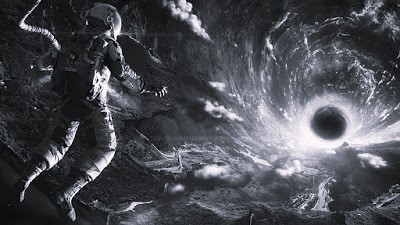
Time Travel: The Grand Dream of the 25th Century
Time is an unceasing current, an invisible vessel carrying us toward the shores of tomorrow without our realization. When we look back, we see only the lingering shadows of memories; when we look ahead, we face inscrutable questions. No living being possesses the power to seize time and bring it to a halt. Whether it is the yearning to see a lost loved one for one fleeting moment or the burning curiosity to witness how our future unfolds, we must peer beyond the "veil of time." The dream of Time Travel was born from humanity’s struggle to assert its existence against the ticking clock. It is not merely a journey made of gears and circuits; it is an emotional pilgrimage driven by a desire to heal the wounds of the past and bequeath a magnificent world to the generations of the future.
In this boundless universe, we may be but a speck of dust, yet our ambition to conquer time is as monumental as the Himalayas. Every time we wish that those precious minutes spent with the people we love could last forever, our hearts take a step toward the possibility of time travel. Standing at the precipice of the 25th century, man appears not as a figurine made of clay, but as a beam of light traversing the stars. This journey may be paved with complex theories and intricate equations, but behind them all lies a singular truth: an innocent, awe-inspiring human longing to break the shackles of time and soar toward the ultimate truth.
The Infinite Ocean of Time: Einstein’s Foundation
For the humanity of the 25th century, time travel is no longer a mere figment of the imagination; it is a living reality. The foundation for this was laid by Albert Einstein , who proposed the Special Theory of Relativity in 1905 and the General Theory of Relativity in 1915. Central to these theories is the concept of Time Dilation , the phenomenon where time itself slows down.
Einstein proved that time is not a universal constant that ticks at the same rate for everyone. Instead, it is elastic, stretching or shrinking based on speed and gravity. His famous equation, E=mc^2, linked energy and mass, but his work on spacetime revealed that as an object approaches the speed of light, time for that object slows down relative to a stationary observer.
Imagine an astronaut in the 25th century boarding a starship capable of near-light-speed travel. If they spend just a few years navigating the interstellar void and then return to Earth, they would find that centuries have passed in their absence. While the traveler has aged only slightly, their home planet has surged forward into the distant future. Thus, traveling into the future is not just a theoretical possibility, it is a physical certainty. By the year 2500 AD, as humans become an interplanetary species, it will be common for a spacefarer to be decades younger than the peers they left behind on Earth.
Wormholes: The Secret Tunnels of the Cosmos
In 1988, physicist Kip Thorne and his team at Caltech provided a rigorous scientific analysis of "Wormholes." Their landmark research paper, "Wormholes, Time Machines, and the Weak Energy Condition," mathematically demonstrated that these structures could theoretically serve as bridges through time and space.
Commonly known as Einstein-Rosen Bridges, wormholes can be visualized quite simply: if you imagine the universe as a flat sheet of paper, the distance between two points might be vast. However, if you fold that paper and poke a hole through both layers, you create a shortcut. These are the secret corridors of the cosmos, connecting two distant regions of space or even two different eras in time.
By the dawn of the 25th century, scientists believe that humanity will have mastered the use of Exotic Matter or Negative Energy. This mysterious substance is required to stabilize the "throat" of a wormhole, preventing it from collapsing instantly. With such technology, we will not only bridge the gap between stars millions of light-years away but also potentially step across the thresholds of different centuries.
Traveling into the Past and the Paradoxical Web
While voyaging into the future is a straightforward consequence of high-speed travel, venturing into the past presents a formidable challenge. This is where we encounter the infamous Grandfather Paradox. If you were to travel back in time and inadvertently prevent your grandfather from meeting your grandmother, your own birth would become impossible. But if you were never born, how did you travel back in time to cause the interference?
To solve this, 25th-century physics looks toward the Multiverse Theory or the concept of parallel universes. This suggests that any change made in the past does not overwrite your current reality; instead, it branches off into a new, separate timeline. You are not changing your past, but creating a new future in a different dimension.
Kip Thorne suggested that if one end of a wormhole is accelerated to near-light speeds while the other remains stationary, the wormhole becomes a functional Time Machine. Although this remains one of the most complex procedures known to science, for the humans of the 25th century, it represents the ultimate experiment in understanding the fabric of existence.
Hidden Technology and the Hand of Governments
There is a persistent belief that a technological gap of nearly 300 years already exists between public knowledge and the secret advancements of certain nations. This notion may hold a kernel of truth. Throughout history, "Black Projects" and classified military research have often operated decades ahead of the commercial sector.
Today, research into Quantum Teleportation and Anti-Gravity is already underway in high-security laboratories. By 2500 AD, these secrets will likely have moved from the shadows into the light. Humanity will no longer be confined to the soil of Earth but will expand across the galaxy. In that era, conflicts may not arise over land or gold, but over Temporal Technology—the power to control and monitor the flow of time itself. The destiny of the future depends entirely on how humanity chooses to wield this god-like power.
The Lifestyle of the 25th Century: A Vision
The period between 2401 and 2500 AD may well be the Golden Age of human history. By this time, we may have conquered the biological limitations of aging, or perhaps even achieved a form of digital immortality by transferring our consciousness into synthetic vessels. Space stations will not just be laboratories; they will be our primary residences.
We will have the capacity to decode signals from other star systems and communicate with extraterrestrial intelligences. In this era, "Time" will no longer be represented by the mechanical ticking of a clock. Instead, it will be viewed as a destination, a place we can visit, much like a tourist visiting a historical monument. Yet, regardless of how far our technology advances, the survival of the human spirit will always depend on ecological balance and the preservation of our moral compass.
Epilogue: Let Truth Prevail
Time is a magnificent illusion. Our pursuit of time travel is ultimately an attempt to rectify the mistakes of the past or to gain a glimpse of the hope that the future holds. However, in the process of unraveling the mysteries of nature, we must never lose our sense of wisdom or ethics.
As the saying goes, "Victorious Be Humanity & Truth, Ever & Forever." No matter how advanced our machines become, truth and compassion must remain the heartbeat of our civilization. The 25th century will not be remembered merely as an age of machines, but as the era where Truth and Knowledge finally became one. Time may pass, and history may be written, but the human quest for discovery will remain eternal.
In conclusion, the innovations of the 25th century are more than just engines that move us from planet to planet; they are the compasses guiding us through the vast ocean of time. From Einstein’s relativity to Thorne’s wormholes, this intellectual odyssey proves that for the human mind, the word "impossible" is but a temporary obstacle. Whether we are mending the wounds of yesterday or illuminating the path to tomorrow, our society must be built on the foundations of humanity and truth. In the infinite expanse of the universe, time may be a secret path, but the person who walks it is an invincible explorer.