
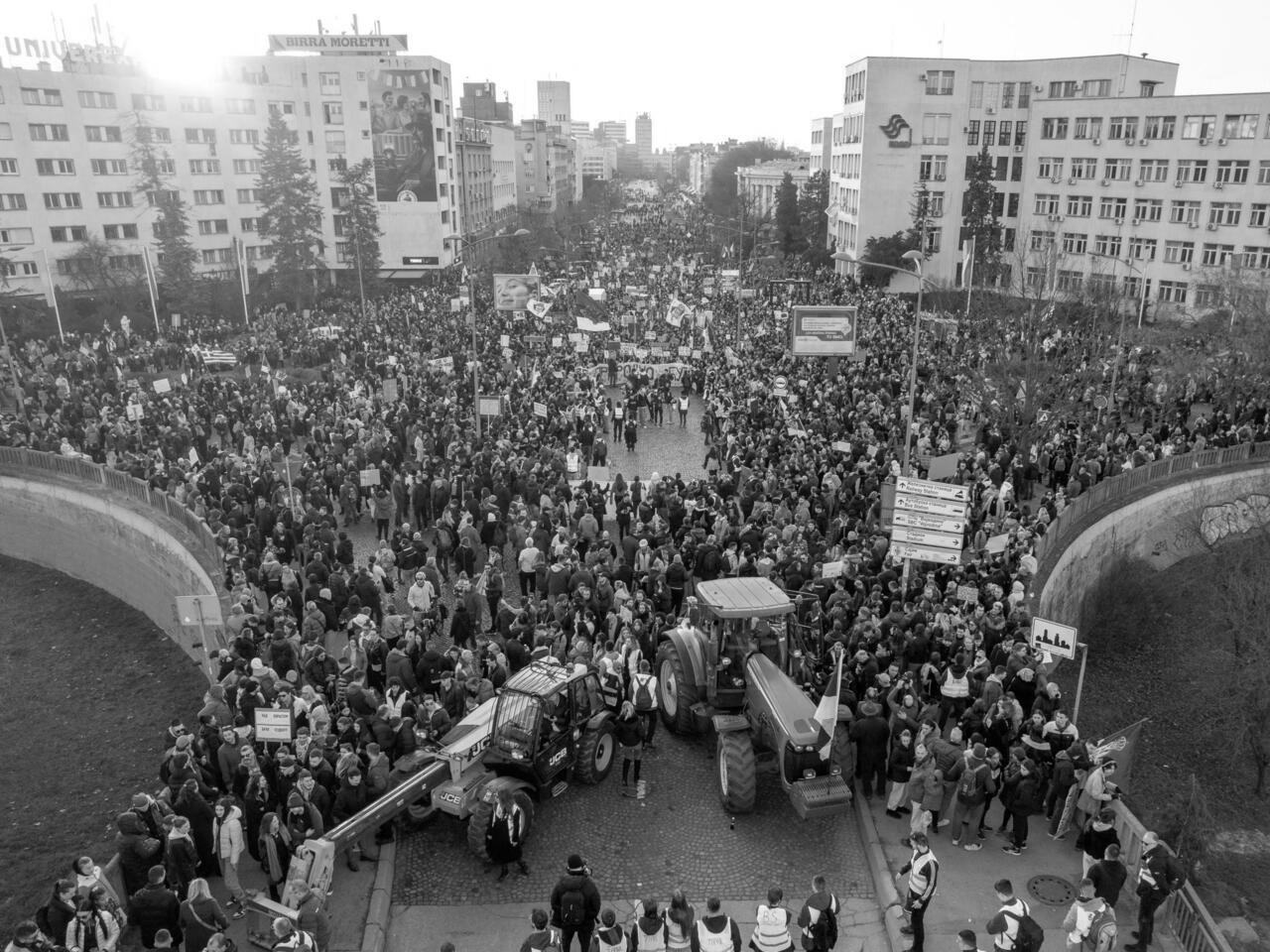
Thousands rally in Novi Sad as student-led movement challenges Serbian Government
Thousands of people rallied in Serbia on Saturday as university students announced a new phase of their year-long anti-corruption movement targeting President Aleksandar Vucic ’s government, intensifying pressure on the country’s long-serving leader.
The protest, held in the northern city of Novi Sad, is about 80 kilometres (50 miles) northwest of Belgrade, is part of a wave of nationwide demonstrations that began in November 2024 after a deadly train station disaster killed 16 people. Protesters allege that systemic corruption, poor oversight and political cronyism contributed to the tragedy, turning public anger into sustained anti-government unrest.
Chanting slogans such as “thieves,” demonstrators accused the Vucic administration of allowing corruption to flourish while weakening democratic institutions. The movement, led largely by university students, has since grown into one of the most significant challenges to Vucic’s rule in more than a decade.
While the rallies have been largely peaceful, rights groups and organisers say the protests have had wide repercussions. Hundreds of people have reportedly been detained, while others claim they have lost jobs or faced intimidation for openly opposing the government. Authorities have denied systematic repression, but critics argue that pressure tactics have intensified as demonstrations spread.
At Saturday’s gathering, students told the crowd they would soon present a detailed roadmap to dismantle corruption and restore the rule of law in Serbia. Proposed measures include barring corrupt officials from public office and conducting thorough investigations into the assets and wealth of political figures once a new government is formed.
The rally was held under the banner “What Victory Will Mean,” signalling a shift from street protests toward political mobilisation. Last month, student leaders said they had collected around 400,000 signatures in support of their demand for early elections , a call that President Vucic has so far rejected.
Organisers announced that the next major protest will take place on January 27 in Belgrade, as momentum continues to build across the country.
Vucic, who came to power more than ten years ago promising to steer Serbia toward European Union membership, has faced growing criticism for tightening his grip on power. During his tenure, Serbia has strengthened ties with Russia and China, while opposition groups accuse his government of eroding media freedom, undermining judicial independence and tolerating organised crime.
The student-led movement has attracted broad public support from citizens increasingly disillusioned with traditional political parties. Vucic, however, has dismissed the protests as foreign-backed, accusing students of acting on unspecified Western instructions to “destroy Serbia.”
Despite such claims, demonstrators say their demands are homegrown and focused squarely on accountability, justice and democratic reform, as Serbia braces for another round of mass protests in the coming weeks.