
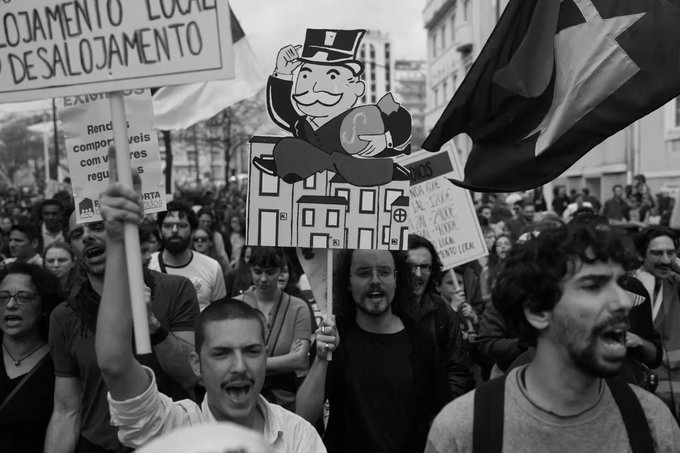
Thousands Protest In Portugal As Housing Costs Surge And Eviction Fears Grow
Thousands of people protested outside Portugal's Parliament in Lisbon on Tuesday, October 27, demanding affordable housing as lawmakers debated the centre-right government's 2027 spending plans. The demonstrations also targeted recent police operations against housing activists and a proposed rental reform that could make evictions easier and remove rent caps on new leases.
The protests follow similar demonstrations in neighbouring Spain and reflect growing unrest across Europe over housing affordability. Portuguese President António José Seguro has convened the advisory Council of State for a meeting next week to discuss the unrest.
Portugal has recorded one of Europe's steepest increases in housing costs. An European Union report found that housing costs in Portugal surged 147 per cent between 2015 and 2025, compared with the EU average of 60.5 per cent. House prices rose nearly 20 per cent between the first quarters of 2025 and 2026, while rents increased 68 per cent since 2020.
In Lisbon, a one-bedroom apartment typically costs around 1,500 euros a month, while the minimum monthly wage is 920 euros before tax, highlighting the growing gap between housing costs and earnings.
Foreign buyers, investment funds, tourism and the expansion of short-term holiday rentals have contributed to rising property prices. Young people increasingly struggle to buy homes or live independently, while families are being forced to move farther away in search of affordable accommodation.
The government has announced tax cuts for new construction, restrictions on short-term rentals and plans to build 145,000 homes. However, its proposed rental reform has drawn criticism from tenant groups, who fear faster evictions and the removal of rent protections could worsen the crisis.
Police operations to dismantle housing activists' tent camps in Lisbon and Porto on Sunday triggered further outrage. Police reported 11 minor injuries, including three officers, while activist group Casa para Viver claimed 60 people were injured. Portugal's internal affairs watchdog and prosecutors have opened separate investigations into police conduct. Prime Minister Luis Montenegro defended the operations, saying officers acted according to the principles of necessity and proportionality.