
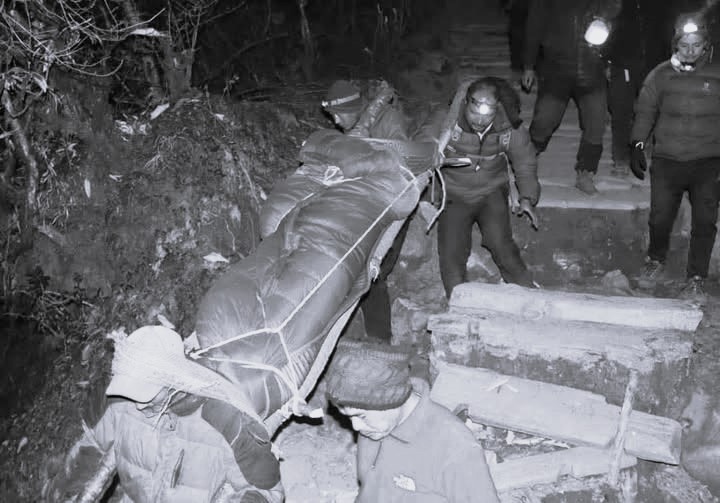
Third Trekker dies on Goechala route in 2025, raising safety concerns
A 45-year-old man from Uttar Pradesh has died while trekking along the popular Goechala route in Sikkim’s Khangchendzonga National Park, police said on Saturday, marking the third death on the trail this year.
The deceased was identified as Suraj Kumar Tiwari , who was undertaking an eight-day Goechala trek with two friends. The route passes through the UNESCO World Heritage-listed Khangchendzonga National Park and is among the most sought-after high-altitude trekking destinations in the eastern Himalayas.
According to police, Tiwari had completed the main trek and was on his return ascent on Thursday when he suddenly fell ill near Kokchurong camp around 9 am. He reportedly displayed symptoms resembling paralysis. Fellow trekkers and guides administered first aid, after which locals and other trekkers helped carry him towards Yuksom , the base village for the trek.
However, his condition deteriorated during the descent, and he died near Phedang campsite , situated at an altitude of approximately 12,100 feet , around 8 pm on Thursday.
The body was transported to Gyalshing District Hospital on Friday, where a post-mortem examination was conducted. After completing legal formalities, the body was handed over to his family on Saturday. Tiwari is survived by his wife, a son, and a daughter.
Tourism stakeholders in Yuksom expressed concern over the recurring fatalities and urged authorities to strengthen medical facilities and emergency evacuation mechanisms along the Dzongri-Goechala corridor . They noted that while trekking in the Himalayas offers adventure and breathtaking landscapes, it also carries inherent risks, particularly due to high altitude, unpredictable weather, and limited access to immediate medical care.
Earlier this year, a trekker from Kolkata and a local resident from Gyalshing died in separate incidents on the same route, both reportedly linked to acute mountain sickness (AMS) . Experts have repeatedly stressed the importance of proper acclimatisation, medical screening, and rapid-response rescue systems to reduce fatalities on high-altitude trekking routes, especially as adventure tourism continues to grow in the region.