
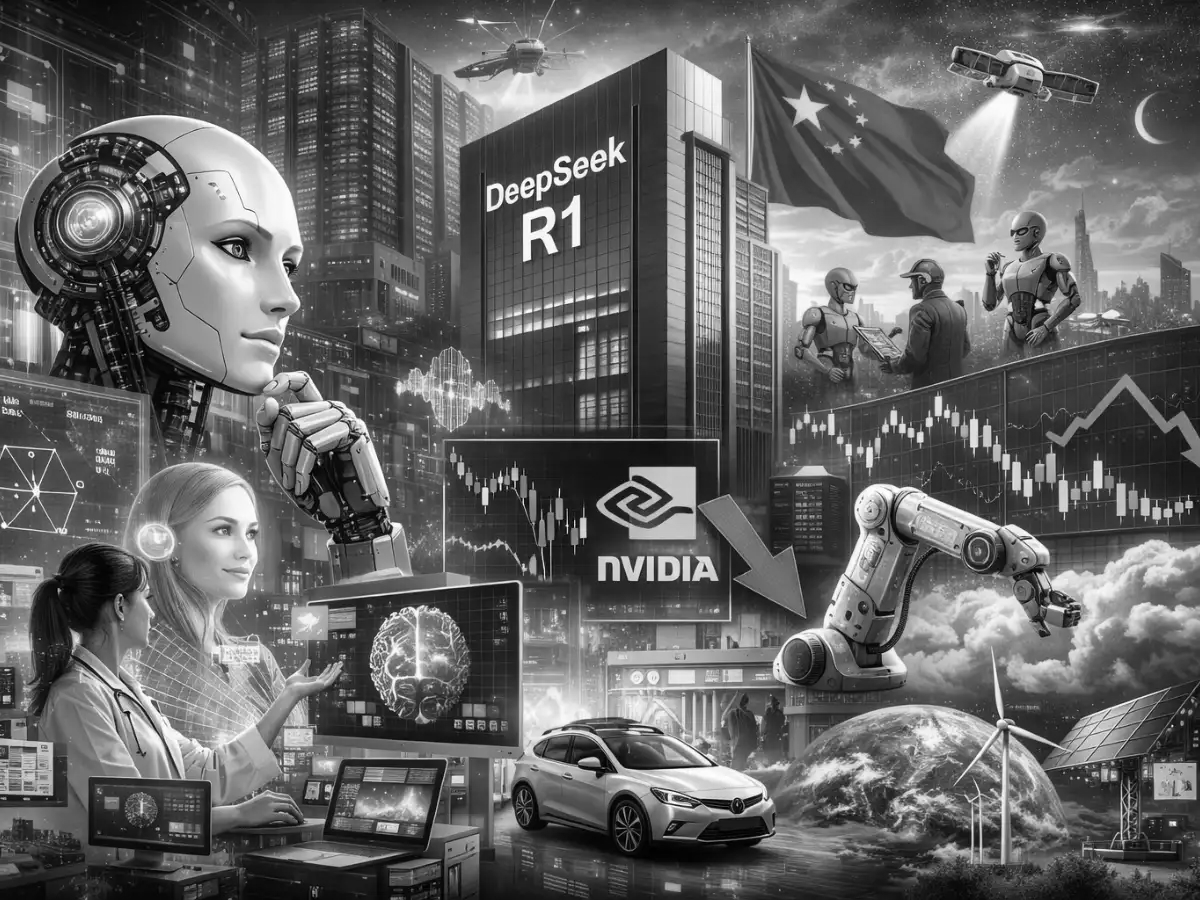
The year 2025 AI reshaped big tech and the world economy
The year 2025 has firmly established itself as a watershed moment in the global artificial intelligence race, marked by unprecedented spending, rapid innovation, and growing anxiety over whether the sector is heading toward a bubble.
There is little debate that 2025 belonged to AI. Major technology companies together spent nearly $400 billion on capital expenditure, primarily on data centres, advanced chips, and AI infrastructure. Several economists argue that this massive investment wave helped cushion the global economy from slipping into a broader recession. Nvidia became the most visible emblem of the boom, crossing a historic milestone to become the world’s first $4 trillion company, while AI-generated content permeated daily life from entertainment and advertising to political campaigns.
However, the enthusiasm has been accompanied by persistent unease on Wall Street. Market volatility has repeatedly reflected fears that AI-related stock valuations may be outpacing economic fundamentals. Comparisons with the dot-com bubble of the early 2000s have become frequent, even as industry leaders remain divided over whether current conditions justify such concerns.
OpenAI CEO Sam Altman added fuel to the debate earlier this year by suggesting that elements of a bubble were already visible. Nvidia CEO Jensen Huang, on the other hand, rejected the comparison, describing AI as a foundational technology similar to electricity or railroads. Other prominent voices including Bill Gates, Mark Zuckerberg, and Mark Cuban have expressed views ranging from cautious optimism to guarded concern.
Despite the debate, the spending momentum shows little sign of slowing. JPMorgan Chase estimates that AI-related investment contributed 1.1% to US GDP growth in the first half of the year. Goldman Sachs Research projects that hyperscalers could spend as much as $527 billion on capital expenditure next year, noting that Wall Street has consistently underestimated the scale of AI investment. Executives at OpenAI and Meta have warned that underinvestment, rather than excess spending, may pose the greater risk as demand for computing power continues to surge.
The year also saw an intensifying AI talent war, particularly in Silicon Valley. Meta made headlines by offering compensation packages reportedly worth tens of millions of dollars to attract top researchers. OpenAI responded with aggressive retention offers, though some high-profile talent still changed sides, highlighting the fierce competition for skilled professionals.
To fund their ambitions, global cloud giants such as Alphabet, Amazon, Meta, Microsoft, and Oracle raised nearly $100 billion through bond markets, contributing to a record year for global bond issuance. At the same time, the complex web of partnerships among AI firms, cloud providers, and chipmakers has increased scrutiny over financial risks and interdependence.
Concerns have been especially pronounced around OpenAI, which is expected to post a $9 billion loss this year while carrying massive long-term data centre commitments. Brief remarks by its CFO about possible government support sparked controversy, though the company later clarified that it was not seeking bailouts.
Meanwhile, Google has mounted a strong comeback with the launch of Gemini 3, which many observers say has narrowed the gap with OpenAI. As 2025 draws to a close, the AI boom stands at a critical juncture driving growth and innovation while testing the limits of capital, confidence, and competition.