
The woman who ran a marathon in space: Sunita Williams retires
Every time Sunita Williams floated above Earth, the world paused to look up. After nearly three decades with NASA, one of the most accomplished astronauts in the history of human spaceflight has officially retired. Sunita “Suni” Williams’ retirement took effect at the end of December, bringing to a close a 27-year career defined by resilience, leadership, record-setting achievement and an enduring love for space.
At 60, Williams steps away after completing three long-duration missions to the International Space Station and spending a remarkable 608 days in orbit , the second-highest total time logged by any NASA astronaut. A former US Navy captain and highly experienced test pilot, she joined NASA in 1998 and steadily became one of the agency’s most reliable and respected astronauts. Reflecting on life beyond Earth, Williams often described space as “my happy place,” saying, “I love being up here. It’s peaceful, it’s beautiful, and it gives you a whole new perspective on Earth.”
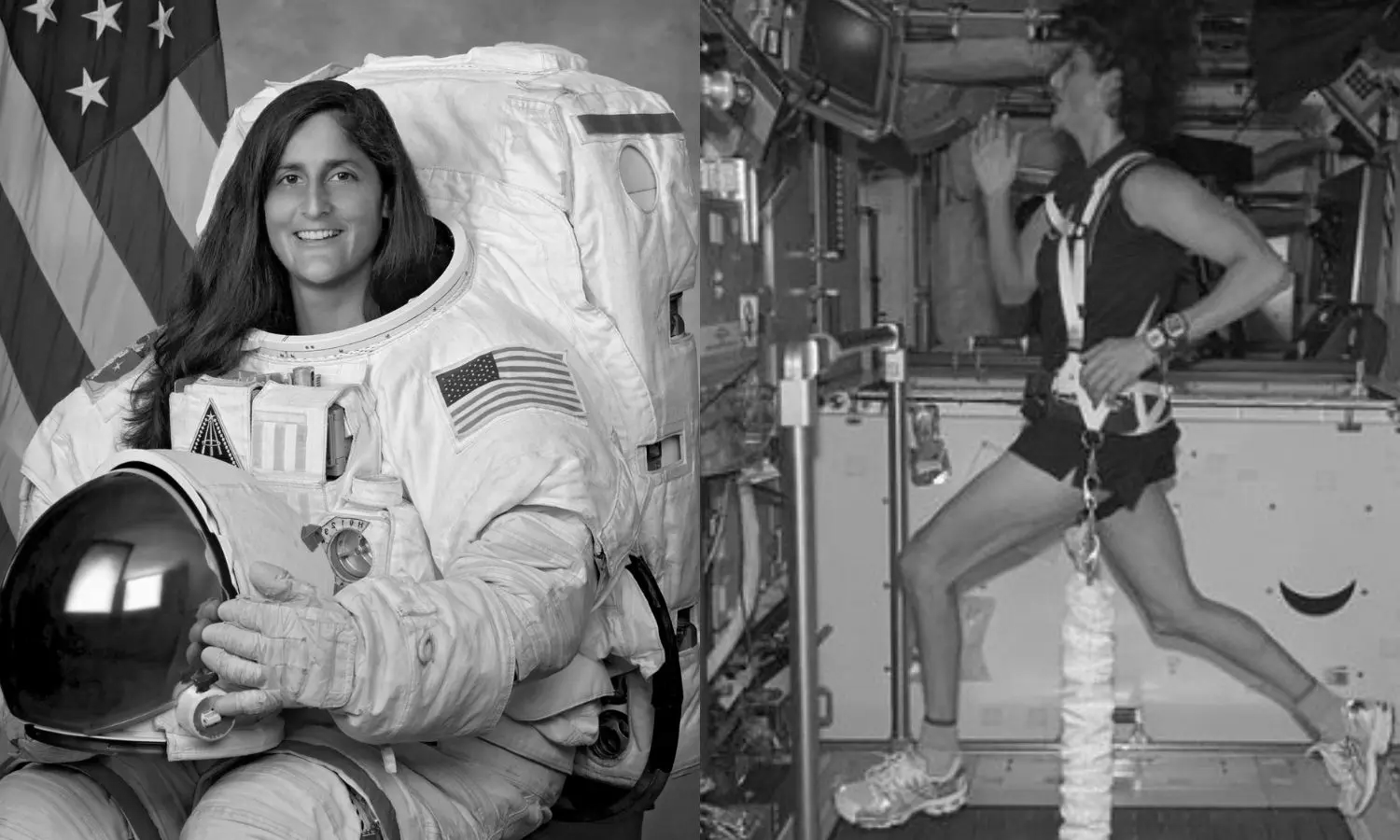
She didn’t just orbit the planet. She stepped into the void. Over the course of her career, Williams conducted nine spacewalks , spending more than 62 hours working in open space, the most by any woman in history and one of the highest totals overall. Speaking about spacewalks, she once said, “It’s just you, the Earth below, and the work in front of you. It’s challenging, but it’s also incredibly humbling.” She also made history as the first human to run a marathon in space, completing the distance on a treadmill aboard the space station and proving that endurance has no gravity-bound limits.
Her final mission, launched in June 2024, placed her at the centre of one of the most closely watched spaceflights in recent years. Williams and fellow astronaut Butch Wilmore became the first humans to fly Boeing’s new Starliner crew capsule on its inaugural crewed test flight. What was intended to be a brief, week-long mission stretched into more than nine months after technical issues with the spacecraft made a timely return unsafe.
Throughout the extended and uncertain stay, Williams displayed calm resolve and professionalism. She continued to conduct scientific experiments, oversee station maintenance and support daily operations, later serving as commander of the International Space Station. Reflecting on the experience, she said, “You train for the unexpected in space. No matter how long you’re up there, the job is to stay focused, take care of the station and take care of each other.” The pair eventually returned safely to Earth in March aboard a SpaceX spacecraft.
Looking back on the view from orbit, Williams often spoke about how seeing Earth changed her perspective. “Every time you look out the window, it reminds you how fragile our planet is,” she said. “ You come back wanting to protect it .”
A defining and deeply personal part of Williams’ journey is her strong connection to India. Her father, Deepak Pandya , was born in Gujarat before moving to the United States, and Williams has frequently spoken with pride about her Indian roots. She remains the most accomplished astronaut of Indian origin in history . From space, India left a lasting impression on her. “ India is amazing, just amazing ,” she said, recalling the Himalayas, the glowing web of city lights at night and the fishing fleets visible off the Gujarat coast. “At night, you see this incredible network of lights. It’s really beautiful.”
After retiring, Williams travelled to India , describing the visit as a “ homecoming .” She expressed her desire to return often and connect with people across the country. “I want to come back to my father’s home country and talk about space,” she said, sharing her hope of inspiring students, scientists and young dreamers. She has also spoken positively about India’s growing role in global space efforts and stressed the importance of collaboration, saying, “Space exploration should be democratic,” and that humanity’s push toward the Moon and beyond should benefit all of humankind.
While she joked that she would still love to go to the Moon - “but my husband would kill me” - Williams acknowledged that the time had come to step aside. “ It’s time to pass the torch ,” she said, expressing confidence in the next generation of explorers who will carry human spaceflight forward.
NASA Administrator Jared Isaacman described Williams as “ a trailblazer in human spaceflight ,” praising her dedication, leadership and lasting impact on the agency. Her career included her first spaceflight aboard space shuttle Discovery in 2006 , commanding Expedition 33 in 2012, extensive work in astronaut training and robotics, and participation in underwater missions designed to simulate space conditions.
But Sunita Williams’ legacy will not be measured only in missions flown, records set or hours logged above Earth. It will live on in the countless lives she inspired, in young people who now dare to aim higher because she showed them what was possible, and in the quiet strength she displayed when plans changed and challenges arose.