
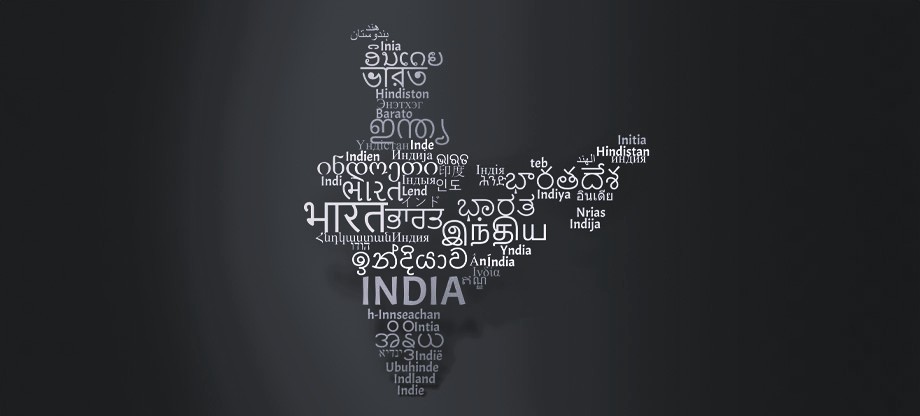
The Vanishing Languages of India: A Cultural Emergency
There is something magical about the sound of a mother tongue spoken after years of silence. It feels like home, like roots suddenly remembering the soil they came from. India this enormous, complicated, forever-surprising country has always taken pride in calling itself a land of languages. Not one or two or ten, but hundreds. Linguists still argue about the exact number, but the most widely accepted idea is that India once had over 1,600 languages when the first linguistic surveys were carried out. Today, if one flips through the pages of the latest studies, fewer than 450 remain in active use. Many more are on ventilator support. And every few years, one slips quietly into silence. No obituary. No headlines. Just another village losing a tongue it once called its own. This is not merely a cultural concern. It is, to put it bluntly, a cultural emergency slowly unfolding across the subcontinent. And it is happening while most of us are too busy scrolling through English-dominated digital worlds to notice.
The slow disappearance nobody notices
The vanishing of a language rarely happens with a dramatic collapse. It fades the way old photographs do quietly, slowly, almost politely. A generation moves into cities and stops speaking its ancestral tongue; parents begin using Hindi or English because they think it will give their children a better future; elders who once guarded rare dialects pass away; and with them go proverbs, songs, rituals, jokes, and entire worldviews.
A language dies the moment the last child stops learning it. Not when scholars record its grammar. Not when the script is printed in a book. But when a child no longer speaks it on the playground. In India, this is happening at a speed faster than most experts predicted. The 1961 Census listed over 300 languages with more than 10,000 speakers. By 2011, the number had fallen to about 121. Over 250 languages vanished from census records in just five decades. Some, like Sura, Mra, Mao, Majhi, and Tokre Koli, disappeared almost without documentation. Linguists worry that many more, especially tribal and nomadic languages will follow the same path.
Why India’s linguistic diversity Is unmatched
India’s stunning linguistic diversity is not an accident. It is a result of centuries of migration, trade routes, local kingdoms, oral traditions, tribal networks, and cultural intermingling. Our languages do not sit politely in neat boxes they overlap, borrow from one another, evolve in unpredictable ways, and adapt to local identities.
This is why a dialect spoken in one district often sounds entirely different in the neighboring one. Even Hindi has dozens of regional forms, from Awadhi to Braj to Haryanvi. Similarly, Tamil in Madurai is not the Tamil in Chennai. Assamese speakers immediately recognize the difference between their own language and the closely related Bodo or Rabha. The Northeast, in fact, is one of the world’s richest linguistic zones, home to languages belonging to families as diverse as Sino-Tibetan, Tai, and Austroasiatic. Yet this rich mosaic, this beautiful chaos of vowels and consonants, is shrinking.
The pressures of modern life
India’s language loss is largely a story of aspiration. In a country where opportunities are uneven and competition is fierce, families believe speaking dominant languages mostly English, Hindi, or the major regional tongues is essential for survival. It’s difficult to blame parents who stop speaking their mother tongues at home. They want their children to fit in, to succeed in school, to get jobs. Many tribal communities report that schools actively discourage the use of indigenous languages, sometimes mocking children who speak them.
Urban migration, meanwhile, uproots people from their language ecosystems. A young worker from a small tribe moves to Bengaluru or Delhi, spends years speaking broken Hindi, English, or Kannada, and eventually stops speaking his own tongue altogether. When he returns home once a year, he’s often embarrassed to use it. This isn’t a new story; it’s just happening at a much larger scale now.
Languages at the edge of extinction
Some Indian languages are now spoken by fewer than a hundred people. Among them are names most Indians have never heard: Chaimal in Tripura, Nihali in Maharashtra and Madhya Pradesh, Saimar in Meghalaya, Toto in West Bengal, and parts of the Andaman tribes whose languages are now functionally extinct. The case of the Great Andamanese languages is particularly heartbreaking. There were once at least ten distinct languages spoken by Great Andamanese groups. Today, only a mixed form survives, spoken by fewer than ten people. The original languages are gone along with thousands of years of oral history.
In Arunachal Pradesh alone, communities speak dozens of endangered languages. Some villages have only one or two fluent speakers remaining. Linguists travel treacherous roads to record these languages, but documentation alone cannot save them. Languages need speakers, not just scholars.
Why losing a language is losing a world
When a language dies, the loss is far more than vocabulary. We lose:
A worldview:
Tribal languages often encode unique relationships with nature—names for plants, animals, seasons, winds, rivers that do not exist in mainstream languages.
Knowledge systems:
Ancient methods of farming, herbal medicine, craftsmanship, and community rituals are often preserved through oral instructions. Once the language dies, that knowledge becomes fragmented or disappears entirely.
Cultural memory:
Songs, myths, prayers, lullabies, jokes, and oral histories vanish. These are not just "stories" they are emotional glue binding communities together.
Identity:
Language is identity. People who lose their language often feel culturally rootless, disconnected from ancestry.
In short, a dying language isn’t just a communication tool fading away—it’s an entire civilization crumbling quietly.
The digital age: A friend and a foe
Technology has played a double role in this crisis. On one hand, English dominates nearly every corner of the digital universe social media, apps, entertainment, education, and workspaces. Young people, understandably, gravitate toward what helps them participate in global culture. But technology is also becoming a surprising ally. Linguists, NGOs, and even village communities are using smartphones to record elders speaking, singing, or narrating folktales. Some languages are creating keyboards, fonts, and apps. Digital archives are growing. The real challenge is ensuring these languages are not just recorded but revived.
Efforts of Revival: Small Sparks of Hope
Several organizations and state governments have begun small but meaningful initiatives. In Odisha, tribal communities have fought to introduce mother-tongue education in early grades. In Nagaland, language clubs have become popular among students eager to reconnect with their roots. The Sikkim government has recognized endangered languages like Sherpa, Tamang, and Limbu, helping preserve them.
Some communities themselves have taken up the mission. The Toto tribe of West Bengal, once considered on the verge of linguistic extinction, has started documenting vocabulary and promoting schooling in their language. A similar movement is visible among Kodavas in Karnataka. These efforts are heroic but insufficient on their own. A nation as large and diverse as India needs something bigger a coordinated cultural rescue mission.
Why the Government’s role matters
India has policies promoting multilingualism, but implementation has always been shaky. Languages with fewer than 10,000 speakers rarely get educational support. Endangered languages often don’t even make it to school textbooks or teacher-training programs. Without formal support, languages have no space to breathe. The inclusion of mother tongues in early education something UNESCO strongly advocates can significantly reduce dropout rates among tribal children. It also strengthens cognitive development and self-confidence. But the transition from policy to classroom is slow. If India is serious about saving its languages, these efforts must be expanded and adequately funded.
Urban India’s quiet responsibility
Urban Indians rarely think about language loss because it doesn’t personally affect them. A Bangalore tech professional or a Mumbai banker may feel no urgency toward the disappearance of a tribal tongue spoken by 200 people in a remote corner of Meghalaya. But cities are where language loss often begins. Parents avoid speaking their mother tongues at home; metropolitan schools insist on English dominance; cultural spaces prioritize a narrow range of languages. In a strange way, the cultural emergency of vanishing languages is also a mirror reflecting our own insecurities and aspirations.
A country that must learn to listen again
India’s strength has never been in uniformity. It lies in the messy, unruly, impossibly diverse network of voices, stories, and identities that have coexisted for thousands of years. This diversity is not a burden; it is our cultural wealth. Losing our languages means losing our cultural inheritance. Saving them requires not just policies or linguists, but young people, especially willing to embrace the languages of their childhood, their families, their ancestors.
We must learn to listen again.
Listen to the lullabies sung by grandmothers.
Listen to the folktales whispered in forgotten dialects.
Listen to the words that shaped our communities.
Because once a language disappears, it never truly comes back. At best, we get museum pieces, recordings, books, dictionaries, grammar notes and souvenirs of something that was once alive. India cannot afford to let its voices fade away silently.
A cultural emergency that demands action
The vanishing languages of India constitute one of the quietest cultural crises of our time. While debates rage over politics, economy, and development, this silent erosion carries consequences that are far deeper and more irreversible. A nation that loses its languages is a nation slowly forgetting itself.
There is still time. But not much.
Saving India's languages is not only about protecting the past it’s about safeguarding the future. A future where diversity is not just celebrated rhetorically but lived, spoken, and passed on. A future where every child, whether in a tribal hamlet or an urban apartment, grows up knowing that their mother tongue matters. In the end, languages survive when people speak them, love them, and believe they deserve to live. India, a country built on the strength of its many voices, must decide whether it wants to remain a land of languages or become a place where silence grows a little louder every year.