
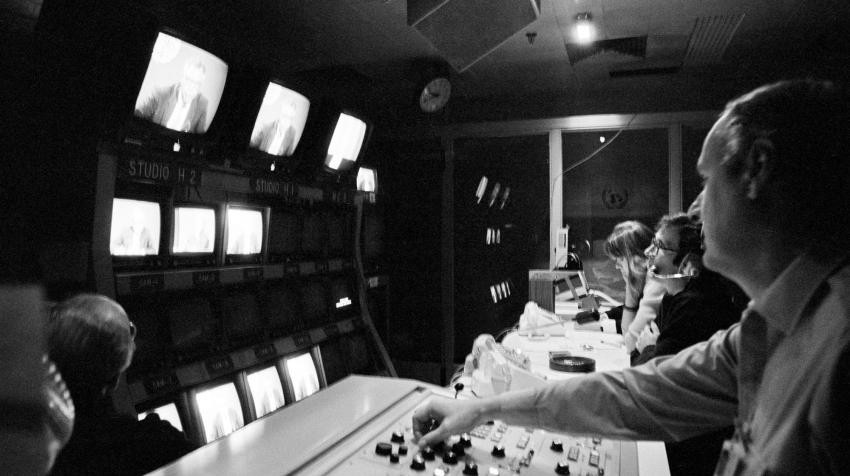
The Unsinkable Anchor - Why Broadcast Television Still Rules Our World
On Nove mber 21st, we mark World Television Day, recognizing a medium that has undergone a radical, costly transformation since the United Nations General Assembly proclaimed the day in 1996. While the world is now dominated by streaming and on-demand platforms, television’s power remains essential as a critical pillar for trusted news, shared cultural moments, and local investment, particularly through its public service arm.
Survival Through Transformation
Television has moved far beyond the challenges posed by the initial emergence of digital technologies. It has made the demanding, costly leap from analogue to digital broadcasting, from bulky box sets to sleek flatscreen monitors, and from restricted national transmission to global reach through digital satellite platforms. This technological revamp has ensured its survival against fierce competition from Internet-based media, including video-sharing platforms and non-linear, on-demand services. Today, nearly every broadcaster maintains a robust online presence, and the majority are no longer reliant on scarce radio frequencies.
Despite this fierce competition, TV remains the single largest source of video consumption, with the number of households subscribing to television service globally continuing to rise.
The Role of Public Service Media
In an era defined by the "cacophony of contradicting messages," disinformation, and conflicting interpretations of events, traditional television especially through Public Service Media (PSM) retains a vital role as the anchor of reliable information.
PSM's Mandate and Trust
PSM, a concept recognized by the Council of Europe as an "essential factor of pluralistic communication," operates under a strict mandate:
Strict Journalistic Standards -
Ensuring a balanced and impartial approach to current affairs.
Plurality of Views -
Presenting diverse political and cultural perspectives.
Serving Minorities -
Catering to the needs of children, women, and various minority groups often ignored by purely commercial media.
Audiences’ trust in public broadcasters is earned through the hard work of journalists and editors striving for quality, investigative reporting, fact-checking, context, and reason. PSM is capable of setting a high standard for commercial media in disseminating timely and reliable information to the public, especially in emergency situations. This vital function differentiates television from algorithm-driven social feeds.
Shared Cultural Moments and Education
Television’s impact extends beyond news. In addition to being the largest source of video consumption, television provides ample opportunities to promote education, understanding, and culture across and within borders.
Shared Cultural Touchstones
While streaming excels at personalization, traditional TV excels at social cohesion, a point strongly asserted during World Television Day observations. The ritualistic, scheduled viewing of major live events be it the Olympics, a political debate, or a national memorial creates powerful shared cultural moments. These events unify millions under a single, collective experience, generating a common frame of reference and fostering a collective identity that the individualized, fragmented viewing habits of streaming cannot replicate.
Real-Time Awareness
The medium also helps sharpen our focus on today’s major issues, allowing us to witness conflicts and threats to political, economic, and social security unfolding, often in real time. This instant, shared witness compels public awareness and response to global headlines.
Economic Anchor and Local Investment
The economic influence of traditional television is also crucial, acting as a powerful Economic Anchor that supports regional employment and media production:
Local Production Funding
Unlike streaming, which often concentrates investment in major global hubs, television's dependence on regional and national advertising funds jobs in content creation, local journalism, and broadcasting infrastructure across multiple cities and regional markets.
Accessible Information
The continuation of free, over-the-air broadcast programming serves as a form of economic equity, ensuring that essential public information and cultural content are accessible to all citizens without the financial burden of monthly subscription fees.
Media Capture and Disinformation
The ideals that television can support such as peace, human rights, and democracy are unfortunately jeopardized when the medium is compromised.
In many transitional societies, public service television is often deprived of proper resources, existing as a mere façade. Worse, PSM may fall under governmental control, both financially and administratively. When this happens, trust is lost, as the broadcaster becomes dependent on and retransmits the messages of those holding political power.
This danger is amplified when government-controlled PSM is complemented by the State capturing other commercial channels. This media capture uses propaganda and disinformation to control the public narrative, curtailing editorial freedom and undermining the freedom of information enshrined in the United Nations Universal Declaration of Human Rights. State control over mass information leads to a monopoly on “truth” and the elimination of media pluralism.
The international community remains concerned, as the systematic oppression of freedom of information within national borders often leads to aggression and malign propaganda against "the others" beyond a country's frontiers, a threat recognized by the 1936 International Convention concerning the Use of Broadcasting in the Cause of Peace.
Ultimately, World Television Day is not a celebration of the technology itself, but of the noble ideals of peace, human rights, knowledge, society, and sustainable development that the technology can be harnessed to advance.