
The Silent War: Suicide is Never the Solution!
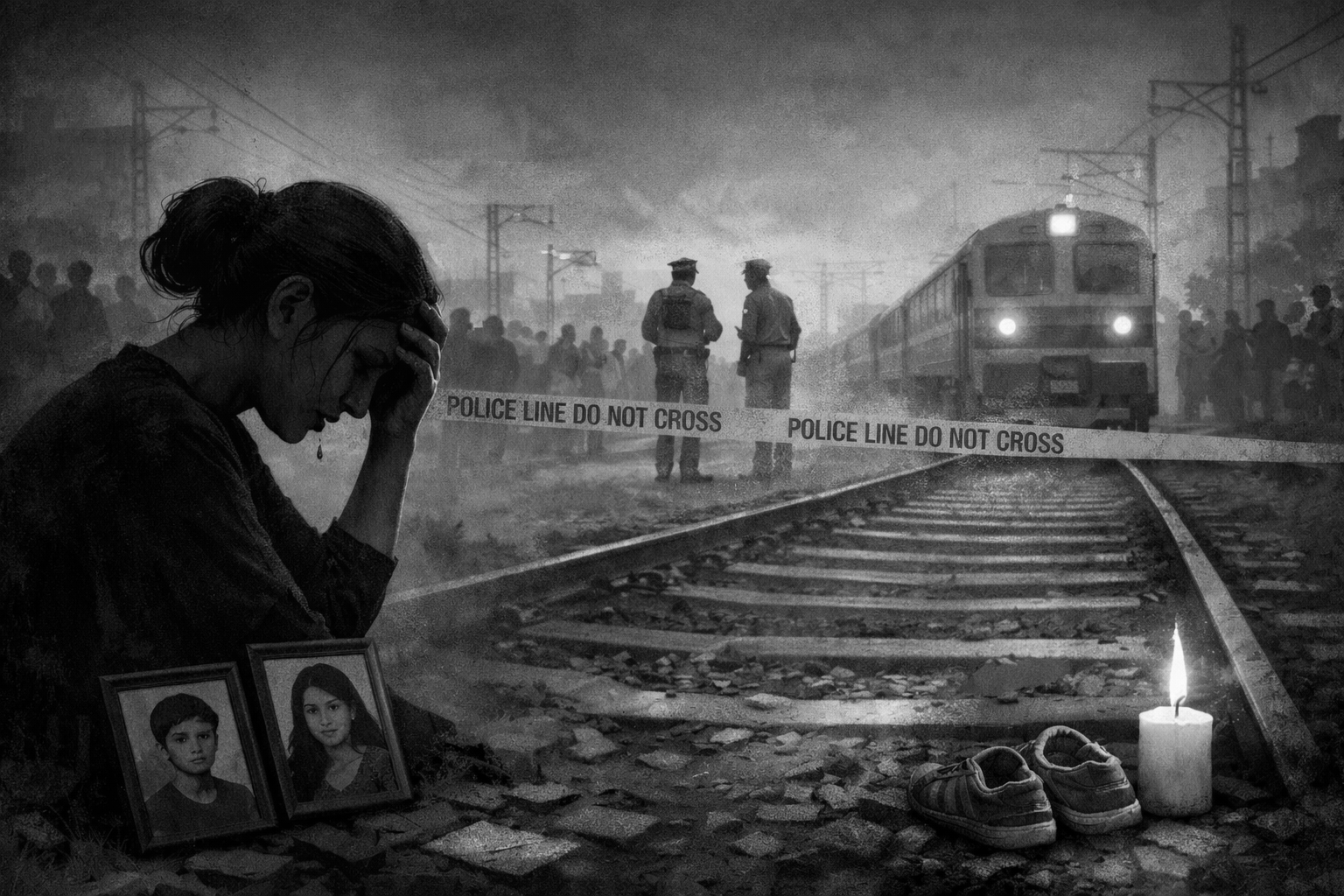
The recent tragedy near Charlapalli Railway Station, where an educated software professional ended her life along with her two adolescent children, is deeply heart-wrenching. For a 38-year-old woman settled in her career with children pursuing higher education to take such a step is a stark warning to society. This is not merely an accident; it is the pinnacle of a silent agony endured within a family.
The Pandemic of Loneliness
In today’s modern era, 'loneliness' is like a cancer that eats a person from the inside. Despite being surrounded by people and hundreds of colleagues at work, an individual becomes isolated when they cannot fearlessly share their inner thoughts. In the case of Ms. Vijaya, although she appeared to the outside world as a successful software employee, this incident suggests she may have been feeling profoundly lonely within.
The Burden of Responsibility - Mental Stress
For a woman, shouldering the burden of a career, household, and the upbringing of growing children alone can lead to extreme psychological strain. This stress doubles especially in cases of single parenting or family disputes. When there is no one to share this weight, the mind becomes numb, creating the illusion that death is the only escape.
Involvement of Children - A Great Sorrow
When parents resort to suicide, the decision to take their children with them often stems from the overwhelming anxiety of "What will happen to them after I’m gone?" However, this is a fundamentally flawed perspective. Children have their own futures and rights. Parents imposing their despair on their children and crushing their lives is not a solution to any problem.
Unfortunately, collective family suicides are becoming a dangerous trend. A sense of insecurity-the fear that children will become orphans—is driving parents toward such atrocities. Recent sensational tragedies in the Telugu states highlight the severity of this issue.
The Backdrop of Financial Distress and Social Status
In many instances, unable to bear the burden of debt, parents poison their children before taking their own lives. Past incidents in Hyderabad’s Kukatpally and IT corridor areas saw software couples killing their toddlers and themselves following financial losses. In these cases, children do not even realize what is happening to them. Fear of losing social status also drives people to pull their children into the jaws of death. Sometimes, entrepreneurs facing losses assume their children's futures are dark and resort to extreme steps in hotel rooms or on railway tracks. It is a tragedy when parents unilaterally decide that "children cannot survive the struggle."
Mental Depression
When either parent falls into deep depression, it affects the entire family. Recent incidents in Warangal and Karimnagar districts involved families jumping into wells or consuming pesticide due to marital discord or health issues. The belief that children are "property" is a grave mistake. The over-protectiveness of thinking "my child cannot take a single step without me" turns parents into killers. By not sharing problems or seeking the children's opinions, the youth become helpless victims of their parents' decisions. In the Charlapalli case, the children were 17 and 18 young adults with an understanding of the world. Their willingness to die with their mother indicates the depth of silent suffering in that home.
Adolescent Mental Shifts and the Digital Isolation
Adolescence is a period of rapid hormonal changes, making youth hyper-sensitive or prone to intense sadness. The feeling that "no one understands me" takes deep root. When they feel controlled by parents, they withdraw, leading to perceived loneliness.
Furthermore, the magic of smartphones often distances people from real relationships. Spending hours on social media leads to 'Digital Isolation.' Having thousands of virtual friends but not a single one to talk to face-to-face is a major crisis for today’s generation. Comparing their real lives to the "fake" perfect lives on Instagram or Facebook leads to an inferiority complex and extreme stress. Sleep deprivation from phone usage further fuels negative thoughts. When loneliness peaks, 'tunnel vision' sets in, making death seem like the only exit.
The Path to Recovery
To pull children away from screens, parents must spend quality time with them. Listen to them without judgment, play games together, and spend time in nature. It is essential to teach children from an early age that "life is more valuable than any problem."
Suicide is a permanent punishment for a temporary problem. Financial or personal issues can be resolved with time. While a life lost cannot be regained, facing challenges eventually opens new doors. Our shift toward 'nuclear families' has decreased social support. We must regain social consciousness to recognize the warning signs an individual gives before taking an extreme step. 'Emotional Intelligence' is now more important than just book knowledge.
Seeking Help is Not a Weakness
In our society, mental health issues are often stigmatized. However, just as we visit a doctor for a fever, it is natural to consult a psychiatrist or counselor when the mind is wounded. Seeking help is an act of courage, not weakness. Professional counselors provide a safe space without judgment. If the victims of the Charlapalli tragedy had taken one small step to ask for help, three lives might have been saved today.
The Responsibility of Society and Teachers
If someone around you suddenly becomes silent or isolated, talk to them. The simple words "I am here for you" can save a life. Teachers also play a vital role. If a student is frequently absent, turns silent, or sees a drop in grades, it should be viewed as a cry for help rather than just a lack of discipline. When educational institutions prioritize mental health over mere ranks, we can prevent such tragedies.
Life is beautiful, and there is always someone ready to help. You just need to reach out.
Helpline Numbers:
If you or someone you know is struggling, please reach out to:
• Tele-MANAS: 14416 (24/7 Free Mental Health Services)
• Roshni Helpline: 040-66202000