
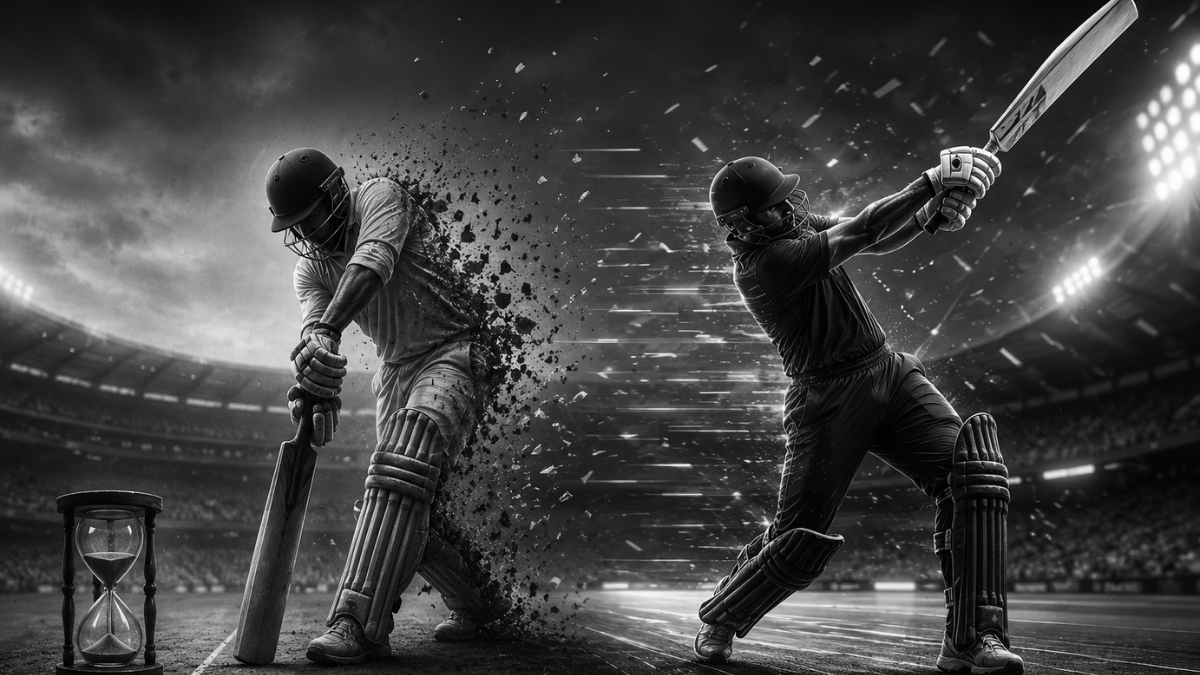
The Science Behind the Sixes: Inside Cricket’s New Bat Revolution
The modern game of cricket is no longer just changing on the field. Away from the roaring stadiums and towering sixes, a silent revolution is unfolding inside bat manufacturing units, where traditional craftsmanship is rapidly evolving into a world driven by science, precision and customisation .
The rise of T20 cricket and franchise leagues has transformed batting into an aggressive power game, forcing manufacturers to rethink how cricket bats are designed. Today’s batters demand thicker edges, massive sweet spots and explosive power, but without compromising on weight or balance.
To meet those expectations, bat makers are increasingly relying on advanced techniques such as moisture control, fibre analysis and player specific design . Modern bats are now carefully engineered rather than simply handcrafted.
At leading manufacturing centres in Meerut, imported English willow undergoes controlled air drying to adjust moisture levels and reduce excess weight. The aim is to create bats that feel light in the hands while still carrying enough mass to clear boundaries with ease.
The transformation is remarkable when compared to earlier generations. Former India captain Sunil Gavaskar used comparatively heavier and thinner bats during the 1970s and 1980s. Today’s players often carry eight to ten bats , each designed for specific match situations such as powerplays or death overs.
Customisation has become central to the process. Manufacturers now study a batter’s strength, swing pattern, hand size and scoring areas before shaping a bat. Even the handle design varies according to preference.
Legendary batter Sachin Tendulkar preferred stiff handles for greater control, while Sourav Ganguly liked more flexibility in his bats.
Technology is also reshaping the industry. Data analysts and tracking systems now provide insights into where batters score most frequently, helping manufacturers fine tune balance and weight distribution. Many companies are already exploring the use of Artificial Intelligence to design future bats.
Yet, despite the technological boom, former spinner Harbhajan Singh believes one truth remains unchanged, no bat can replace skill. In cricket’s new age of science and innovation, talent still remains the game’s greatest weapon.