
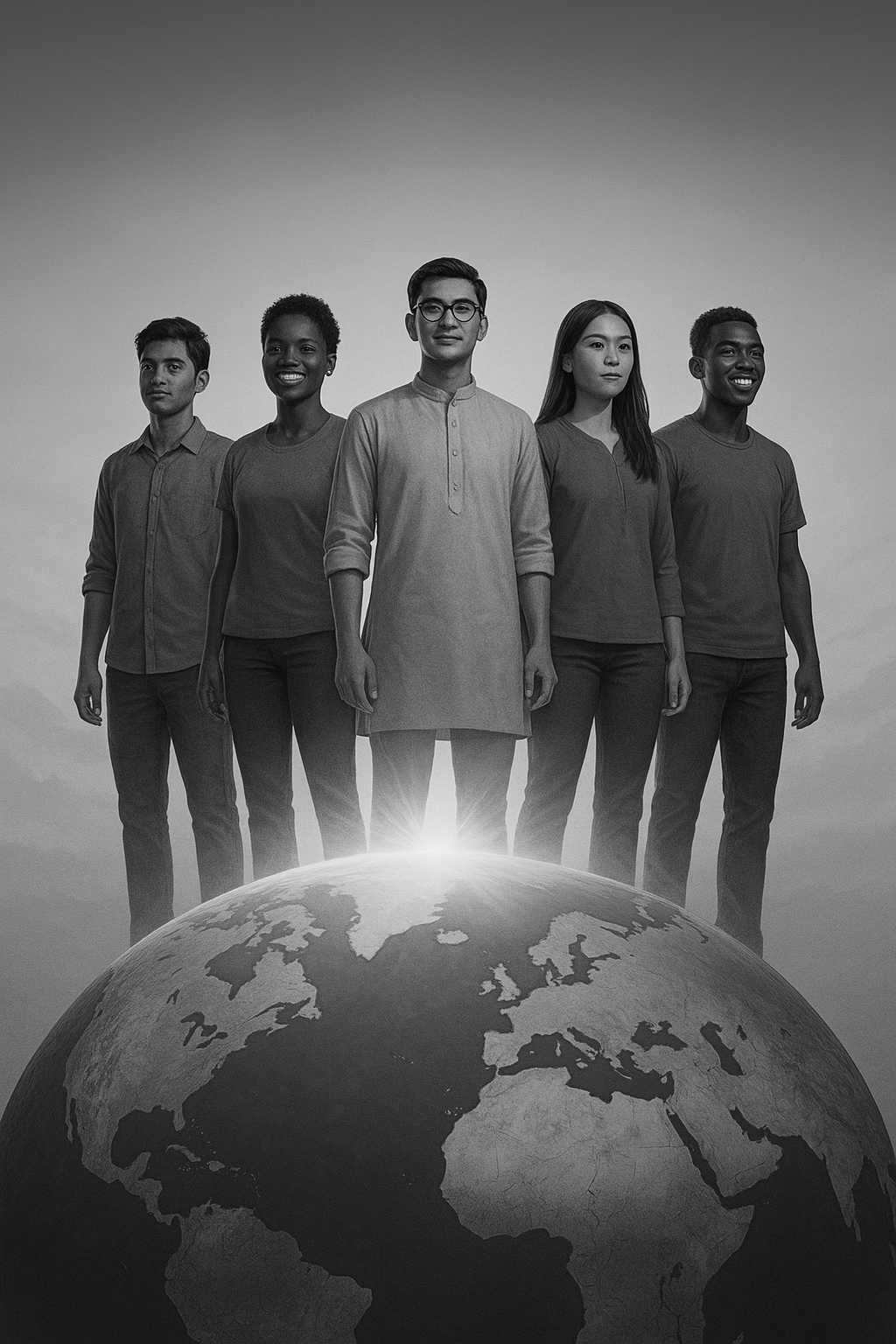
The rise of the global south, youth and the new power equation
A quiet revolution is underway in the global south, one not marked by conflict, but by conviction. From India to Indonesia, from Brazil to South Africa, a new generation is reshaping the world’s balance of influence. The shift is not just economic or political; it is demographic, digital, and deeply generational.
A young world in the south
The numbers tell their own story. Nearly 65% of the global south’s population is under the age of 35, making it the youngest region in the world. India alone adds nearly 12 million young people to its workforce every year. Africa’s median age is just 19. This youth bulge is not merely a statistic, it’s a signal of potential, innovation, and restless energy.
Unlike the aging global north, where economies struggle with stagnation and shrinking workforces, the global south’s strength lies in its people. With growing access to education, digital technologies, and entrepreneurial ecosystems, young citizens are demanding a seat at the global table, and increasingly, they’re getting it.
The economic rebalance
Over the past two decades, emerging economies have steadily narrowed the gap with the west. The IMF now projects that countries of the global south will account for over 60% of global GDP growth by 2030. India, Brazil, Indonesia, and Nigeria are among the key engines of this new momentum.
This economic rise is fueling a political reordering. The BRICS alliance, which began as an acronym, is now expanding into a bloc that challenges western-led financial systems. Calls for reforming global institutions like the UN, IMF, and World Bank are growing louder, and they’re backed not by ideology, but by economic weight and youthful ambition.
Youth driving a new vision
According to recent studies, over 70% of young Indians believe that countries of the global south will play a greater role in shaping global decisions in the coming decade. This optimism reflects not only confidence in national progress but also a desire for more equitable global governance.
Younger generations across Asia, Africa, and Latin America are not waiting for leadership to be granted; they are creating it. Youth-led movements are redefining diplomacy, sustainability, and innovation, from climate action in Kenya to tech startups in Bengaluru. Their demand is simple yet transformative: a world order that reflects today’s realities, not yesterday’s hierarchies.
Challenges on the horizon
However, optimism alone cannot drive transformation. The global south still faces deep inequalities, in education, healthcare, gender equity, and employment. The challenge lies in converting the youth dividend into a true demographic advantage. Without meaningful inclusion, the same youthful energy that promises growth could turn into frustration.
Moreover, the power shift is not guaranteed. As global conflicts, protectionism, and AI-driven inequalities rise, the global south must navigate both cooperation and competition. For young populations, this means mastering not just ambition but adaptability.
A generation ready to lead
What makes this moment unique is that the global south is not asking for recognition, it is earning it. The world’s fastest-growing economies, most dynamic markets, and youngest minds are all converging below the equator. The question is no longer if the global south will lead, but how it will choose to do so.
In the next decade, the balance of power will not just shift between nations, it will shift between generations. And for once, the youngest voices may have the loudest say in shaping the future.