
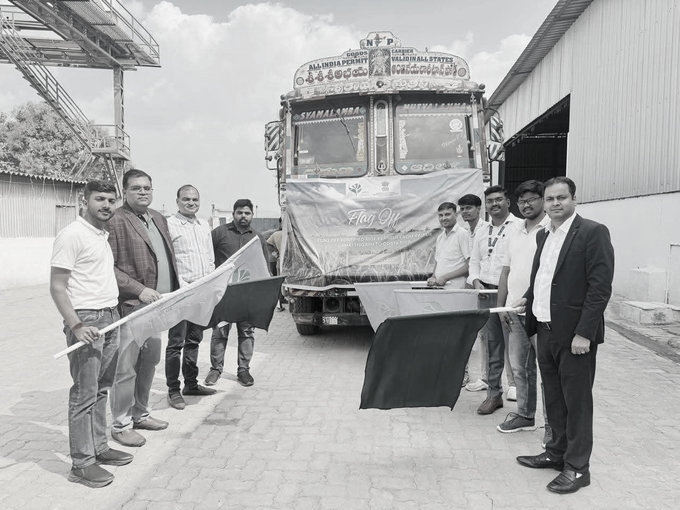
The rice bowl of India, Chhattisgarh, sends first fortified rice kernel shipment to Costa Rica
The Agricultural and Processed Food Products Export Development Authority (APEDA), under the Ministry of Commerce and Industry, Government of India, has facilitated the country’s first-ever export of Fortified Rice Kernel (FRK) from Chhattisgarh to Costa Rica. The 12-metric-tonne shipment marks a significant breakthrough that links India’s domestic fight against malnutrition with its growing presence in international nutrition markets.
Chhattisgarh, known as the Rice Bowl of India, was chosen for the landmark export due to its strong foundation in rice cultivation, advanced fortification infrastructure, and a proactive export ecosystem. The state has long been a major rice producer, supported by modern Fortified Rice Kernel production units and a well-organized industry network. These efforts, led by the Rice Exporters Association of Chhattisgarh (TREA-CG), enabled the state to meet the international quality, safety, and certification standards necessary for global trade.
President of TREA-CG, Mukesh Jain, thanked APEDA for its extensive support in facilitating the export and confirmed that additional consignments to new destinations are already being planned. He emphasized that such collaborations are vital to enhance Chhattisgarh’s agricultural export potential. APEDA Chairman Abhishek Dev also congratulated all stakeholders, stating that this milestone strengthens India’s agri-export portfolio while reaffirming its global commitment to tackling malnutrition through science-led innovation.
Fortified Rice Kernel is produced by blending rice flour with essential micronutrients such as iron, folic acid, and vitamin B12. These nutrients are extruded and shaped into rice-like grains, then mixed with natural rice in a set ratio, usually 1:100. The resulting rice retains the same appearance, taste, and texture as regular rice while offering significantly enhanced nutritional value.
The choice of Costa Rica as the destination for this pilot export was a strategic decision. The Central American nation serves as a gateway to Latin America and has a growing demand for nutrient-enriched food products. Costa Rica’s strict food safety and fortification standards made it an ideal market for India to demonstrate its technological and quality capabilities. Moreover, India and Costa Rica have shared friendly trade ties through the Joint Economic and Trade Committee (JETCO) established in 2021, which aims to strengthen cooperation across sectors like agriculture, health, and food technology. Costa Rica’s interest in expanding trade relations and exploring a preferential trade agreement with India provided a strong institutional framework for this export.
The timing of this export, four years after the establishment of JETCO, is the result of several factors. India’s fortified rice programme needed time to achieve nationwide coverage and demonstrate success domestically. Simultaneously, exporters had to align their production and testing processes with global fortification standards. In recent years, APEDA’s market diversification strategy began focusing on non-traditional destinations such as Latin America, further paving the way for this milestone. The completion of India’s nationwide fortified rice rollout by 2024–25 provided the right foundation for global expansion.
The successful shipment of fortified rice from Chhattisgarh to Costa Rica stands as a symbol of India’s growing role in global food security. It showcases how the combined efforts of APEDA, the Government of Chhattisgarh, and private industry have positioned India as a dependable supplier of nutrition-rich, high-quality food products. More importantly, it reflects the country’s ability to translate domestic health initiatives into global contributions, reinforcing India’s identity as both the Rice Bowl of India and a global advocate for nutritional well-being.