
The Revolution of Ink: A Special Feature on Indian Newspaper Day
The Guinness World Records recognizes 'Relation' ( Relation aller Fürnemmen und gedenckwürdigen Historien ) as the world's first newspaper. It was launched in 1605 in Strasbourg , Germany (now part of France), by a man named Johann Carolus . Before this, news was shared only through expensive, hand-written manuscripts; however, Carolus used the printing press to disseminate information to everyone at a lower cost. This not only laid the foundation for modern journalism but also marked the beginning of the information revolution.
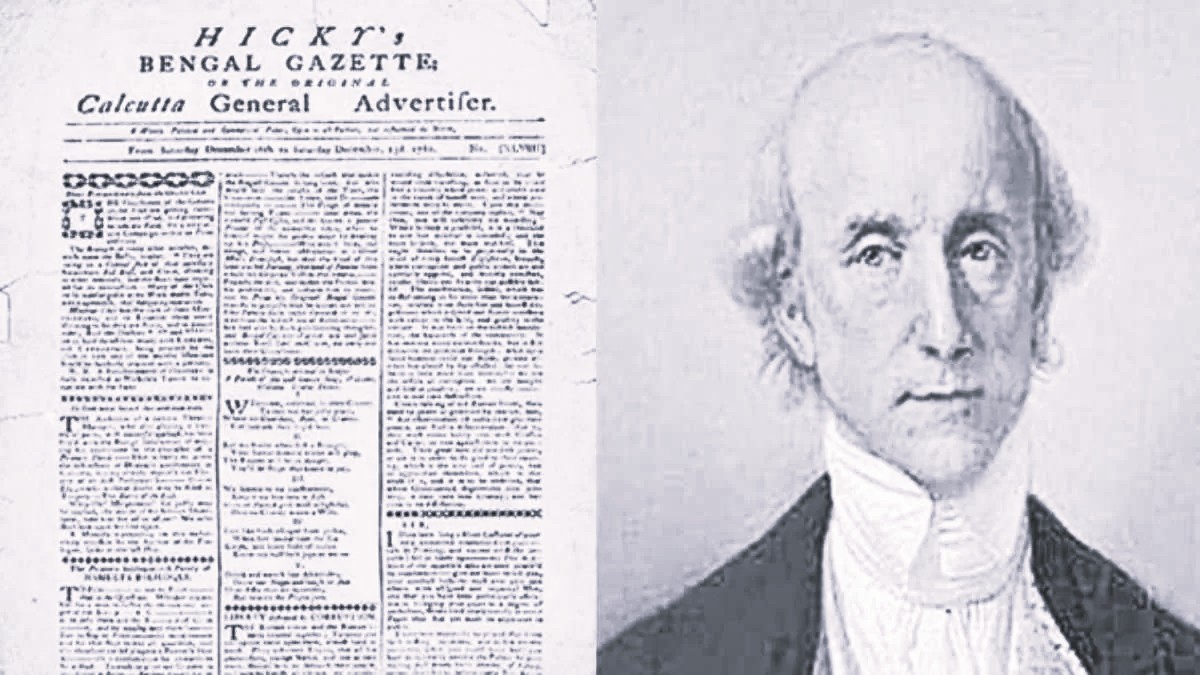
In India, January 29 is not merely a date on a calendar, it is the birthday of the Indian conscience. On this day in 1780, a daring adventurer named James Augustus Hicky printed the first issue of Hicky’s Bengal Gazette . Beginning with a small press in Kolkata, he could never have imagined that this journey would inspire India's freedom struggle and stand as a foundational pillar of our democracy for centuries.
"The Father of the Indian Press"
Before 1780, news in India was shared only through word of mouth or official government notices. Hickey changed this landscape entirely. In the name of honest journalism, he famously declared that his paper would be "open to all parties, but influenced by none."
James Augustus Hickey was a courageous Irish journalist, widely regarded as the "Father of the Indian Press." He was the first person to fearlessly use his publication to expose the corruption of East India Company officials and the personal scandals of high-ranking authorities like Governor-General Warren Hastings. Consequently, he suffered imprisonment and the loss of his printing press. Nevertheless, the foundation he laid, the right to press freedom and the audacity to question those in power, continues to inspire Indian journalism today. He proved that a newspaper should not act as a sycophant to the government but as a guardian of the people.
The Script of National Awakening
During British rule, newspapers emerged as the most powerful weapon in uniting Indians. Leaders used the press as a platform to explain the exploitative policies of the British to the common masses. Beyond providing news, newspapers prepared the public for significant movements like the Boycott of Foreign Goods and the Swadeshi Movement. While the literate read the paper, the illiterate gathered in groups to listen to it being read aloud. In this way, newspapers carried the spark of independence to every household and laid the groundwork for a social revolution.
The Press as a Weapon of the Freedom Struggle
During the 19th and 20th centuries, Indian newspapers evolved from mere information tools into instruments of social reform and revolution. Several publications created history during the independence movement:
Raja Ram Mohan Roy:
Fought against social evils like Sati through his paper, Sambad Kaumudi .
Bal Gangadhar Tilak:
Roared "Swaraj is my birthright" through Kesari , igniting patriotism among the youth.
Mahatma Gandhi:
Disseminated messages of non-violence, the quest for freedom, Satyagraha, and the abolition of untouchability through Young India and Harijan .
Aurobindo Ghosh:
Promoted revolutionary thoughts through the newspaper Bande Mataram . These were not just news outlets; they were beacons that awakened the Indian soul.
The Legacy of Krishna Patrika
Krishna Patrika holds a distinguished place as the first Telugu newspaper to promote political and nationalistic ideas. It was launched in Machilipatnam on February 2, 1902, founded by Konda Venkatappayya and Dasu Narayana Rao. Mutnuri Krishna Rao , who served as its long-time editor, gave the paper national recognition. His pen became a source of constant anxiety for the British authorities.
During the Vandemataram and Swadeshi movements, this paper was a pioneer in mobilizing the Telugu people. It championed not only politics but also arts, literature, and culture. In those days, the paper reached every village, gaining such popularity that people would gather in groups to read it. Indian journalism may have its roots in Hicky’s efforts, but on Telugu soil, nationalism was fortified by Krishna Patrika .
The Literacy Movement in Andhra Pradesh
In Andhra Pradesh, newspapers and the library movement worked hand-in-hand to bring about intellectual awakening.
Kandukuri Veeresalingam Pantulu:
Fought against social evils like child marriage through Vivekavardhini .
Kasinadhuni Nageswara Rao:
Founded Andhra Patrika , uniting all Telugu people and fostering a love for their language and nation.
The slogan "The library is the people’s university" fueled a magnificent library movement. Starting from the first library in Visakhapatnam in 1886, the movement spread to every village through the efforts of stalwarts like Ayyanki Venkata Ramanaiah and Gadicherla Harisarvottama Rao .
The Struggle in the Telangana Region
In Telangana, newspapers and libraries were more than just sources of information; they were potent weapons against the tyrannical Nizam rule.
Suravaram Pratapa Reddy:
Launched Golkonda Patrika in 1926, which became the voice of the Telangana people.
Library Movement & Andhra Mahasabha:
Libraries like the Sri Krishna Devaraya Andhra Bhasha Nilayam (founded in 1901) became centers for anti-Nizam struggles. These libraries birthed the "Andhra Mahasabha," which eventually led to the Peasant Armed Rebellion.
Challenges and Oppression
Fearing the influence of the press, the British government enacted several draconian laws to suppress it, such as the Vernacular Press Act (1878) . Editors were routinely jailed under sedition charges, and newspapers were financially crippled through the denial of advertisements or heavy security deposit requirements. Despite this, many newspapers were printed in secret to reach the people. Because these editors risked their lives and property, we breathe the air of freedom today.
Post-Independence and the Digital Era
In independent India, newspapers have acted as a bridge between the government and the citizens. From explaining Five-Year Plans in the early years to standing tall during the dark days of the Emergency , the press has remained the "watchdog" of democracy.
By 2026, the journey of newspapers has taken a high-tech turn. We now live in an era of "Phygital" journalism.
QR Codes:
Modern papers integrate digital tech; scanning a sports article’s QR code instantly plays the match highlights on your phone.
Sustainability:
Today, 90% of newspapers are printed on recycled paper using solar-powered presses.
Credibility:
In an age of "Fake News" on social media, people are returning to daily newspapers for verified analysis and in-depth understanding.
The small step taken by James Hickey has today become the protective shield of Indian democracy. As long as the written word exists, the voice that questions injustice will continue to be heard.