
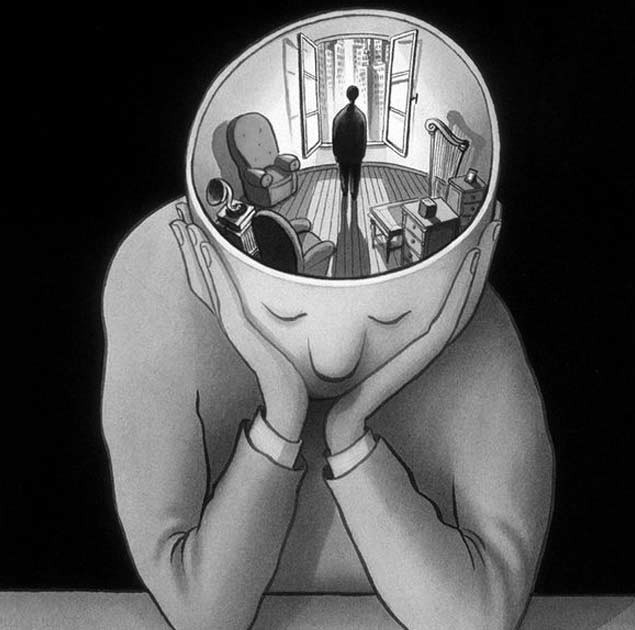
The Psychology of 'The Kick' - Unpacking ‘Boredom Susceptibility’
The year 2009 introduced Telugu cinema audiences to Kalyan, a character so driven by an unusual internal mandate that he quit a high-paying software job simply because it didn't give him the "kick." Played by Raviteja in the film Kick , Kalyan’s entire life was governed by a relentless, almost maniacal pursuit of thrill and challenge. His actions from double-crossing his best friend to faking amnesia to reconcile with his girlfriend Naina, and finally, becoming a mastermind thief who steals only for a cause were not driven by money, fame, or even love, but by an inescapable sense of under-arousal. He was bored by the normal, the routine, and the expected.
In the world of psychology, Kalyan is a perfect, albeit dramatic, case study of an individual with High Boredom Susceptibility (BS). This article delves into the psychological underpinnings of this trait, using Kalyan's character as a dynamic reference to explore its benefits, drawbacks, and the paths to managing its impulsive energy.
Defining the 'Kick' – High Boredom Susceptibility
Boredom Susceptibility (BS) is a personality trait that describes an individual's proneness to experiencing the negative emotional state of boredom frequently and intensely. Individuals with high BS possess a low tolerance for monotony and tend to feel chronically understimulated and disengaged, even in situations that others find interesting or comfortable.
At its core, BS is intrinsically linked to the personality trait of Sensation Seeking and the brain’s dopamine reward system. Dopamine is the neurotransmitter responsible for pleasure, motivation, and novelty-seeking. Research suggests that in people with high BS, the dopamine system may be less sensitive, requiring more intense, novel, or risky experiences to achieve the same level of satisfaction or arousal as others. They are constantly looking for a high-amplitude signal to keep their mental engine running.
Kalyan's Diagnostic Profile
Kalyan’s behavioral pattern is a textbook manifestation of high BS:
Intolerance for Routine
He changes jobs every few days/months, not due to incompetence, but because the work (even if challenging initially) quickly becomes "thokalo" (useless/boring). His famous dialogue, " Naku kick kavali, kick ” (I need a kick, a thrill), perfectly encapsulates the need for a constant state of arousal.
Impulsivity
His decisions are driven by the immediate need to alleviate boredom, such as pulling a dangerous stunt while driving or engaging in risky social manipulation (the amnesia trick).
The Pursuit of Novelty
The film presents Kalyan’s condition not as a flaw, but as a driving force, allowing us to examine the functional aspects of this personality trait.
The Adaptive Edge – How High BS Fuels Success
While often associated with negative outcomes, the restless energy of high Boredom Susceptibility can be a powerful catalyst for action and innovation, allowing individuals to break free from the conventional and achieve extraordinary results.
1. Motivation for Change and Innovation
Boredom, from a functional perspective in psychology, is an aversive emotional signal that indicates a mismatch between a person's desired level of engagement and their current environment. It forces the individual to shift goals.
2. Unconventional Problem Solving and Creativity
When the mind is understimulated, the need for arousal prompts it to look inward, promoting mind-wandering and creative ideation. Individuals with high BS are often highly creative because their default state pushes them to conceive new, non-obvious solutions.
3. High Achievement and Rapid Mastery
The constant desire for challenge means that individuals with high BS quickly master routine tasks and move on. Their ability to focus and excel is intense, but short-lived.
The Dark Side – Drawbacks and Maladaptive Behaviors
The same energy that drives innovation can easily spiral into maladaptive behavior if not channeled properly. Kalyan's character also highlights the serious psychological costs of unmanaged high BS.
1. Impulsivity and Lack of Stability
The need fo r immediate arousal often overrides rational thought and long-term planning, manifesting as poor self-control.
2. Relational Strain and Emotional Intimacy
Long-term, secure relationships are built on predictability, trust, and shared routine precisely the elements that bore the high BS individual.
3. Risky and Destructive Behaviors
As noted in psychological literature, high BS is tightly correlated with risky sensation-seeking, including substance abuse, reckless driving, and criminal behavior, as a means of affect regulation (escaping the aversive feeling of boredom).
Channeling the Thrill – Overcoming Maladaptive BS
The ultimate psychological challenge for individuals like Kalyan is not to eliminate the high arousal drive, but to channel it into constructive, sustainable, and intrinsically rewarding goals.
Cognitive Reappraisal - Finding the Challenge in Consistency
Instead of viewing routine tasks as dull, a person with high BS can use cognitive reappraisal to reframe them as a new, more difficult kind of challenge: the challenge of endurance and long-term mastery.
Cultivating Intrinsic Motivation
The focus must shift from extrinsic stimulation (external danger, new job, new relationship) to intrinsic motivation (deep personal satisfaction, purpose, and mastery). Kalyan begins to achieve this when he realizes his best "kick" comes from helping children, connecting his high-risk skills to a high-value ethical goal.
Constructive Outlets
High BS energy should be channeled into complex hobbies or demanding professions that offer novelty within a controlled structure competitive sports, entrepreneurial ventures, high-stakes finance, or scientific research. Kalyan's final transition to a high-ranking, challenging police position is a perfect psychological resolution: a job where the stakes are high, the challenges are novel, but the framework is ethical and stable.
The Power of "Doing Nothing" and Mindfulness
The most difficult step for a high BS individual is learning to tolerate the feeling of low arousal. Mindfulness and self-reflection are vital tools. By acknowledging the restlessness without immediately reacting to it, one can:
Separate the Signal from the Action
Recognize boredom as just a signal to change, but not a mandatory command for immediate, impulsive action.
Encourage Internal Creativity
Allowing the mind to rest and wander in a non-electronic, non-stimulated state (like a long walk or quiet contemplation) is proven to increase creativity and problem-solving skills, turning boredom from an aversive threat into a creative opportunity.
Kalyan's journey in Kick serves as a cinematic metaphor for the high BS personality. His "kick" is his dopamine-driven destiny, providing him with extraordinary competence and relentless drive. However, the film shows that true life satisfaction (and a successful relationship) is achieved only when he successfully integrates his high-arousal personality with a stable, meaningful, and ethical purpose. The kick must be channeled, not chased.