
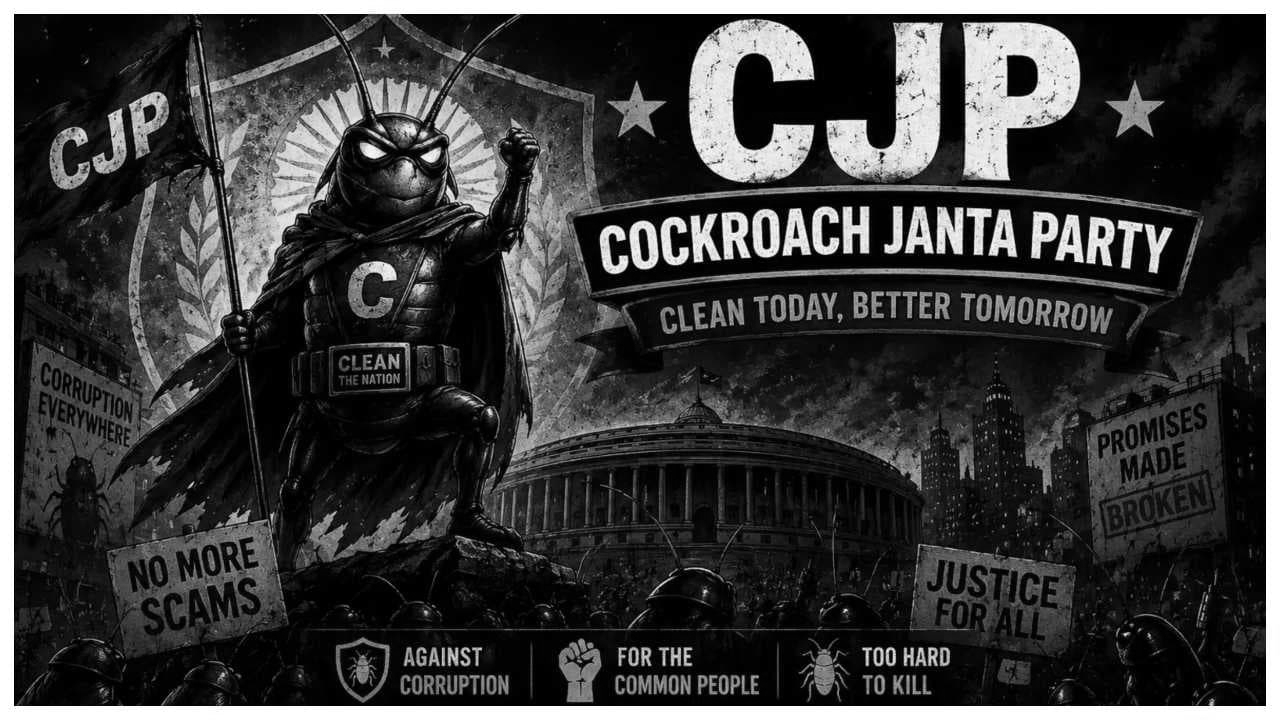
The Party Nobody Expected: ‘Cockroach Janata Party’ and the Insult That United a Generation
On May 15, 2026 , during a Supreme Court hearing on fake law degrees, Chief Justice Surya Kant reached for a word that would follow him across the internet for days. "There are youngsters like cockroaches, who don't get any employment and don't have a place in a profession," he said from the bench. "Some of them become media, some of them become RTI activists, and they start attacking everyone." The Chief Justice later clarified that his remarks were directed at persons using fraudulent degrees to enter professions, not at unemployed youth in general. "It is totally baseless to suggest that I criticised the youth of our nation," he said. The internet, however, had already heard what it needed to hear, and it was not in a forgiving mood.
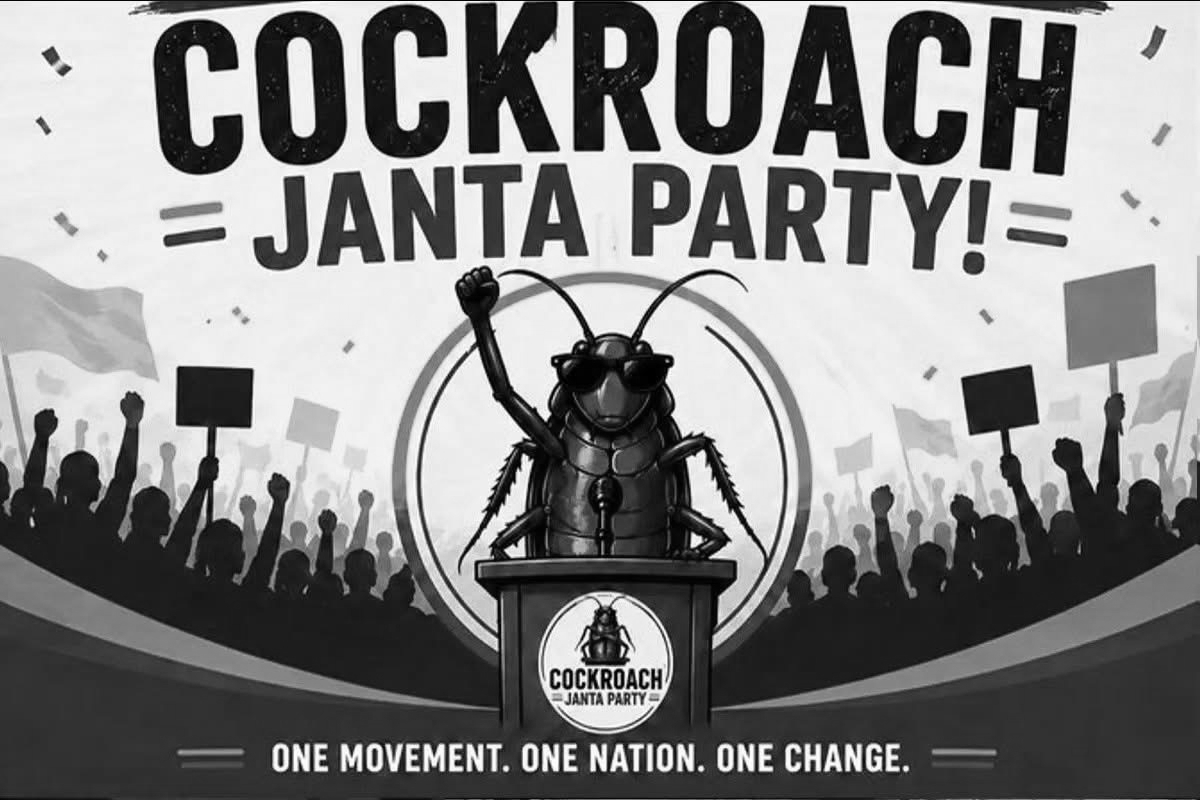
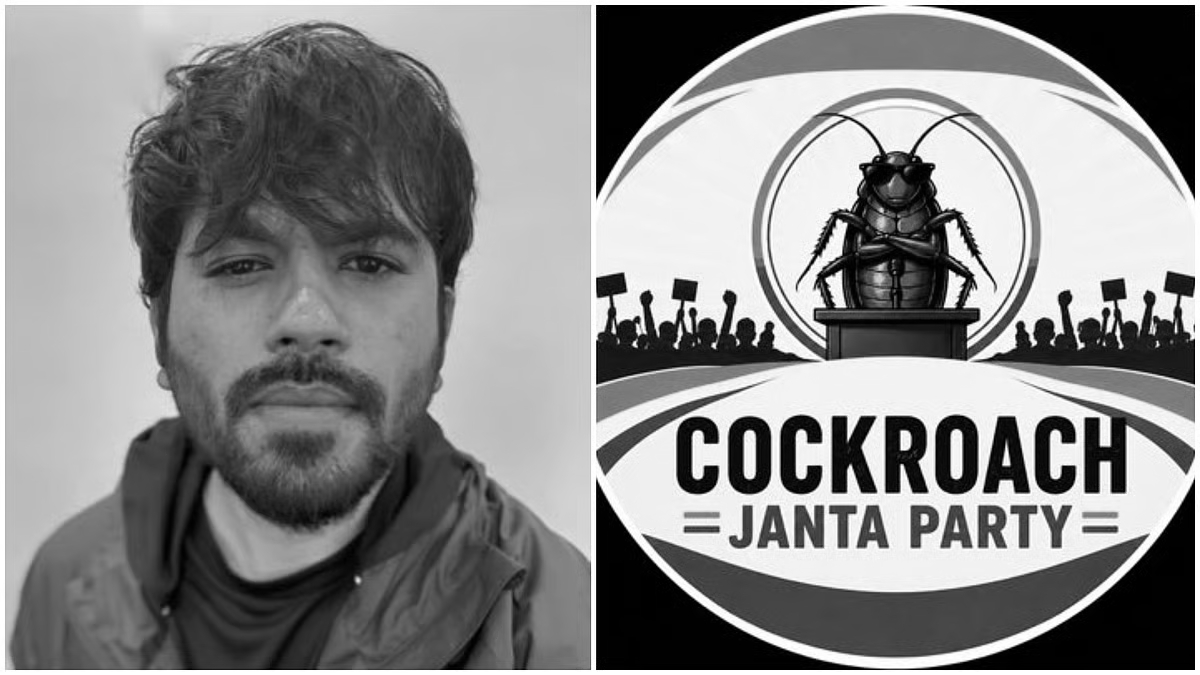
Abhijeet Dipke had barely slept in the next 72 hours, fielding waves of messages after a casual joke took an unexpected turn. The 30-year-old, a public relations graduate from Boston University , suddenly found himself at the centre of a sweeping satirical political movement, the Cockroach Janta Party , which began gaining thousands of followers with each passing hour.
As outrage spread online, Dipke posted on X: "What if all cockroaches come together?" He followed that remark by setting up a website and social media accounts for what would become a viral political satire movement. Built rapidly using digital tools and crowd participation, the platform soon developed a manifesto, a constitution, and a five-point agenda within days.
By May 19 , the movement had crossed over one lakh registered members . Two sitting MPs, Mahua Moitra and Kirti Azad , publicly associated themselves with the platform, while the hashtag #MainBhiCockroach trended widely. On X, the movement grew to 121.7K+ followers .
The numbers on Instagram became the most striking symbol of its virality. The account reportedly surged from around 3.2 million followers in the morning of May 20 to 5.5 million+ within just a few hours, reflecting how quickly the movement spread through reels, memes, and youth-driven content across the country.
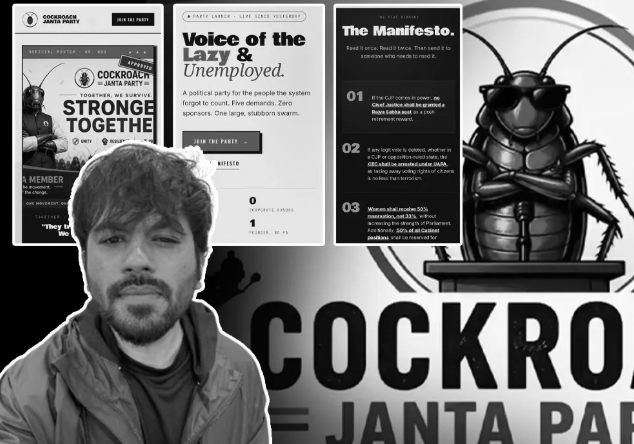
The website carries a minimalist design and a deliberately ironic tone. It presents itself as "Voice of the Lazy and Unemployed," describing the movement as one for "the people the system forgot to count." Its membership form asks users whether they are lazy, chronically online, and whether they identify as a cockroach, a reference to the original remark that sparked the controversy.
The manifesto, while satirical in presentation, contains sharp political demands. It calls for an end to post-retirement political rewards for top judicial posts, strict action against voter list manipulation, stronger women's representation in Parliament and Cabinet , regulation of corporate-owned media houses, and a 20-year election ban for elected representatives who switch parties . Supporters argue that beneath the humour lies a serious critique of political accountability and institutional trust.
Among early sign-ups were unexpected names from politics and public life. Opposition leaders Mahua Moitra and Kirti Azad were publicly welcomed by the platform. A retired Indian bureaucrat, Ashish Joshi , also joined, describing the movement as a reflection of growing public frustration and fearlessness among citizens.
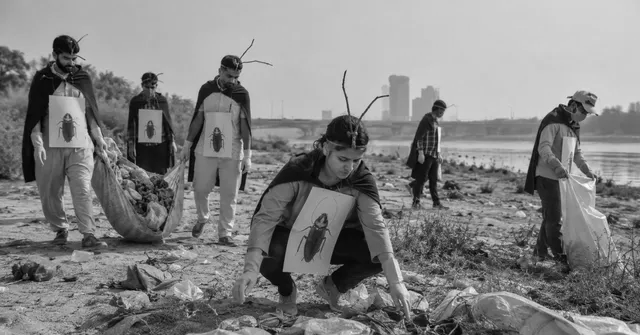
What made the phenomenon stand out was that it did not remain confined to screens. In one widely circulated instance, youth volunteers organised a cleanliness drive along the Yamuna river dressed in cockroach-themed outfits, turning satire into visible street-level activism. Participants described it as reclaiming an insult and converting it into civic action .
The movement also spawned parallel online satire, including a spoof rival group called the National Parasitic Front . Together, the two became part of a broader digital theatre where political humour, criticism, and activism began to overlap.
Observers have compared the rise of the movement to earlier waves of youth mobilisation in India, noting that while the format is different, the underlying frustration is familiar. High unemployment among graduates and widespread distrust in institutions have created fertile ground for symbolic forms of protest.
At the same time, critics point out that the Cockroach Janta Party remains an informal, unregistered digital movement with no electoral structure or formal political programme. Its long-term trajectory remains uncertain, and even its founder has acknowledged its fragile and unpredictable nature.
Still, its cultural impact is difficult to ignore. In less than a week, a single courtroom remark transformed into a viral identity movement, drawing millions into a shared digital expression of satire and frustration.
Whether it evolves into something more structured or fades as a fleeting internet moment, the Cockroach Janta Party has already demonstrated how quickly political meaning can be reshaped in the age of social media.
And at its core remains a simple, unsettling line that now defines the movement: