
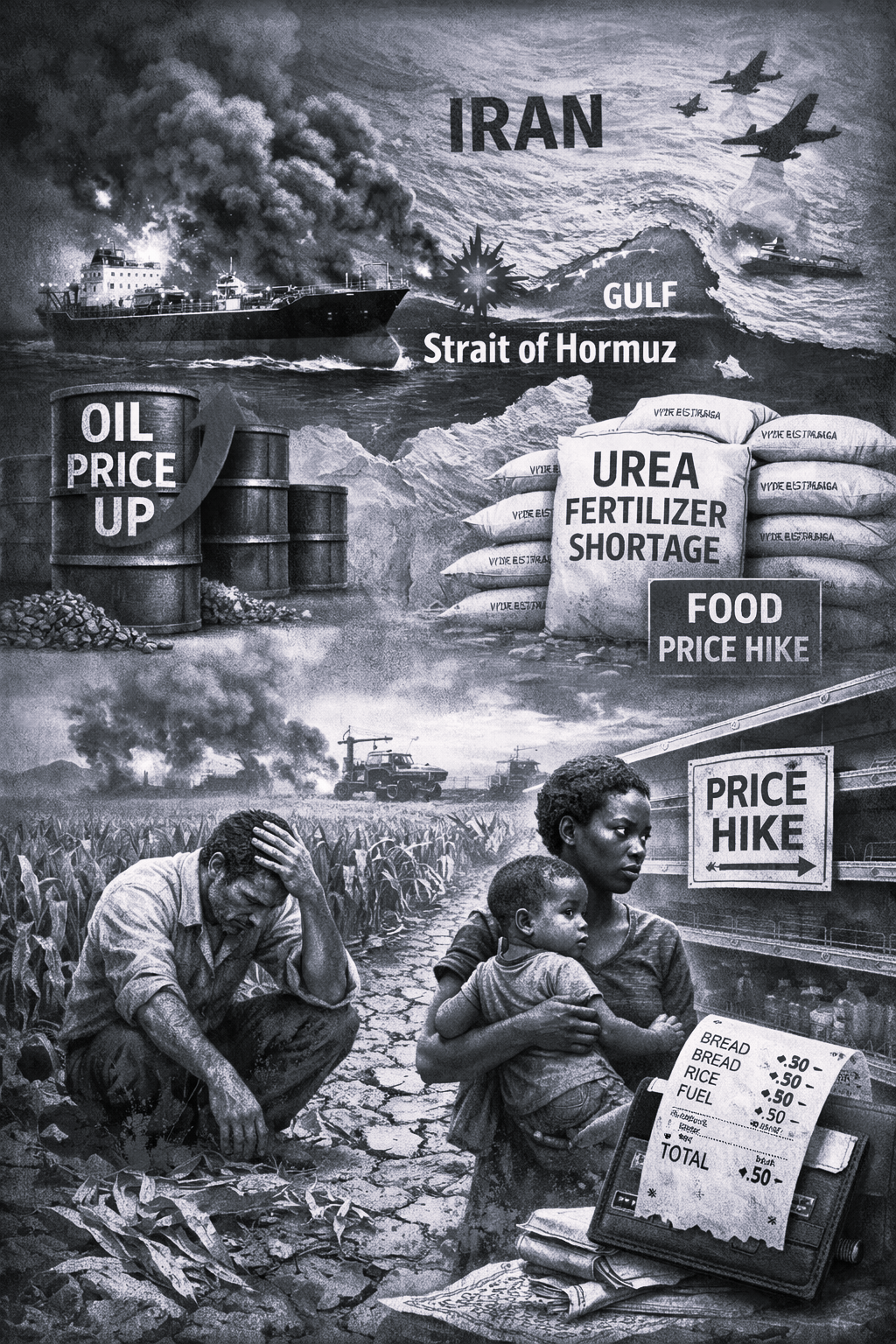
The Next Global Crisis: How Iran War May Trigger Food and Fuel Inflation
The ongoing conflict involving Iran has begun to trigger a cascading global crisis, with disruptions in energy and fertiliser supply chains threatening to push up both food and fuel prices worldwide. At the centre of the turmoil is the near shutdown of the Strait of Hormuz , one of the world’s most critical trade arteries, through which nearly a fifth of global oil and a substantial share of fertiliser shipments normally pass. Since the escalation of hostilities, maritime traffic through the strait has dropped sharply, with shipping firms avoiding the route due to security risks, effectively choking supply lines and sending shockwaves through global markets.
The immediate fallout has been a sharp rise in energy prices, which in turn is driving up the cost of fertiliser production. Nitrogen-based fertilisers such as urea heavily dependent on natural gas have been hit particularly hard, with nearly 30 per cent of global trade disrupted. Prices of key inputs have surged significantly in recent weeks, reflecting both supply bottlenecks and rising fuel costs. Phosphate and sulfur supplies, largely sourced from the Gulf region, are also under strain, compounding the crisis for global agriculture.
This disruption comes at a critical moment for farmers across major agricultural regions, including the United States , Europe , and parts of Asia , where planting seasons are either underway or imminent. Fertilisers are essential during the early stages of crop growth, and delays or reduced application can lead to lower yields. Experts warn that even short-term shortages could translate into long-term production losses, forcing farmers to either cut back on fertiliser use or shift to less input-intensive crops, thereby reducing overall agricultural output.
The implications extend far beyond farms. A decline in crop yields is expected to push up global prices of key food staples such as wheat, maize, and rice, while rising crude oil prices are simultaneously increasing transportation and logistics costs. Economists warn that the conflict is approaching a “tipping point,” where supply disruptions could lead not just to price spikes but also to broader shortages across multiple sectors. Inflationary pressures are already building, raising concerns of a wider inflation surge if the conflict persists.
The burden of this dual shock rising food and fuel prices is likely to fall most heavily on poor and middle-class households. For low-income families, who spend a large share of their income on essentials such as food and energy, even modest increases in prices can erode purchasing power and deepen food security concerns. In developing regions across Africa and parts of Asia, where farmers depend heavily on fertiliser imports from the Gulf, the crisis is particularly acute.
Compounding the challenge is the limited ability of global producers to offset the supply shortfall. Major producers are operating near capacity, leaving little room to stabilise global markets. Even if the conflict de-escalates, trade flows may take time to recover due to high insurance costs and persistent security concerns in the region.
Experts warn that the situation underscores the fragility of global food systems, which remain deeply intertwined with geopolitical stability and energy markets. A prolonged disruption of the Strait of Hormuz could trigger a systemic shock to global supply chains, with long-term consequences for both economic stability and food availability. Governments may need to step in with subsidies, promote domestic fertiliser production, and ensure supply chain resilience, but without a swift resolution, the world could be heading toward a prolonged period of elevated food and fuel prices, with the most severe impact borne by vulnerable populations.