
The loneliness epidemic in urban India: A hidden public-health crisis
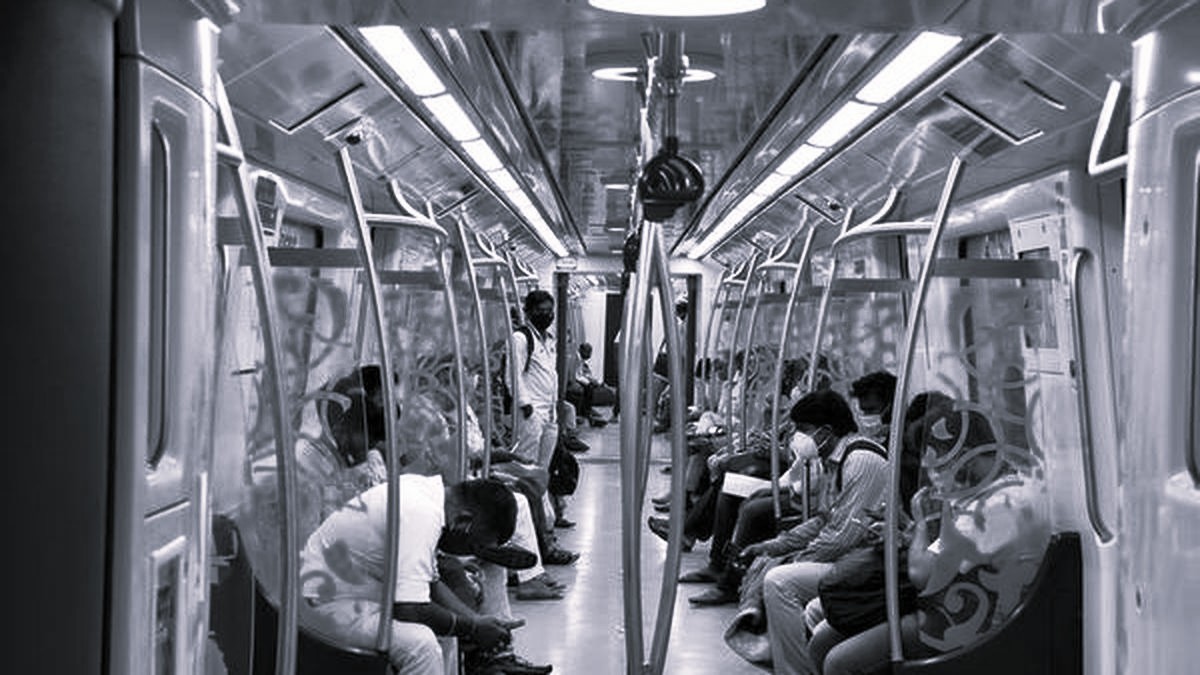
They crowd the local trains, share co-working desks, double up in rental flats and feel alone. In India’s rapidly urbanising cities, loneliness has become an invisible but growing public-health problem: not merely a private sorrow, but a factor that worsens depression, anxiety, chronic disease and even mortality. Once thought to be the province of the elderly, loneliness in India today spans age groups high among young adults and present in the elderly as well and is shaped by technology, migration, work cultures and fraying community ties. This special report draws on recent studies, interviews and on-the-ground reporting to examine how loneliness takes hold in the urban landscape, who is most at risk, and what can and must be done.
Connected but not close: the paradox of urban life
“Everyone is online, but nobody is there,” said A., a 28-year-old software engineer in Bengaluru, when asked about friendships after moving to the city for work. He described a daily routine of coding, meetings and swiping through social feeds late at night interactions that left him drained rather than comforted. Stories like his are common across India’s tech hubs: young professionals live in clusters of strangers, with work schedules and commuting times that leave little space for sustained relationships.
A growing number of surveys and reports confirm the anecdotal sense. Global polls and Indian studies suggest that urban Indians report loneliness at levels higher than many would expect a symptom of high population density that masks low emotional connectivity. “We appear connected but lack meaningful emotional contact,” one recent analysis of urban loneliness in India put it.
Loneliness is not just sadness. Clinically, it is a subjective feeling a gap between the social relationships a person wants and those they have. It differs from social isolation (an objective lack of contacts) but the two often overlap and compound each other. The World Health Organization warns that social isolation and loneliness are widespread and have serious impacts on physical and mental health.
Who is lonely and why
Young adults (Gen-Z and millennials)
Contrary to the stereotype that loneliness is an elderly problem, multiple Indian studies show that loneliness peaks in young adulthood. Pressures of education and employment, the precariousness of early careers, and the effects of social media shape a generation that is digitally hyperconnected but emotionally precarious. “With a focus on digital communication, Gen-Z may have fewer face-to-face interactions and meaningful conversations,” a psychiatrist told reporters while discussing youth mental health. Many young people move cities for college or jobs and lack the family or long-standing friendships that anchored earlier generations.
Migrant workers and new urban residents
Millions who migrate to cities for jobs live in single-room tenements, hostels or employer accommodations. The daily grind, separation from family, and uncertain housing make it hard to form lasting social ties. A 30-year-old construction supervisor in Pune told a local reporter: “I have colleagues, but after work we go to our rooms. There is no one to share the small things with.” Such accounts highlight how economic mobility can come with emotional cost.
The elderly - present but lonely
Elderly people in cities are often physically around others but emotionally isolated. Studies from India show that a significant minority of older adults report frequent loneliness and low social participation; family dispersal, nuclearisation and the loss of traditional community roles have reduced older adults’ daily social contacts. One national survey estimated that over 13% of older adults reported frequent loneliness, a stark number given India’s population.
Professionals in high-pressure jobs
Doctors, first-responders, corporate executives and gig workers report elevated loneliness and burnout. Long hours, irregular schedules, and workplace cultures that prize stoicism can prevent people from seeking or sustaining friendships. A multi-city corporate survey found that a majority of young employees acknowledged feeling lonely at work a worrying signal that workplaces themselves might be amplifiers of the problem.
The pandemic’s long shadow
COVID-19 did not create loneliness, but it deepened it and made existing vulnerabilities visible. Lockdowns severed routines, curtailed physical gatherings, and replaced classrooms and offices with screens. Many people who coped through community institutions, temples, clubs, neighbourhood groups lost those anchors. The psychological fallout was well documented: increased distress, anxiety, and reported loneliness across age groups in India. More troublingly, the pandemic accelerated trends (remote work, online schooling, altered family patterns) that may have a lasting effect on social connectedness.
Health consequences: more than loneliness of spirit
Research globally and in India links chronic loneliness with higher risks of depression, anxiety, cardiovascular disease, poorer immune function and increased mortality. Mental-health researchers warn that loneliness has an effect size comparable with major health risks: chronic loneliness can be as harmful as smoking or obesity for long-term health outcomes. In India, where mental-health resources are scarce and stigma remains, loneliness exacerbates existing gaps in care: many people who are lonely do not label their suffering as a clinical problem or seek help. The public-health framing is crucial loneliness is a social determinant of health.
Live examples: small lives, large reverberations
• A call centre worker in Chennai
• : She moved from her village two years ago. Nights are the loneliest, she told a magazine reporter: “On calls I help others, but when I hang up there is silence.” The job gives her income but not a social network; her family is two states away, and her cramped rental leaves no space for neighbours to visit. (Example reported in human-interest pieces on urban loneliness.)
• A Bengaluru software engineer
• (quoted earlier): He described increasingly shallow friendships: “People message, but deep conversation is rare.” His story mirrors other accounts of urban professionals with many acquaintances but few confidants.
• An elderly widow in Mumbai
• : Once active in her housing society, she now spends most days watching television alone after her husband’s death and children’s migration abroad. Local surveys of older adults report similar patterns of reduced social participation and frequent loneliness.
• Students in metropolitan universities
• : Recent multi-city surveys show high levels of anxiety, depression and loneliness among students in Tier-1 cities; academic pressure, disrupted social life and post-pandemic uncertainty compound the problem. A student from Delhi told a newspaper: “You can be surrounded by classmates and still feel invisible.”
Each of these snapshots is not an outlier; together they form a pattern in which structural forces migration, precarious work, changing family forms and digital lifestyles shape personal isolation.
Why social media doesn’t solve it
Social platforms can maintain weak ties and offer support for some, yet they often substitute for face-to-face intimacy. The comparison economy of curated feeds can deepen feelings of inadequacy. For younger users, constant online exposure to peers’ highlight reels fosters a sense of missing out, even as time spent on devices displaces time spent in more emotionally nourishing interactions. Mental-health specialists emphasise that not all connectivity is equal: depth matters more than breadth.
What is being done and what is missing
India has expanded mental-health initiatives in recent years, including national programmes and digital helplines. Helplines such as Tele-MANAS and state mental-health portals provide crisis support and guidance. Several NGOs and community groups run initiatives to reconnect older adults, create peer-support groups, and set up “loneliness-busting” activities like neighborhood clubs, skill circles and community kitchens.
Yet gaps remain:
• Scale and access
• : Public mental-health services are limited; specialist care is concentrated in cities while many lonely people are invisible to the system.
• Stigma and language
• : Many do not recognise loneliness as a health issue or fear stigma in seeking help.
• Workplace policies
• : Few employers proactively address social well-being, even when loneliness reduces productivity and increases burnout.
• Data and policy focus
• : Loneliness is under-measured in national surveys and not yet mainstream in health planning. The recent National Mental Health Survey and other academic work are steps forward, but policymakers lack consistent, disaggregated data to design interventions.
Solutions that can work - from the grassroots to the statehouse
Reframe loneliness as public health
Governments should treat loneliness like other social determinants: invest in surveillance (regular measurement), fund community programmes, and integrate social-connection indicators into public-health metrics.
Build social infrastructure
Urban design and civic planning matter. Parks, community centres, affordable public spaces, and safe pedestrian streets create opportunities for incidental social contact. Local governance (wards, resident welfare associations) can be incentivised to run evening clubs, hobby groups and intergenerational activities.
Workplaces as sites of intervention
Employers should invest in social-wellness programmes: mentorship, buddy systems for new hires, flexible schedules enabling social life, and training managers to recognise isolation and refer employees to support. Mental-health days, communal lunches and quiet-time policies can reduce chronic isolation.
Strengthen mental-health access and destigmatise help
Scale up low-cost counselling, train community health workers in psychosocial support, expand tele-counselling, and run campaigns that normalise conversations about loneliness. Peer support groups, student counsellors on campuses, and geriatric community outreach are all practical steps.
Promote intergenerational and civic programmes
Programs that connect students with older adults, volunteer networks that pair newcomers with neighbourhood hosts, and time-banking (exchanging time for help) can rebuild social capital.
Measure, evaluate, adapt
Pilot programmes should be rigorously evaluated. Evidence from community interventions must inform scaling decisions. Research universities, public health agencies and NGOs all have roles in generating the evidence base India needs.
A moment for collective imagination
Loneliness is not a problem to be solved only by psychiatry; it is partly a design failure of contemporary urban life. The solutions require cross-sector action — urban planners, employers, civil society and families all have parts to play. When a city invests in playgrounds, libraries and neighbourhood festivals, it is, in effect, investing in its residents’ social health.
For the millions who enter India’s cities seeking livelihood and respite, the promise of urban life must include not only income and opportunity, but also the prospect of meaningful human connection. Otherwise, the loneliness epidemic will continue to grow, quietly worsening health outcomes and fraying the social fabric that sustains public life.
What you can do today (practical tips)
• Reach out: a short, regular call to an older relative or a friend living alone reduces loneliness more than a long, occasional call.
• Join local groups: a hobby class, library, reading circle or neighbourhood volunteer group creates opportunities for deeper ties.
• Employers: encourage peer check-ins, organise small team rituals that are not work-focused.
• Students: advocate for campus counselling, create peer support networks.
• Policymakers: measure loneliness in surveys and fund community pilots.