
The Grandeur of Indian Republic: A 77-Year Journey
Republic Day is not merely a red-letter public holiday on the calendar; it is a momentous national festival that evokes waves of patriotism in the heart of every Indian. On this day, as the tricolor flutters in every town and locality, the small paper flags held by school children reflect the aspirations of a modern India. The cultural programs, along with the soul-stirring renditions of "Vande Mataram" and "Jana Gana Mana" in schools, instill a deep sense of love and respect for the nation in children from a young age. The patriotic songs echoing in every home and street remind us of the sacrifices of our freedom fighters and awaken our sense of responsibility toward the nation.
From the Kartavya Path in the capital, New Delhi, to the remotest villages, this celebration unites all Indians, showcasing our "Unity in Diversity." The parades and tableaux organized on this day display our military prowess and cultural heritage to the world. Republic Day is a vibrant day to honor our past while rededicating ourselves to a bright and prosperous future.
In the history of India, January 26 is not just a date, it is a symbol of self-respect and sovereignty for billions. On this day in 1950, the world’s largest written constitution came into force, transforming India into a powerful Republic. The 77th Republic Day in 2026 is particularly significant. While the nation surges ahead toward "Atmanirbharata" (Self-Reliance), the 150th anniversary of the national song "Vande Mataram" adds a new layer of splendor to the celebrations.
What is a Republic? Self-Governance through the Constitution
Attaining Independence meant liberation from foreign rule. However, becoming a Republic meant establishing a legal framework to govern ourselves. Although India was freed from British rule on August 15, 1947, the country remained a "Dominion," still following British laws. India attained full sovereignty only on January 26, 1950, when the Constitution came into effect.
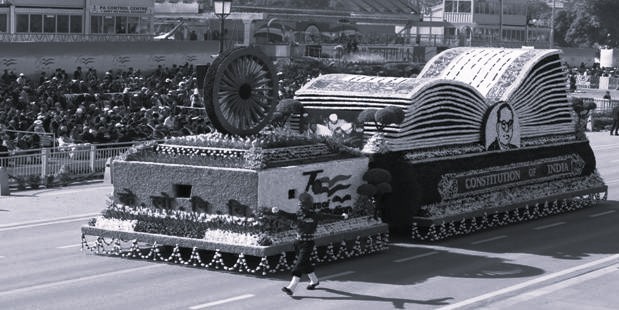
The Constitution is not just a book; it is a sacred text regarding the rights and duties of citizens and the structure of the government. Drafted under the leadership of Dr. B.R. Ambedkar, this Constitution ensured equality for every individual regardless of caste, creed, religion, or gender. It mandated that everyone, from the President, the highest office in the land, to the common citizen, must abide by the law.
Vande Mataram: A 150-Year Glorious History
The government has chosen "Vande Mataram -150 Years" as the theme for the 2026 Republic Day. This year’s celebrations are intricately woven around this national song. The mantra of 'Vande Mataram' ignited the fire of revolution during the freedom struggle and united millions of Indians. Written by Bankim Chandra Chatterjee for his novel Anandamath , this song completes 150 years, and the milestone is being celebrated with great pomp. This slogan once struck fear into the hearts of British rulers and stood as a personification of patriotism. By centering the 2026 parade on the theme of 'Vande Mataram,' the nation proudly showcases its heritage and the glory of the national song to the younger generation.
International Relations: Global Partnerships
Inviting a foreign leader as the 'Chief Guest' for Republic Day is a grand tradition. It is more than a courtesy; it is a testament to India’s strategic and diplomatic ties with the world. Through this tradition, India conveys the philosophy of "Vasudhaiva Kutumbakam" (The World is One Family).
In 2026, it is a matter of great pride that Ursula von der Leyen , President of the European Commission, and António Costa , President of the European Council, are attending as Chief Guests. This visit strengthens the strategic relations between India and European nations. The EU leaders will be on an official visit from January 25 to 27, 2026, and will co-chair the 16th India-EU Summit. Cooperation in trade, technology, security, and global governance is expected to expand further. Such high-profile participation highlights India’s growing influence and stature on the global stage.
Modern Military Techniques and Public Participation
For the first time in this year’s parade, the Indian Army will demonstrate its strength in a ‘Battle Array’ format, showcasing modern warfare tactics and the readiness of our forces. Furthermore, the celebrations have evolved from being VIP-centric to people-centric. Farmers, students, women from self-help groups, and common citizens are now given priority as ‘Special Guests.’
From Purna Swaraj to the Republic
The choice of January 26 as Republic Day is rooted in a heroic history:
Purna Swaraj Resolution (1930):
In 1929, under the leadership of Jawaharlal Nehru at the Lahore Congress, the 'Purna Swaraj' (Complete Independence) resolution was passed. Consequently, January 26, 1930, was celebrated as the first Independence Day across the country. To honor that pledge, the same date was chosen for the implementation of the Constitution.
Efforts of the Constituent Assembly:
Drafting the Constitution was a monumental task. Starting on December 9, 1946, nearly 300 members studied various global constitutions and adapted them to Indian social conditions. After two years, eleven months, and seventeen days of rigorous deliberation, it was adopted on November 26, 1949.
Spectacular Sights at Kartavya Path
Republic Day is synonymous with the parade at Kartavya Path (formerly Rajpath). The day begins with the Prime Minister paying homage to fallen heroes at the National War Memorial . Subsequently, the President unfurls the National Flag. As the Commander-in-Chief of the Armed Forces, the President receives the salute from the Army, Navy, and Air Force. Indigenously developed tanks and missiles stand as a testament to our military self-reliance.
Military Parade:
A disciplined march by the three wings of the armed forces, accompanied by patriotic tunes from military bands, fills every Indian with pride. The 'Fly-Past' by the Indian Air Force, featuring daring maneuvers by fighter jets, leaves the audience spellbound.
Tableaux Presentation:
The tableaux represent a "Mini India," showcasing the cultural beauty of states like Kerala, the grandeur of Telangana, or the spirituality of Uttar Pradesh. In 2026, around 30 tableaux based on themes like 'Vande Mataram' and 'Atmanirbhar Bharat' are being presented, highlighting "Unity in Diversity."
MY Bharat, Digital Republic, and Schools
The government is using digital platforms like MyGov and MY Bharat to engage the youth through essay writing, painting, and quiz competitions. In schools, the atmosphere is festive. After the flag hoisting and patriotic performances, the traditional distribution of chocolates and sweets brings joy to children, creating sweet, lifelong memories of patriotism.
Atmanirbhar Bharat: A Self-Reliant Nation
The 2026 celebrations place a significant emphasis on 'Make in India.' From defense technology to ISRO’s space achievements and the burgeoning startup ecosystem, India is evolving from a global follower to a global leader. This journey from "Make in India" to "Make for the World" is transforming India into an economic and strategic superpower.
Padma Awards: National Honors
On the eve of Republic Day, the President announces the Padma Awards - Padma Vibhushan, Padma Bhushan, and Padma Shri. These honor excellence in various fields like art, education, sports, and social service. The recognition of 'Unsung Heroes'. those who serve society without seeking limelight, adds profound meaning to the Republic Day celebrations.
Beating Retreat: The Grand Conclusion
The festivities culminate on January 29 with the ‘Beating Retreat’ ceremony at Vijay Chowk. As the sun sets, military bands play soul-stirring tunes, concluding with the National Anthem, marking the official end of the Republic Day celebrations.
Republic Day is a celebration of our faith in democracy. Remembering the sacrifices of our freedom fighters and respecting the rights granted by our Constitution, we must pledge to be responsible citizens. Inspired by 'Vande Mataram,' we must strive to make India a "Viksit Bharat" (Developed India) by 2047.