
The El Niño Effect: How It Could Redraw India's Climate and Economy
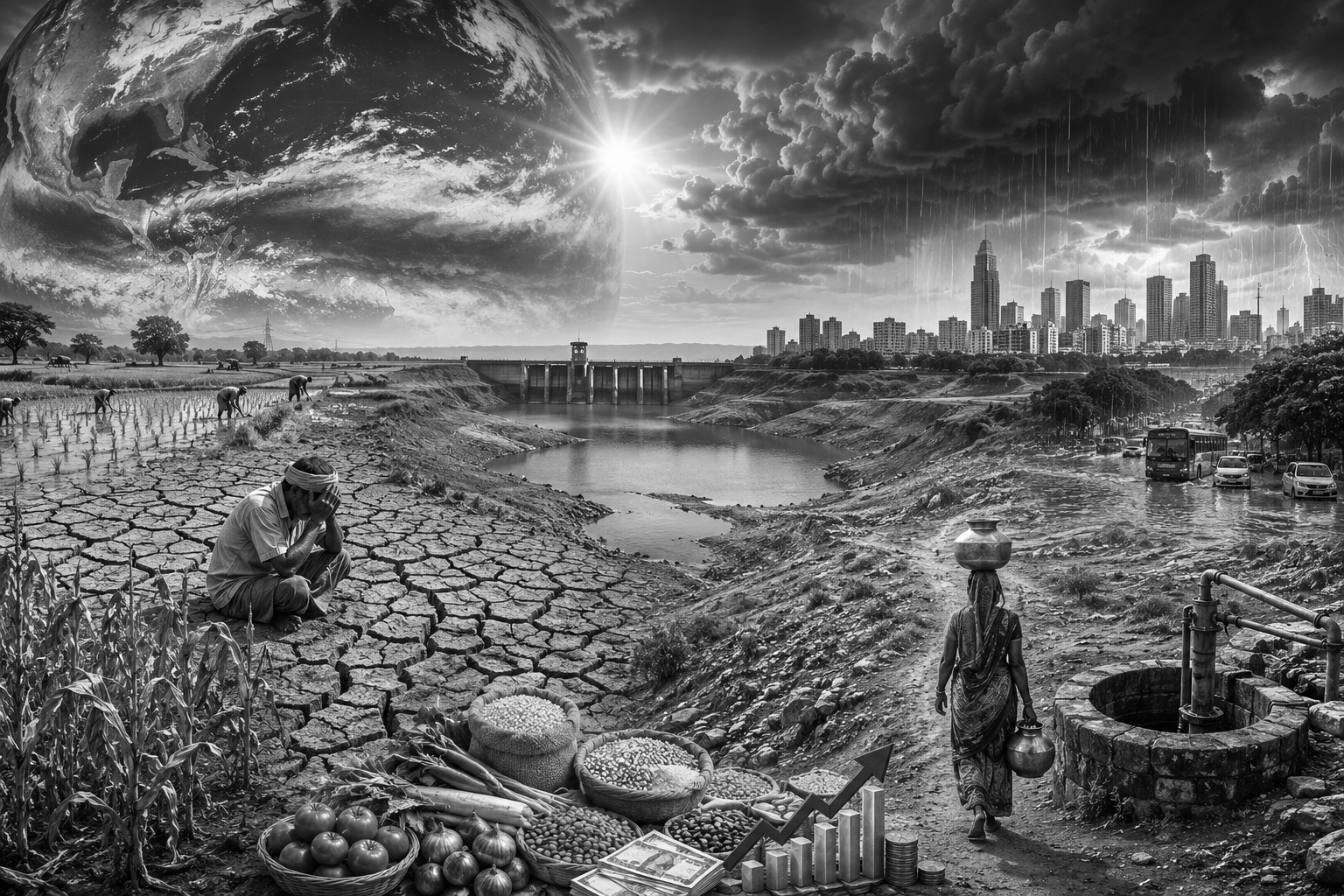
For a country where the southwest monsoon is often described as the lifeline of its economy, a climate event unfolding thousands of kilometres away in the Pacific Ocean is commanding extraordinary attention. Scientists, policymakers and disaster management agencies are closely watching the rapid development of El Niño , a naturally recurring climate phenomenon capable of reshaping global weather patterns. From rainfall and crop production to water availability, inflation, trade and financial markets, its ripple effects extend across continents. With the World Meteorological Organization (WMO) warning of a high probability of a moderate-to-strong El Niño this year and the India Meteorological Department (IMD) forecasting a below-normal monsoon, India is preparing for what could become one of its biggest climate and economic challenges of 2026.
The WMO has said there is an 80% probability of El Niño developing during June-August 2026 and more than a 90% chance that it will continue until at least November . Most global climate models indicate the event is likely to be moderate to strong , increasing the risk of extreme weather, higher temperatures and disrupted rainfall across many parts of the world. Meanwhile, the IMD has confirmed that El Niño conditions have already developed and revised its seasonal outlook, forecasting below-normal southwest monsoon rainfall at around 90% of the Long Period Average (LPA) , with nearly a 60% probability of deficient rainfall .
What Exactly is El Niño?
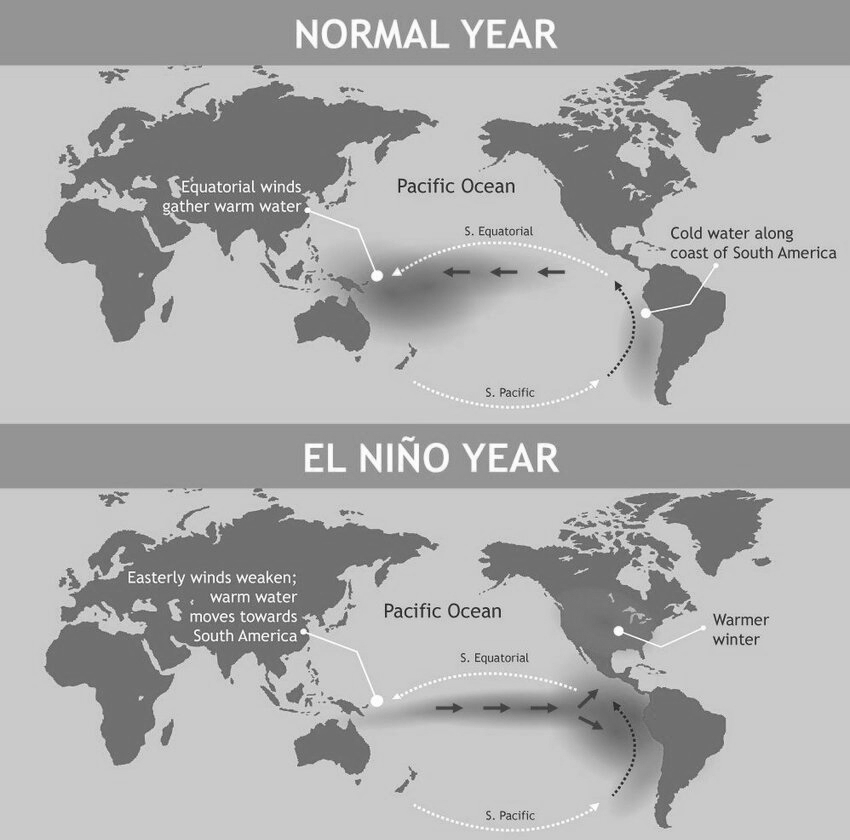
El Niño is the warm phase of the El Niño-Southern Oscillation (ENSO) , a naturally recurring ocean-atmosphere phenomenon that develops every two to seven years . Under normal conditions, strong trade winds push warm surface waters across the Pacific towards Indonesia and Australia, allowing cold, nutrient-rich waters to rise near South America. During an El Niño event, these trade winds weaken, allowing warm waters to spread eastward across the central and eastern Pacific. This alters atmospheric circulation, shifts rainfall patterns and changes temperatures across much of the globe.
Although the phenomenon originates in the Pacific Ocean, it influences weather systems thousands of kilometres away through atmospheric teleconnections . Scientists note that El Niño itself is not caused by climate change. However, a warmer atmosphere amplifies its consequences, making droughts, floods and heatwaves more severe.
Why the World Pays Attention
Every El Niño is unique, but history shows a familiar pattern. Countries such as Australia, Indonesia, India, Central America and southern Africa often face prolonged droughts, while regions including Peru, Ecuador, the southern United States, the Horn of Africa and parts of South America tend to experience heavier rainfall and flooding.
The consequences extend beyond weather. Reduced agricultural production drives up prices of commodities such as rice, wheat, coffee, cocoa, sugar and palm oil , disrupting global supply chains and contributing to food inflation. Marine ecosystems are also affected as warmer Pacific waters suppress nutrient-rich upwelling, reducing fish populations and impacting fisheries along the South American coast.
India's Monsoon Under Pressure
India remains one of the countries most vulnerable to El Niño because the southwest monsoon provides nearly 75–80% of the nation's annual rainfall . Agriculture, drinking water, hydropower and rural livelihoods all depend heavily on a timely and well-distributed monsoon.
The IMD has clarified that a below-normal monsoon does not necessarily mean drought across the country. Instead, India is expected to witness erratic rainfall , characterised by prolonged dry spells punctuated by short bursts of intense rainfall. This uneven distribution often proves more damaging than uniformly low rainfall, as crops suffer from moisture stress while sudden downpours increase the risk of flooding and soil erosion.
Early June recorded a rainfall deficit of nearly 40% , though widespread showers in early July narrowed the national shortfall. Nevertheless, meteorologists expect El Niño to strengthen through the monsoon season, increasing the likelihood of weaker rainfall across several parts of western and southern India.
Agriculture Faces the Greatest Risk
The first and most immediate impact of El Niño is felt in agriculture. Nearly half of India's cultivated land remains rain-fed , making farmers highly dependent on seasonal rainfall. A delayed or weak monsoon can postpone sowing, reduce cultivated acreage and expose crops to prolonged moisture stress during critical growth stages.
The Kharif season is particularly vulnerable, affecting crops such as paddy, cotton, soybean, maize, groundnut and pulses . If El Niño persists into winter, the Rabi season could also come under pressure as higher temperatures reduce yields of wheat, mustard and chickpea . Horticultural crops including mango, banana, tomato, onion, grapes and citrus fruits may suffer from poor flowering, reduced fruit quality and lower productivity, while fodder shortages could affect livestock and dairy production.
Recognising these risks, the Centre has identified nearly 200 vulnerable districts and initiated contingency planning. Farmers are being encouraged to cultivate short-duration and less water-intensive crops such as maize, pearl millet and green gram wherever feasible.
The Hidden Water Crisis
One of the least discussed but most serious consequences of El Niño is its impact on groundwater . Weak monsoon rainfall means fewer opportunities for aquifers to recharge. To compensate, farmers increasingly extract groundwater for irrigation, accelerating the depletion of already stressed aquifers.
States including Punjab, Haryana, Telangana, Andhra Pradesh, Karnataka, Gujarat and Maharashtra are particularly vulnerable because agriculture in these regions depends heavily on groundwater. Lower rainfall also reduces inflows into reservoirs, affecting irrigation, drinking water supply and hydropower generation.
For metropolitan cities, the challenge extends beyond agriculture. Water shortages expose weaknesses in urban planning, forcing cities to depend on multiple water sources instead of relying solely on rivers and reservoirs.
Economic Shockwaves Beyond Farms
El Niño is not merely an agricultural concern it is a macroeconomic challenge. Lower crop production often pushes up prices of rice, pulses, vegetables, fruits and dairy products , adding to food inflation and influencing monetary policy. Higher temperatures simultaneously increase electricity demand for cooling, while declining reservoir levels reduce hydropower generation, forcing greater reliance on coal-based power.
Trade patterns may also shift. India could witness lower exports of rice, sugar, cotton, tea and spices , while increasing imports of edible oils, pulses and thermal coal . Globally, commodity markets often become volatile as production declines in multiple countries, affecting supply chains and increasing transportation and logistics costs.
Financial markets are not immune either. Rural demand-driven sectors such as automobiles, tractors, fertilisers, banks and FMCG companies often come under pressure when farm incomes decline. Conversely, companies engaged in water infrastructure, irrigation systems, power utilities, renewable energy and cooling technologies may benefit from higher demand.
Where the Impact Will Be Strongest
Historically, the most vulnerable regions include Rajasthan, Punjab, Haryana, western Uttar Pradesh, Madhya Pradesh, Chhattisgarh, Vidarbha, Marathwada, northern Karnataka, Telangana, Rayalaseema in Andhra Pradesh , and Saurashtra and Kutch in Gujarat . These areas depend heavily on monsoon rainfall, contain extensive rain-fed agricultural land and already face significant groundwater stress.
However, scientists caution that El Niño alone does not determine India's monsoon. Other climate drivers, particularly the Indian Ocean Dipole (IOD) , can either intensify or offset its effects. The IMD expects the IOD to remain neutral initially before potentially turning positive later in the season, offering some hope of moderating El Niño's influence.
Preparing Before the Crisis
Governments worldwide increasingly treat El Niño as a multi-hazard disaster risk rather than merely a weather event. Preparedness now focuses on early warning systems, drought contingency plans, reservoir management, groundwater recharge, Heat Action Plans, disease surveillance and flood preparedness.
Indian cities are also strengthening long-term water resilience. Hyderabad is developing a 2,000 MLD Greywater Bank and constructing 50,000 groundwater recharge pits to improve water security. Chennai , after its 2019 'Day Zero' crisis, has expanded rainwater harvesting, wastewater recycling and desalination. Bengaluru is promoting groundwater recharge and wastewater reuse, while Delhi and Mumbai are investing in rainwater harvesting, wetland restoration and climate-resilient urban infrastructure. National initiatives such as AMRUT 2.0 , Jal Shakti Abhiyan and the Catch the Rain campaign are further encouraging integrated urban water management across Indian cities.
For India, El Niño is ultimately a reminder that climate resilience is no longer optional. While science cannot prevent the phenomenon, accurate forecasting and timely planning can significantly reduce its impact. As weather becomes increasingly erratic in a warming world, the ability to conserve water, adapt agriculture and strengthen disaster preparedness will determine whether El Niño becomes a temporary climate challenge or a prolonged socio-economic crisis.