
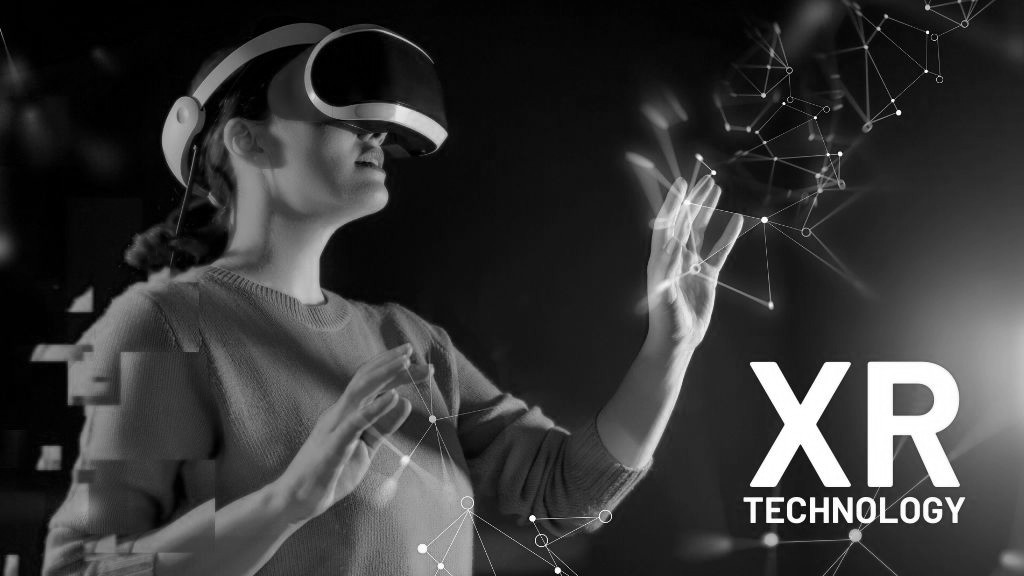
The Dawn of Spatial Computing - Extended Reality and the End of the Flat Screen
A new dimension of digital interaction is rapidly moving beyond science fiction, challenging the two-dimensional screen interfaces that have defined personal computing for decades. Known as Extended Reality (XR), this technology is far more than an incremental update; it represents a fundamental shift in how humans interact with digital information, blurring the lines between the physical and the virtual worlds. By combining the immersive power of virtual environments with the informational utility of augmented overlays, XR is poised to redefine nearly every sector of our lives, from the factory floor to the doctor's office and our own living rooms.
Decoding the Continuum - What is Extended Reality (XR)?
Extended Reality (XR) serves as the encompassing term for all technologies that augment, merge, or replace our real-world view with digital content. The ‘X’ in XR is essentially a variable, a placeholder for the spectrum of immersive technologies, including Virtual Reality (VR), Augmented Reality (AR), and Mixed Reality (MR). Understanding this continuum is key to grasping the technology's potential.
At one end of the spectrum is Virtual Reality (VR). This is the oldest and most familiar form, achieved by wearing a headset that completely isolates the user from their physical surroundings. VR plunges the user into a completely simulated, 360-degree digital world, allowing for total immersion. This capability makes it an unparalleled tool for high-stakes training, immersive gaming, and simulating environments that are too dangerous or expensive to visit in person.
Moving toward the middle is Augmented Reality (AR). AR does not replace the real world; instead, it overlays digital information, images, or 3D models onto the user’s live view of the physical environment, often utilizing smartphone cameras, tablets, or purpose-built smart glasses. Popular examples like navigation apps displaying routes on the road ahead or retail applications allowing a virtual "try-on" demonstrate AR’s ability to enhance reality without completely separating the user from it.
Finally, the most sophisticated evolution is Mixed Reality (MR). This technology goes a step further than AR by allowing virtual objects to not only appear in the real world but also to interact with and respond to the physical environment in real-time. For example, a digital graphic might cast a shadow on a real table, or a user’s hand might be able to pick up and manipulate a virtual gear. MR requires advanced hardware, often combining outward-facing cameras, depth sensors, and powerful processing to create a seamless, cohesive blend where digital and physical objects co-exist and influence each other. XR acts as the collective banner under which all these forms from the fully virtual to the augmented and mixed continue to evolve.
The Paradigm Shift - How XR Differs from Traditional Computing
The crucial distinction between Extended Reality and conventional computing such as interacting with desktops, laptops, or even touch-based mobile devices lies in the shift from two-dimensional interfaces to three-dimensional, spatial experiences.
Traditional computing is passive and constrained. The user is a detached observer, looking at information displayed on a flat screen. The input methods are abstract: a mouse, a keyboard, or a swipe on glass. These tools serve as intermediaries, translating complex human intent into simple digital commands. Even viewing a sophisticated 3D architectural model on a desktop still requires interacting with it through flat 2D controls, which inherently limits comprehension of true scale and spatial relationships.
XR, conversely, is active, immersive, and spatial. It embodies the concept of spatial computing, where virtual elements are anchored to, and interact with, the physical world. Instead of simply looking at a spreadsheet on a monitor, an XR user can be surrounded by the data, manipulating interactive 3D charts with natural hand gestures, or walking around a full-scale virtual prototype in real space. The interface is no longer a screen; the interface is the world itself.
This change facilitates a much higher degree of experiential learning and sense of presence. In a traditional video meeting, colleagues see flat images of each other; in an XR collaborative space, they see full-size avatars, share the same virtual table, and can jointly manipulate a 3D product, fostering a level of non-verbal communication and engagement impossible with a webcam. By replacing abstract controls with natural inputs like gaze tracking, voice commands, and hand gestures, XR makes the human-computer interaction intuitive and immediate, leading to significantly better information retention and greater efficiency in complex tasks.
Transforming Daily Life
The benefits of integrating Extended Reality into our daily lives are profound and far-reaching, fundamentally changing the way we learn, maintain health, and consume goods.
In Education, XR liberates students from the limitations of the textbook. Instead of merely studying diagrams of human anatomy, students can wear a headset and virtually dissect a three-dimensional, beating heart, or take a historical journey to Ancient Rome, walking the streets as they once were. This multisensory, active engagement transforms abstract concepts into tangible, memorable experiences, accelerating learning and skill acquisition across all ages and subjects.
Healthcare is undergoing one of the most significant transformations. Surgeons can utilize VR simulations to repeatedly practice intricate and rare procedures in a safe environment before stepping into an operating room. AR overlays can guide nurses during tasks like drawing blood by highlighting veins beneath the skin, or assist doctors by displaying real-time patient data and imaging directly into their line of sight during surgery. Furthermore, VR is proving invaluable in non-invasive patient care, used successfully for pain management by distracting patients during painful therapies, and for rehabilitation by creating engaging, tracked exercise environments for physical therapy.
For Retail and E-commerce, XR solves the age-old problem of shopping online: the inability to physically experience a product. AR applications allow users to virtually place furniture into their homes, or "try on" clothes, jewelry, and makeup using their smartphone or smart glasses camera. This not only enhances the customer experience but dramatically reduces expensive product returns, simultaneously boosting consumer confidence and increasing sales conversions. It turns the buying process into a deeply personalized and practical interaction.
The Industrial Revolution of Experience
Beyond personal use, XR is revolutionizing core industrial and business processes, creating safer, more efficient, and more collaborative workplaces.
In Manufacturing and Engineering, the transition from physical prototyping to virtual design saves immense time and resources. Engineers can create and manipulate "digital twins" exact virtual replicas of machines, factories, or aircraft. Using MR, technicians can receive hands-free, step-by-step assembly or repair instructions overlaid onto the real machine they are working on, significantly reducing errors and downtime. This capability is critical for complex maintenance tasks, allowing remote experts to guide on-site workers across the globe as if they were standing beside them.
Workplace Collaboration is being fundamentally reimagined. For global enterprises, XR provides virtual meeting rooms where team members, regardless of their geographical location, can collaborate on 3D models and visualize complex data simultaneously. This shared spatial experience leads to more effective decision-making and project management than traditional 2D video conferencing.
In the Defense and Public Safety sectors, VR simulations provide hyper-realistic, high-risk training scenarios for soldiers, firefighters, and first responders without any actual danger. Whether it is practicing combat manoeuvres, emergency landing procedures for pilots, or navigating a burning building, the ability to train in a fully immersive, repeatable, and measurable digital environment improves readiness and saves lives.
In summary, Extended Reality is not merely a collection of devices but the blueprint for the next computing platform. It is the evolution from passively looking at screens to actively stepping inside our digital content. As hardware becomes lighter, faster, and more accessible, the integration of VR, AR, and MR into our daily routines will accelerate. From personalized education and surgical precision to global remote collaboration and immersive shopping, XR promises to deliver unparalleled levels of efficiency, accessibility, and human-machine connection, solidifying its place as the defining technology of the coming decade.