
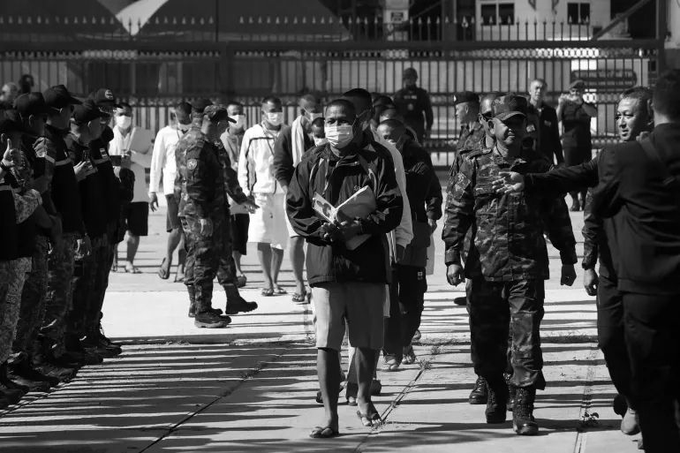
Thailand releases 18 Cambodian soldiers after five months in captivity
Thailand on Wednesday repatriated 18 Cambodian soldiers it had held since late July, three days after the two countries agreed to a renewed ceasefire to end weeks of deadly border clashes. The troops, detained for 155 days , were returned at the Prum International border crossing in Pailin province after both sides agreed to halt hostilities following intense fighting that cost dozens of lives and displaced hundreds of thousands.
The handover fulfilled a key clause of a joint statement signed on December 27, 2025, at a special meeting of the Cambodia‑Thailand General Border Committee . That agreement stipulated that the soldiers would be released after the ceasefire held for a full 72 hours. The ceasefire took effect at noon on Saturday, and although Thai authorities briefly delayed the transfer by a day over alleged breaches, including reported drone activity, the repatriation ultimately proceeded on schedule.
Thai officials described the release as a demonstration of goodwill and confidence‑building and said the soldiers were treated in line with international humanitarian law, including provisions of the 1949 Geneva Conventions and periodic visits by the International Committee of the Red Cross. Cambodian authorities welcomed the return as a critical step toward peace and normalization, underscoring that no soldier would be left behind.
Video footage and official statements from Phnom Penh showed crowds cheering the returning soldiers as they arrived on Cambodian soil and prepared for further transport to the capital. Cambodian government officials said the release was conducted under international observation, including by ASEAN observer teams and the ICRC, and expressed hope that it would bolster mutual trust.
The repatriation followed intense fighting in December that marked one of the most destructive escalations of the long‑running border dispute. The renewed clashes included artillery barrages, exchanges of rocket fire, and air operations that killed at least 101 people and displaced more than half a million civilians on both sides before the latest ceasefire was agreed.
Amid the conflict, a controversial incident further inflamed tensions when Thai military personnel demolished a statue of the Hindu deity Lord Vishnu in the An Ses area near the disputed border. Cambodia condemned the action, saying the statue, built in 2014, stood within its territory and denouncing its destruction as disrespectful. India also expressed concern, saying acts that damage religious symbols hurt the sentiments of followers and urging both nations to resolve their dispute through dialogue and diplomacy. Thai authorities responded that the statue was not a registered religious site and was removed for security and administrative reasons following the Thai capture of the area, and not out of disrespect for religion.
The context for the soldiers’ release dates back to July, when 20 Cambodian soldiers were captured by Thai forces in the hours after an earlier truce took effect. Cambodia characterized their capture as a breach of the ceasefire, while Thailand said its forces acted in self‑defence against what it saw as an incursion. Two of the soldiers were repatriated within days early in their detention for medical reasons.
Ceasefire talks and peace efforts have involved multiple regional players. A previous ceasefire in October was promoted by Malaysia and the United States before that agreement faltered amid continued hostilities. The joint statement accompanying the current ceasefire also calls for frozen troop movements, cooperation on demining, and steps to allow displaced civilians to return home safely.
Despite repeated attempts at peace, deeper underlying issues over border demarcation and sovereignty remain unresolved, and the situation remains fragile. Both sides have pledged to sustain dialogue and avoid provocative actions that could reignite full‑scale hostilities.