
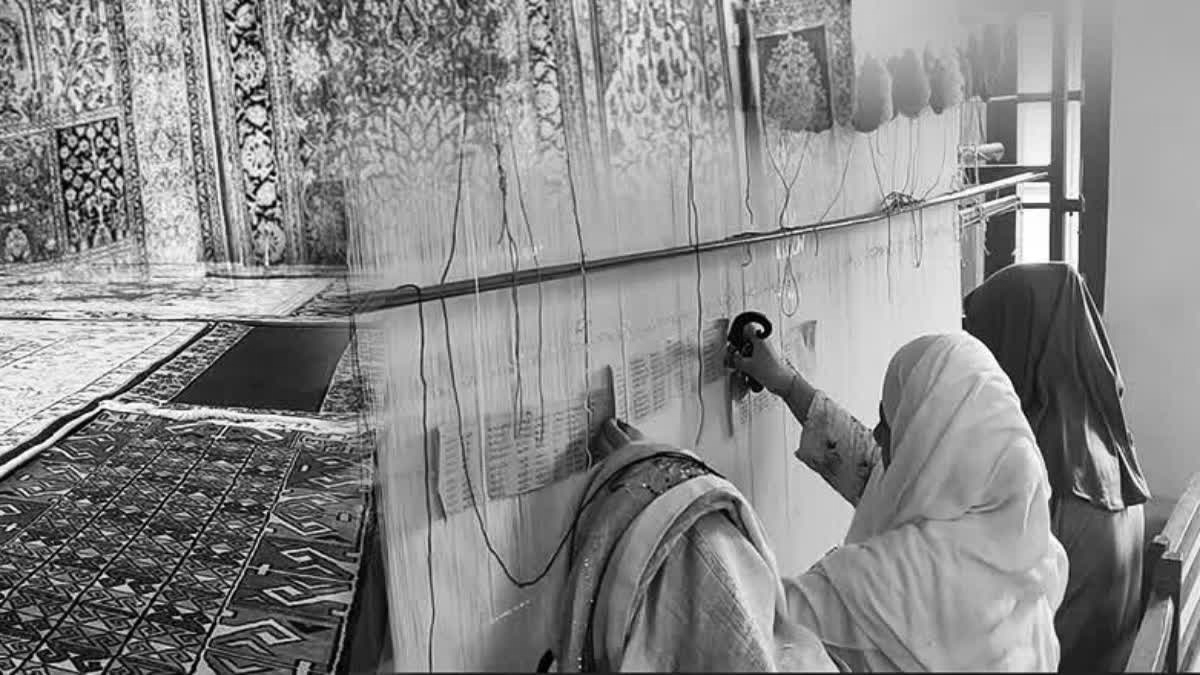
Textile ministry sanctions ₹51 lakh for 100 modern carpet looms in J&K
The Union Ministry of Textiles has sanctioned ₹51 lakh for the procurement and distribution of 100 modified carpet looms among artisans in Jammu and Kashmir, under the Wool Processing Scheme of the Central Wool Development Board (CWDB). The initiative marks a focused intervention to modernize traditional carpet weaving a heritage craft known globally as the pride of Kashmir’s handloom legacy.
According to officials, each loom costs ₹51,000 and has been specially designed by the Indian Institute of Carpet Technology (IICT), Srinagar. These new looms feature ergonomic backrests and seating support, addressing long-standing health and posture issues faced by carpet weavers who spend hours at their craft.
Funding and implementation :
Out of the total sanctioned amount, the Ministry has already released ₹30.60 lakh as the first tranche for procurement. Once the utilisation certificate for this installment is received, the remaining amount will be disbursed in two further installments.
Officials said the Department of Handicrafts and Handloom, Kashmir, will oversee distribution and beneficiary verification. Interested weavers have been asked to contact the offices of the Assistant Director (Handicrafts/Handloom) in their respective districts to complete formalities.
A modern take on tradition :
Zubair Ahmad, Director of IICT Srinagar, welcomed the Ministry’s decision to scale up distribution of what he called “Modified Modern Steel Carpet Looms.” “These looms are designed keeping in view the health concerns and productivity needs of the artisans. A comfortable workstation ensures longer engagement and better craftsmanship,” he noted.
He added that the modification initiative follows extensive field trials with local weavers to ensure the equipment’s suitability to Kashmir’s unique weaving style and climatic conditions.
Enhancing livelihoods and productivity :
While the project’s immediate goal is to improve working conditions, officials said the long-term vision is to increase output and income levels in the region’s traditional carpet sector, a key component of Kashmir’s handicraft exports.
Currently, the state’s carpet industry employs an estimated 25,000–30,000 artisans, contributing significantly to India’s handmade carpet exports, valued at over ₹4,000 crore annually. The upgraded looms are expected to enhance weaving speed and reduce physical strain, particularly benefiting women artisans, who constitute a major share of the workforce.
Part of a broader push :
Th e Wool Processing Scheme is one of CWDB’s key initiatives aimed at upgrading equipment and processes in India’s wool and carpet sectors. The program supports modernisation, quality improvement, and capacity-building among weavers, particularly in regions with rich craft traditions.
However, experts have noted the need for structured training programs alongside equipment upgrades to ensure artisans can fully leverage the new technology. The IICT is expected to conduct skill orientation workshops once the looms are distributed.
Need for long-term vision :
Industry observers say that for such interventions to create lasting impact, the government must integrate design innovation, branding, and market access with production support. Strengthening linkages between artisans, exporters, and digital marketplaces will be crucial in sustaining Kashmir’s global reputation for hand-knotted carpets. “Upgrading looms is only one part of the solution,” said an official familiar with the project. “Ensuring consistent demand, fair pricing, and access to export markets is equally vital for sustaining artisan livelihoods.”