
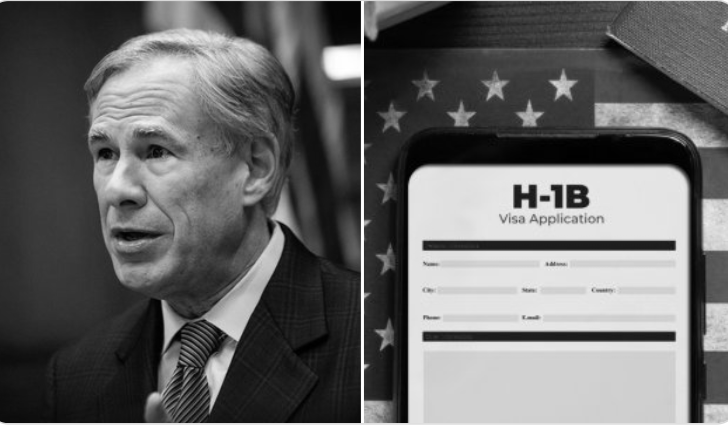
Texas halts new H‑1B visa petitions at state agencies, universities until 2027
Texas Governor Greg Abbott has directed all state agencies and public universities to stop filing new H‑1B visa petitions used to hire skilled foreign workers until May 31, 2027 , unless approval is granted by the Texas Workforce Commission. The January 27 order also requires agencies and universities to submit detailed reports by March 27 on current H‑1B employees, including their numbers, job titles, countries of origin, visa expiration dates, and proof that local talent was given a reasonable opportunity to apply.
The move affects institutions “controlled by a gubernatorially appointed head” and comes amid Republican claims of visa program abuse, alleging that H‑1B workers take jobs from qualified Americans. Abbott said the pause will give lawmakers time to “establish statutory guardrails for future employment practices regarding federal visa holders in state government” and allow Congress and the federal government to implement reforms.
Texas hosts tens of thousands of H‑1B visa holders, though relatively fewer work for state agencies and public universities. Among the institutions with the largest H‑1B populations are the University of Texas Southwestern Medical Center, Dallas (220–228 holders), Dallas ISD (230), Texas A&M University, College Station (214), University of Texas MD Anderson Cancer Center, Houston (171), University of Texas at Austin (169), and Texas Tech University, Lubbock (143) . In total, public universities in Texas sponsor roughly 1,200 H‑1B visa holders .
Supporters of the order say it prioritizes Texans for taxpayer-funded jobs , while critics warn it could slow innovation and affect patient care at top institutions such as MD Anderson Cancer Center. Nationwide, H‑1B visas are primarily used for technical roles, with 60% of approvals since 2012 in computer-related fields. Leading private employers in Texas include Cognizant Technology Solutions, with 3,172 H‑1B workers. Last year, companies such as Amazon, Microsoft, Apple, Google, and Tata Consultancy Services received the most H‑1B visas nationally.
Other states are also scrutinizing H‑1B hiring. Florida Governor Ron DeSantis called for fewer H‑1B hires, citing similar concerns, and the state’s Board of Governors will discuss pausing H‑1B recruitment in public universities.
Created under the 1990 Immigration Act , H‑1B visas allow American employers to hire foreign workers for three years, extendable to six. The annual cap is 65,000 visas, plus 20,000 for holders of a U.S. master’s degree or higher. Universities and non-profits are exempt from the cap. Abbott emphasised that “state government must lead by example,” signalling a broader Republican push to review and potentially reform the H‑1B program.