
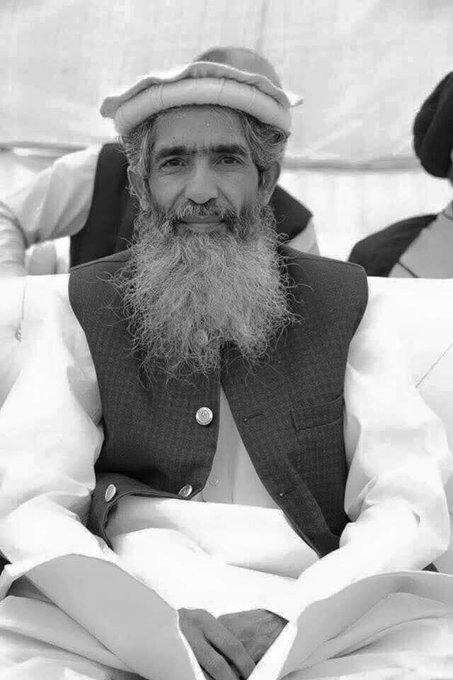
Terrorist Amir Hamza, LeT co-founder, shot outside news channel office in Lahore
Amir Hamza , a co-founder of Lashkar-e-Taiba (LeT) , was shot by unidentified gunmen in Lahore on Thursday and is currently in critical condition , according to local reports.
The attack took place outside a news channel office in the Pakistani city. According to available information, the assailants opened fire at Hamza while he was near the building, leaving him severely injured . He was rushed to a nearby hospital for emergency treatment, where doctors said his condition remains extremely serious.
In a statement, a Lahore Police official confirmed that officers responded to reports of firing by unidentified individuals at a vehicle belonging to the Chairman of Tehreek-e-Hurmat-e-Rasool Pakistan near Hamdard Chowk. The official added that the people inside the vehicle were not harmed in the incident. Police have issued a high alert in the area and launched a search operation to trace and arrest those responsible for the attack.
Hamza is widely known for his long association with militant networks in Pakistan. He co-founded Lashkar-e-Taiba alongside Hafiz Saeed and has been linked to several extremist activities, including attacks in India. A veteran of the Afghan mujahideen, Hamza also gained prominence for his speeches and writings promoting militant ideology.
He served as the founding editor of Lashkar’s magazine Majallah al-Daawa and authored several publications, including the 2002 book Qafila Da'wat aur Shahadat , which promoted extremist narratives.
In 2018, following financial crackdowns by Pakistani authorities on LeT-linked charities Jamaat-ud-Dawah and Falah-e-Insaniat Foundation , Hamza reportedly distanced himself from Lashkar. He later formed a splinter group called Jaish-e-Manqafa, which has been alleged to support militant operations, including in Jammu and Kashmir.
Hamza has also been designated a sanctioned terrorist by the US Treasury Department . Reports suggest he was once part of Lashkar’s central leadership and played a key role in fundraising, recruitment, and negotiating the release of detained militants.