
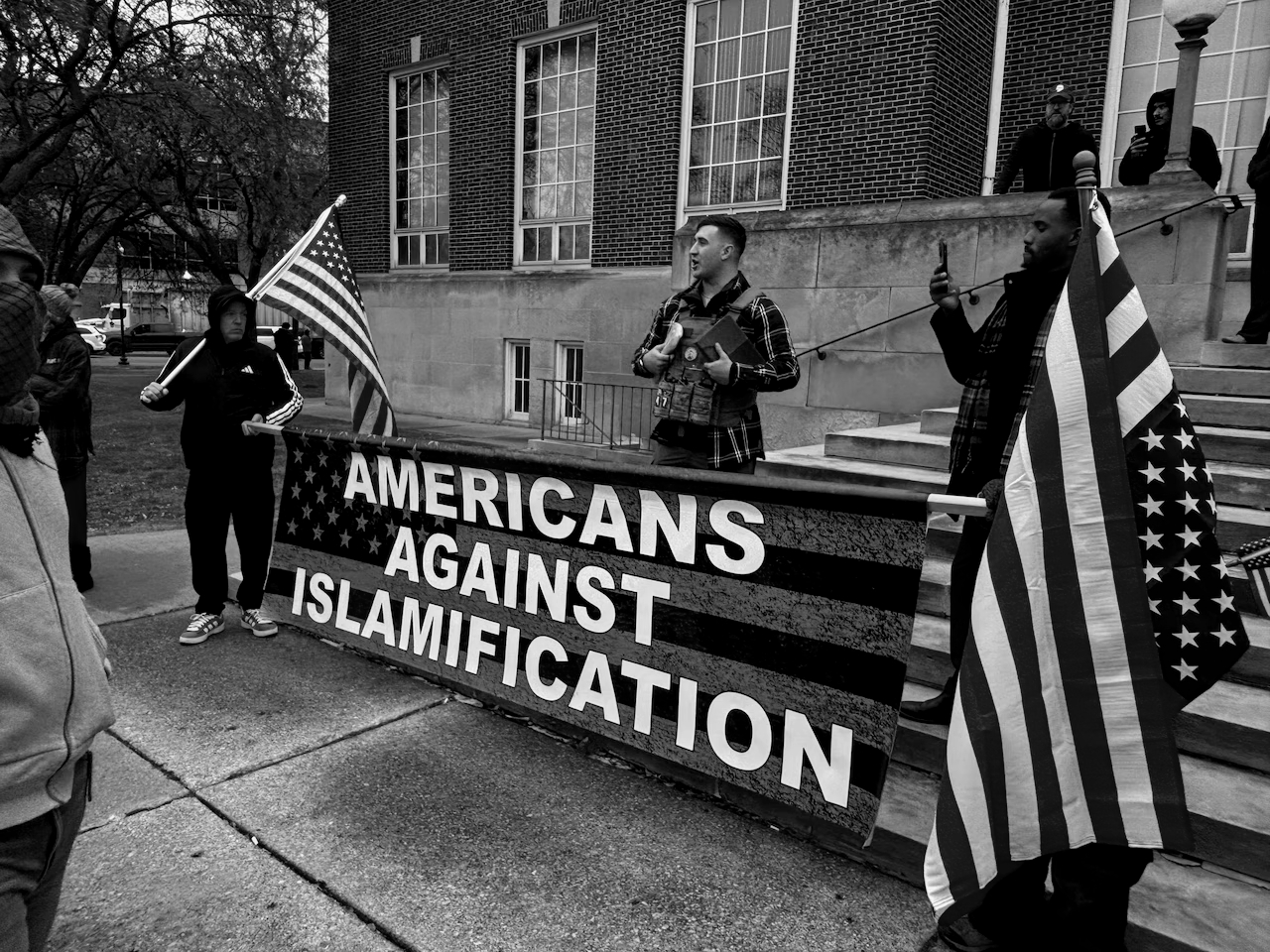
Tensions rise in Michigan as Dearborn faces Anti-Islam demonstrations
The city of Dearborn, Michigan, home to one of the largest Muslim populations in the United States, is preparing for heightened tension as a series of anti-Islam marches and armed demonstrations draw increasing national focus. At the center of the controversy is the “American Crusade,” a politically charged march organized by fringe Republican gubernatorial candidate Anthony Hudson. Known for his anti-Islam messaging, Hudson has repeatedly claimed without evidence that Islamic law threatens the city. His march, scheduled for November 18, will begin at Michigan Avenue and Schaefer Road before proceeding nearly two miles to City Hall, where he plans to speak. Local officials, civil rights groups, and faith leaders have denounced his rhetoric, and while Hudson predicts a large turnout, authorities expect far fewer participants.
Dearborn Police say they have coordinated with march organizers and are fully prepared to maintain order. However, community leaders believe Hudson’s demonstration is intended more to gain political attention than to address any real concern, describing the event as a provocation meant to stoke fear and hostility for electoral gain. They have urged residents to avoid confrontation and ignore the march altogether.
Compounding tensions is a separate anti-Islam rally set to take place outside the Islamic Center of America, one of the nation’s largest mosques. This gathering is drawing far-right groups and open-carry activists, some of whom have publicly expressed plans to arrive armed. State authorities, federal investigators, and local police are monitoring the situation closely, mindful of past clashes in Dearborn involving attempts to desecrate Islamic scripture and provoke worshippers. Security has been increased around mosques in both Dearborn and neighboring Dearborn Heights following recent threats and rising anti-Muslim rhetoric.
Participants expected at the protests include Hudson’s supporters, far-right networks known for extremist affiliations, and gun rights activists who frequently appear at political events with assault-style firearms. Meanwhile, Dearborn’s Muslim and Arab-American residents, heeding guidance from civic and religious leaders, plan to avoid counter-protests to prevent escalation. Community organizations have echoed this approach, stressing that engaging with the demonstrators would only amplify their message.
Dearborn’s current unrest reflects a wider national pattern of growing Islamophobic activism. Over the past several years, cities across the U.S. have seen anti-Sharia marches, protests outside mosques, and far-right gatherings aimed at Muslim communities. Dearborn itself has long been a flashpoint due to its sizable Muslim population. Earlier this year, an attempt by protesters to burn a Quran outside a local mosque made national headlines, leading to police intervention. Yet the city has also demonstrated strong communal solidarity, with tens of thousands participating in a major Shia Muslim Arbaeen procession that showcased Dearborn’s rich cultural identity.
Local officials and community leaders continue urging calm, reaffirming that security plans are in place and emphasizing that the demonstrations are attempts to provoke division. As the protests approach, Dearborn remains on alert, caught between politically motivated agitation, a resolute and resilient community, and the broader national struggle over identity, religion, and the consequences of inflamed political rhetoric.