
Temples or Toilets? YS Sharmila questions TTD funds use
Congress leader Y.S. Sharmila sharply criticized Chief Minister N. Chandrababu Naidu’s proposal to use Tirupati temple (TTD) funds for building temples in Dalit-majority localities. CM Chandrababu Naidu – head of the Telugu Desam Party (TDP) and a key ally of the BJP-led National Democratic Alliance – had directed the Tirumala Tirupati Devasthanams (TTD) board to construct new temples in underdeveloped Dalit colonies. The TTD’s Srivani Trust (funded by devotee donations) is specifically mandated to build Hindu temples in areas with large SC/ST/BC populations. In September 2025, the TTD board (with CM’s approval) announced a first phase of 1,000 new temples (about six per assembly constituency) to “promote Hindu dharma” and curb religious conversions. CM Chandrababu Naidu himself noted that ₹837 crore had already been spent on such projects and urged building more temples in remote villages. These plans were part of a broader “Dalit Govindam” outreach programme that had been initiated under previous governments (including YSR Reddy’s and Jagan Mohan Reddy’s administrations) and revived under Naidu.
• Plan details: According to official statements, the TTD board (chaired by TDP functionary B.R. Naidu) resolved to fund temples in Dalit colonies using Srivani Trust donations. Up to six temples per constituency were approved, at roughly ₹10–20 lakh each (with recent inflation adjustments). The stated aim was to strengthen Hindu faith among Dalits and check conversions. In total, the Srivani Trust has collected over ₹2,000 crore since 2019, far exceeding the ₹837 crore already spent on temple projects, according to CM Naidu.
• Trust objectives: The Srivani (Sri Venkateswara Aalayala Nirmanam) Trust was created in 2019 to promote “Sanatana Dharma” by constructing temples in SC/ST/BC areas, renovating old temples, and supporting struggling temples under the dhupa-deepa-naivedyam scheme. Its funds come from devotees (e.g. ₹10,000 donors receive special darshan). Critics note that the Trust’s charter explicitly includes temple-building in marginalized communities, but Sharmila and others argue those communities need schools, toilets and sanitation more than new temples.
Sharmila’s Criticisms and Demands
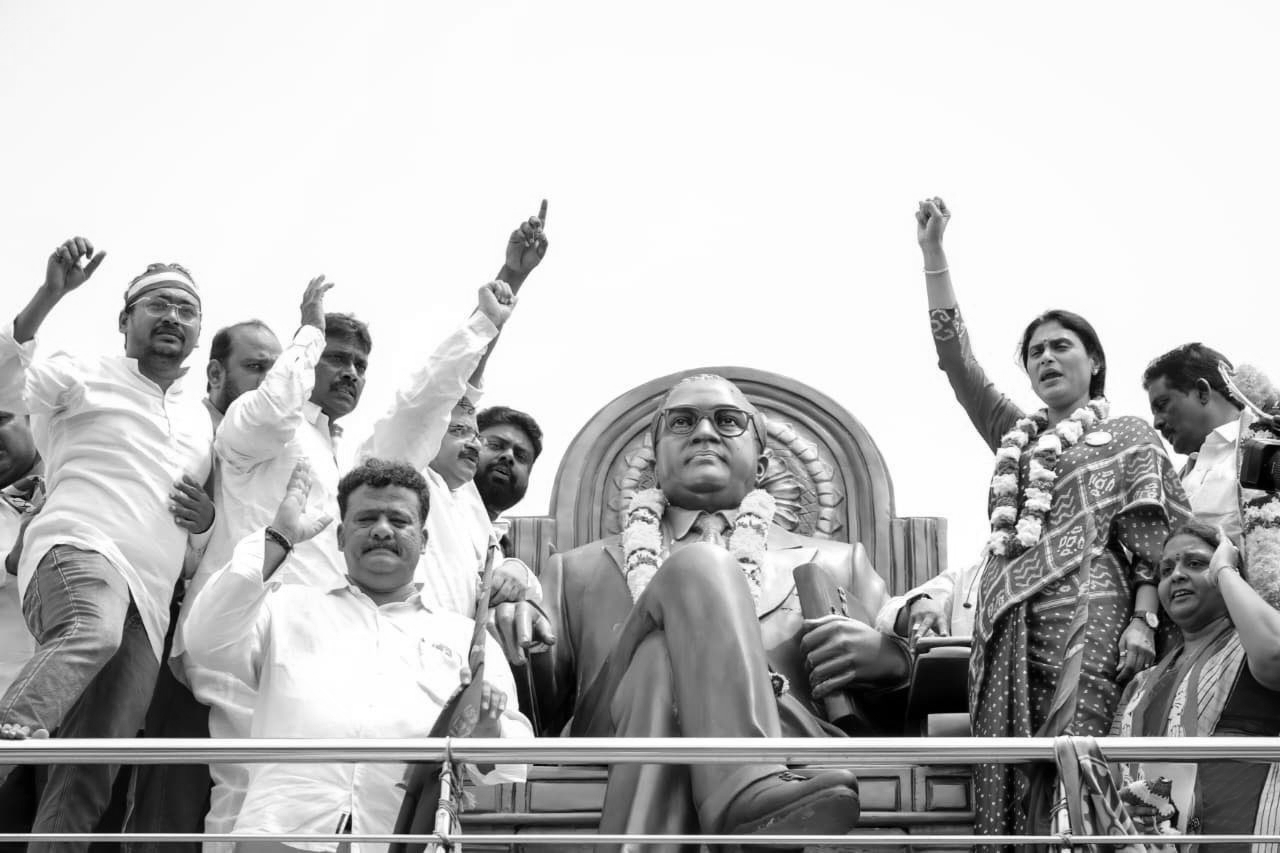
Andhra Pradesh Congress president Y.S. Sharmila – sister of former CM Jagan Mohan Reddy – argued that the temple initiative was a diversionary, ideological project that ignored Dalit welfare. Campaigning in Vijayawada’s Ajith Singh Nagar area, she demanded that “surplus TTD funds” be spent on infrastructure and basic needs in Dalit colonies instead of temples. Sharmila highlighted concrete deficiencies (for example, “200 girl students are compelled to use a single bathroom in a welfare hostel” in her constituency) to illustrate neglect of sanitation and housing. She put forward several pointed questions and allegations:
• Basic needs vs. temples: Sharmila asked, “Why don’t you use surplus TTD funds to develop Dalit colonies?”. She contrasted the temple scheme with the lack of schools, toilets, clean water and roads in Dalit areas, suggesting funds would do more good if spent on those facilities.
• Caste and priests: She questioned the logic of building temples in low-income Dalit neighbourhoods if the usual priestly class (upper-caste Brahmins) would still be appointed. “If temples are built in Dalit colonies, then who will be the priests in them? Will you appoint Brahmins as priests or Dalits?”. This rhetorical query underscored the potential caste insensitivity of the plan.
• Ideological charge: Sharmila framed the temple proposal as a vehicle for RSS/BJP Hindutva ideology . She warned that using a sacred institution like the TTD to push nationwide temple-building “violates the Constitution” (implying a breach of secularism). She accused Naidu of embracing a “right-wing agenda” by supporting BJP/RSS candidates (e.g. in the recent vice-presidential election). In her words, “India is a confluence of all religions, yet Naidu is trying to implement RSS principles where ‘only Hindus are considered humans’ and others are marginalised.”
• Demands: Sharmila called on the (NDA) government to “withdraw the temple construction decision” for Dalit colonies and instead concentrate on sanitation and development. She argued that if Naidu was genuinely interested in Dalit upliftment, he should address basic amenities (toilets, hostel facilities, water, etc.) rather than building temples.
• Political context: Her remarks came amid active campaigning, including allegations of “vote chori” (vote theft) by the ruling party. As Congress state chief, Sharmila was thus combining criticisms of development policy with broader political opposition to Naidu and the TDP-BJP alliance. Notably, the story quoted no immediate response from Naidu or the TDP.
Reactions from Dalit Leaders and Others
Sharmila’s stance was echoed by several Dalit and secular activists, who broadly blasted the temple scheme as misguided:
• RPI (Republican Party of India) – P. Anjaya: The Dalit leader P. Anjaya called the temple-building “merely religious propaganda” aimed at stopping conversions, asking pointedly whether Dalits really need temples or more schools and education. He argued that resources would be better spent on literacy and jobs than on new temples.
• CPM – Kandharapu Murali: CPI(M) leader Kandharapu Murali alleged that the TTD initiative was effectively a BJP/RSS agenda. He noted that building only small local temples (instead of integrating Dalits into major temples) “reinforces discrimination”. In his view, the focus on temple-building was a form of social engineering rather than genuine welfare.
• Ambedkar Mission – Sampath Kumar: Another Dalit activist, Sampath Kumar (Ambedkar Mission chairman), warned that the scheme “appears to be promoting religious hostility.” He asked bluntly how temple construction would truly benefit Dalits, and said that building schools and hospitals would have a far greater impact on the community’s welfare.
• Civil society: Many observers echoed these concerns, calling the “Dalit temples” programme “controversial” and an example of “Hindu evangelism”. They noted that if the TTD were sincerely concerned about Dalit welfare, it would prioritize social development, and appoint Dalits to leadership roles in the Devasthanam (none have yet reached top posts). The Federal (a news outlet) reported a “major pushback” from Dalit groups questioning whether the scheme honors Dalit rights and dignity.
Constitutional and Political Context
The debate touches on India’s secular framework. Critics point out that the Constitution guarantees equality and freedom of religion, discouraging state promotion of one faith over others. Sharmila invoked the Constitution directly, and civil-society commentators have noted that state-controlled temple trusts are expected to act neutrally and focus on social welfare. Using a public trust’s funds to further a particular religious agenda can be seen as blurring the line between religion and state.
Politically, the issue reflects Andhra Pradesh’s alliances. Chandrababu Naidu’s TDP is allied with the BJP at the national level, making CM Chandrababu Naidu’s government part of the ruling NDA coalition. Sharmila explicitly asked why the “NDA government” (i.e. the BJP-led coalition) was pushing this scheme. Her reference to supporting “RSS candidates” ties into the fact that TDP backed the NDA’s candidate in the 2022 Vice-Presidential election, showing Naidu’s alignment with the BJP/RSS bloc. In this charged atmosphere, Congress and allied parties characterize the temple plan as partisan Hindutva politics, while CM Chandrababu Naidu’s camp defends it as religious outreach.
In sum, Y.S. Sharmila accused CM Chandrababu Naidu of using Tirupati temple funds to advance a right-wing Hindu agenda at the expense of Dalit welfare. She demanded redirecting those resources to basic amenities like sanitation, schools and hostels in Dalit colonies. Other Dalit leaders echoed her criticism, calling for schools and infrastructure instead of temples. The controversy highlights tensions over secularism and social justice in Andhra Pradesh, with Chandrababu Naidu’s temple-building drive defended by his party as reviving cultural heritage, and opponents warning it violates constitutional equality and neglects underprivileged communities.