
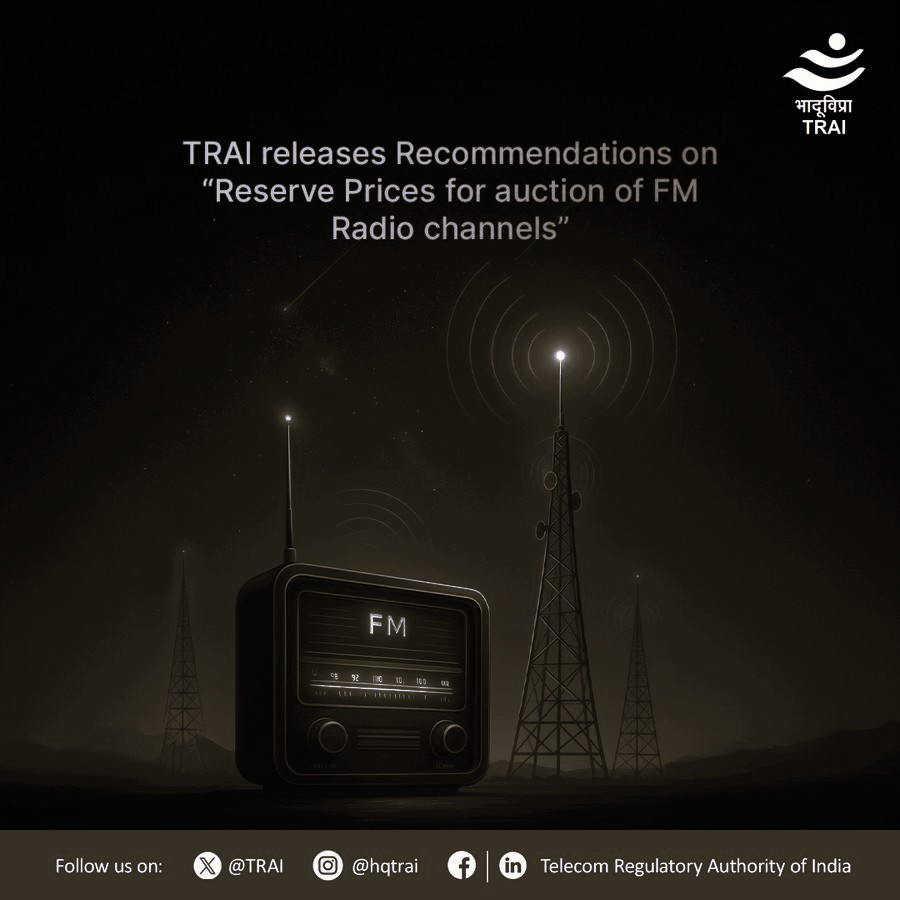
Telecom regulatory recommends simulcast mode, auctions for digital radio in 13 Cities
The Telecom Regulatory Authority of India (TRAI) has recently unveiled its comprehensive recommendations for a Digital Radio Broadcast Policy, marking a significant shift in the radio broadcasting landscape of the country. The policy is designed to modernize radio services, enhance audio quality, and provide diversified content delivery for both corporate and community radio sectors.
Under the new framework, corporate radio broadcasters are required to commence digital radio services in simulcast mode, while existing FM broadcasters have the option to migrate voluntarily. This simulcast approach allows the simultaneous broadcast of analog and digital signals, ensuring a smoother transition to digital platforms without disrupting existing services.
A key feature of the policy is the adoption of a single digital radio technology standard in India within the VHF Band II (88–108 MHz). This standardization is intended to streamline operations and ensure compatibility across broadcasting and receiving devices. TRAI has also proposed that new frequencies for digital radio be allocated through auctions, with reserve prices set for 13 major cities, including Delhi, Mumbai, Chennai, and Bengaluru. Additionally, a 15-year authorization period has been recommended, with eligibility criteria aligned with TRAI’s earlier broadcasting service guidelines. Broadcasters are expected to pay fees based on Adjusted Gross Revenue (AGR), with annual fees of 4% for major cities and 2% for border and hilly regions during the first three years.
While corporate broadcasters stand to gain significant advantages, the policy also benefits community radio stations. The introduction of 'Radio Broadcasting Infrastructure Providers' who can lease active and passive digital infrastructure allows community stations access to advanced technologies without substantial investment. Digital platforms further enable these stations to reach wider audiences and offer concurrent live streaming of terrestrial channels, enhancing content delivery and engagement.
TRAI has also suggested government advisories on the availability of digital radio receivers in mobile phones and car infotainment systems, which would support the adoption of digital radio services among smaller community broadcasters. Community radio in India plays a vital role in amplifying local voices, particularly in rural and underserved regions, providing culturally relevant programming tailored to the needs of their communities.
Notable community radio stations include Radio Bundelkhand in Chhatarpur, Madhya Pradesh, which focuses on local news, agricultural advice, and community issues; Mann Deshi Radio in Mhaswad, Maharashtra, which empowers rural women by discussing topics such as women’s rights, health, and education; Radio Madhuban in Mount Abu, Rajasthan, which promotes local culture, tourism, and development; Radio Namaskar in Bhubaneswar, Odisha, which broadcasts educational programs, health tips, and information on government schemes; and Radio Zindagi in Patiala, Punjab, which focuses on youth issues, education, and career guidance. By leveraging digital radio technology, these community stations are poised to expand their reach and impact, bridging information gaps where mainstream media may not reach effectively.
Prominent corporate radio broadcasters in India, such as Radio Mirchi, Red FM, Radio City, Big FM, and My FM, are expected to benefit immediately from this policy through improved content delivery, multiple channel broadcasts, and broader audience reach. These broadcasters, already established in the market, can leverage digital technology to provide superior audio quality and offer additional value-added services to listeners.
TRAI’s Digital Radio Broadcast Policy represents a forward-looking approach to modernizing India’s radio industry. By establishing a unified technology standard, facilitating infrastructure sharing, and encouraging a competitive auction process, the policy aims to foster innovation and inclusivity in broadcasting. While corporate broadcasters will experience enhanced operational and commercial advantages, community radio stations are equally positioned to benefit from increased access to technology and a wider reach, ultimately ensuring a more diverse and accessible radio ecosystem across the country.