
Telangana to Emerge as South Asia’s Textile Capital: CM Revanth Reddy
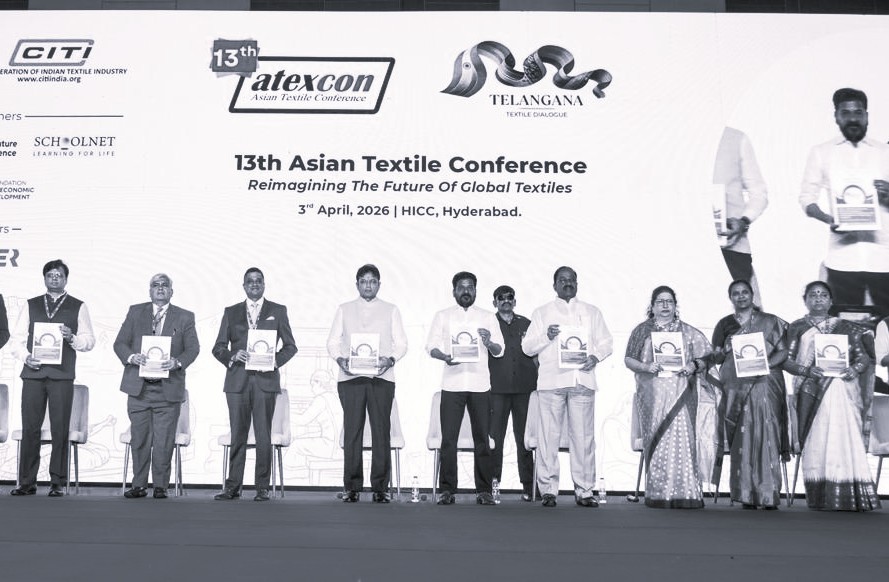
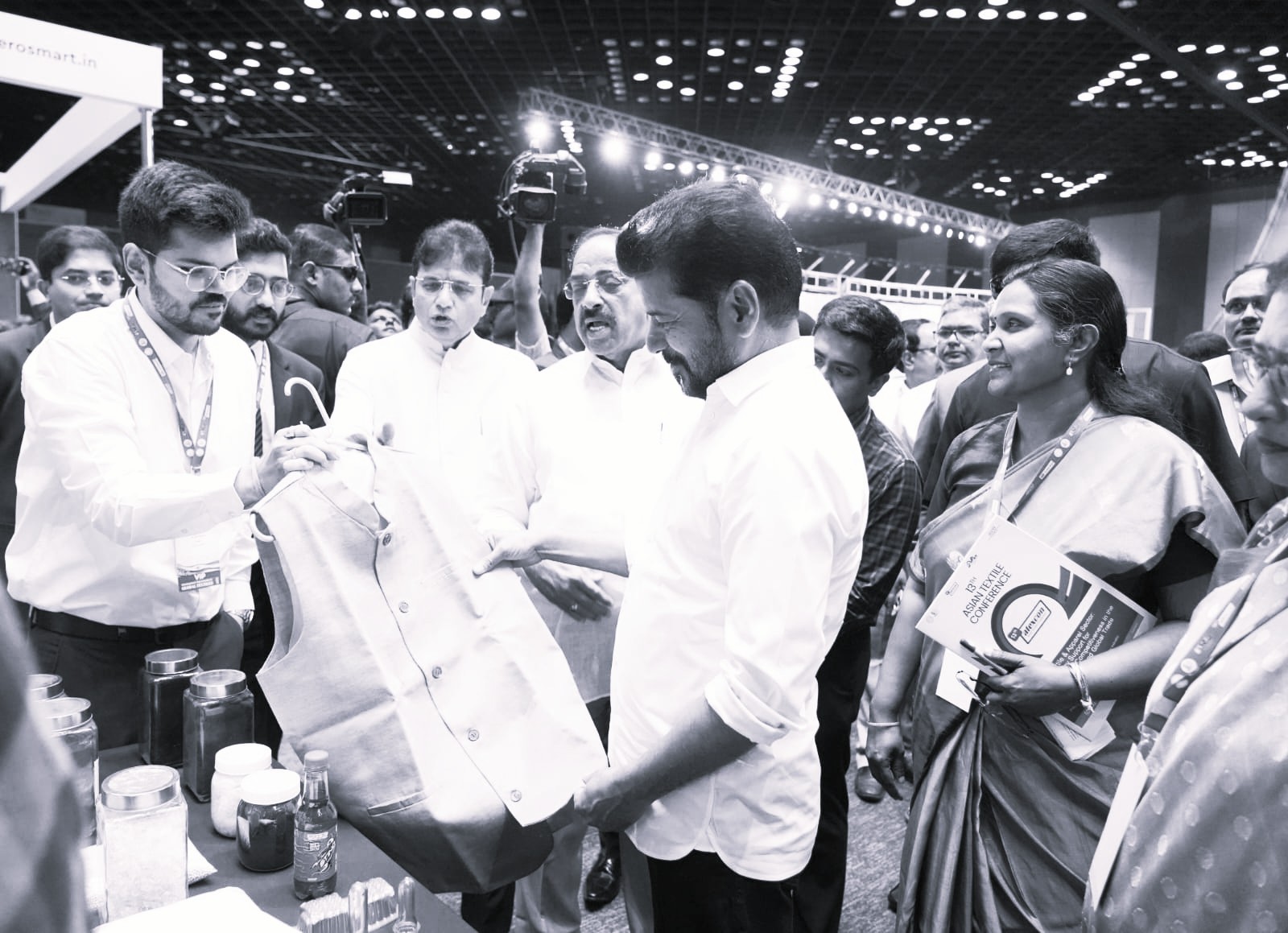
Chief Minister A. Revanth Reddy announced that the government aims to transform Telangana into South Asia’s leading textile capital by 2047 . He was speaking as the chief guest at the 13th Asian Textile Conference 2026 , held in Hyderabad under the aegis of the Confederation of Indian Textile Industry , where he also released the ATEXCON-2026 report and called upon industrialists to invest in the sector.
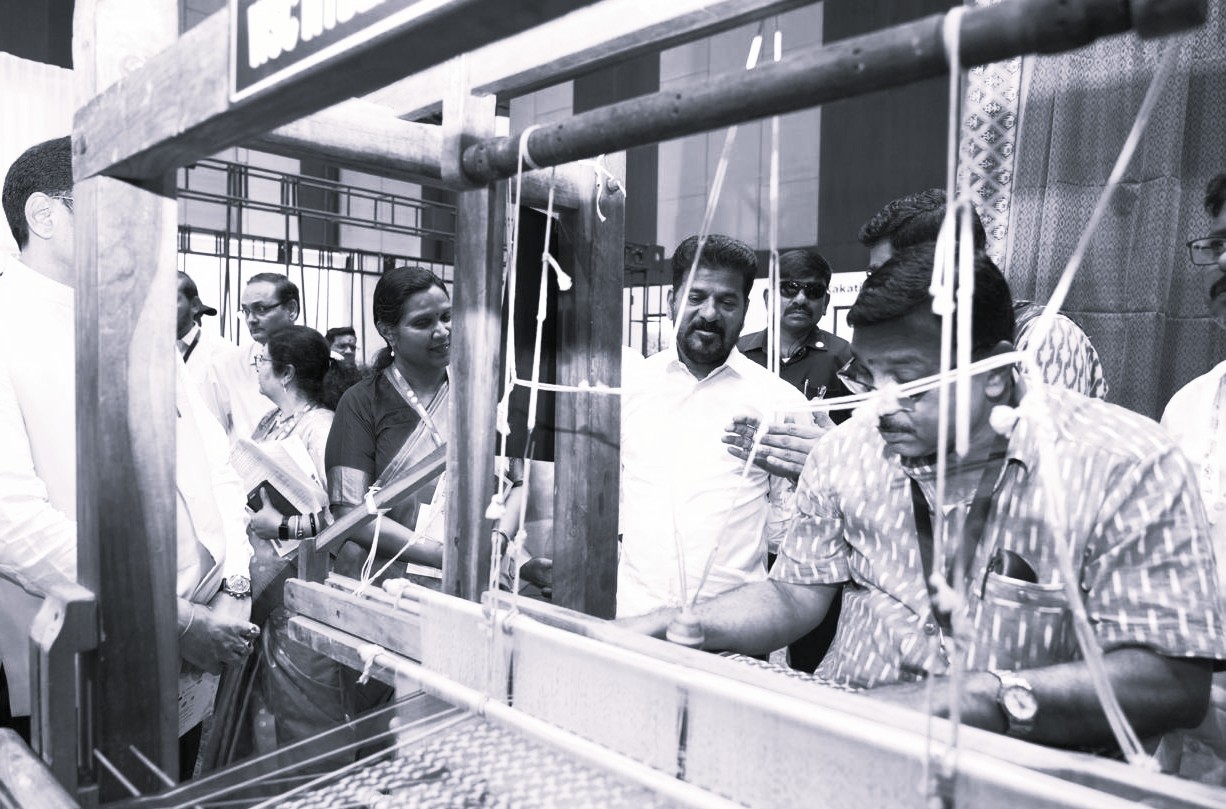
The Chief Minister recalled India’s rich legacy in textile manufacturing, noting that since the Nizam era, Hyderabad’s pearls and textiles have enjoyed global recognition . “ Textiles are in Telangana’s DNA. We are among the leading producers of high-quality cotton in the country,” he said. He added that traditional products such as Pochampally Ikat, Gadwal sarees, Warangal durries, and Narayanpet handlooms are integral to the state’s cultural identity.
Highlighting infrastructure, Reddy said the Kakatiya Mega Textile Park in Warangal meets global standards and houses multiple apparel units. He assured that the government would provide land, power, and water swiftly to textile industries. Telangana, he said, is already ahead in sectors like deep-tech, pharma, and aerospace.
The Chief Minister outlined the state’s economic vision of reaching a $1 trillion economy by 2034 and $3 trillion by 2047 . He expressed confidence that garments produced from Telangana’s cotton fields would soon feature on international fashion platforms in London, Paris, Milan, and Tokyo.
Reddy noted that Hyderabad is emerging as a global filmmaking hub, with international platforms like Netflix setting up studios. With Tollywood, Bollywood, and Hollywood increasingly choosing Hyderabad, he said the state would also develop into a fashion design hub catering to the film industry.
He further stated that the government would promote ‘green textile hubs’ with a focus on sustainability and provide training in modern designing, cutting, and stitching , especially for youth and women. “Our ultimate goal is to ensure that people across the world wear garments made in Telangana,” he said, inviting industrialists to be part of the “Telangana Rising” journey.
Speaking at the conference, Industries Minister Duddilla Sridhar Babu said global developments such as higher tariffs imposed by the United States and the war-like situation in West Asia are adversely affecting the textile sector. He urged India to leverage its vast domestic market in response to shifting global dynamics.
The Minister warned that tariff hikes and geopolitical tensions tend to impact textiles first. “When countries like the United States raise tariffs, the effect is immediately felt on our exports. However, India’s strength lies in its population of 1.4 billion and strong domestic demand,” he said. He added that combining technology with the skills of handloom workers could yield remarkable results.
According to data from the Union Ministry of Textiles , India’s textile and apparel exports reached $37.75 billion in 2024–25 , registering a 5.2% growth . India currently ranks sixth globally in textile exports, with strong demand in markets such as the UAE (14.5%), Japan (19%), and Hong Kong (69%) . The country is also strong in both natural fibres cotton, silk, wool, jute and man-made fibres .
Sridhar Babu emphasised that the textile sector is one of the largest employment generators and is being treated as a priority industry by the government. He called for technological advancements that bridge traditional heritage with modern industry needs.
He stressed that balanced support for farmers, handloom workers, and investors is essential for sustained growth. The Minister also underlined the need for the textile industry to redefine itself in line with changing times.