
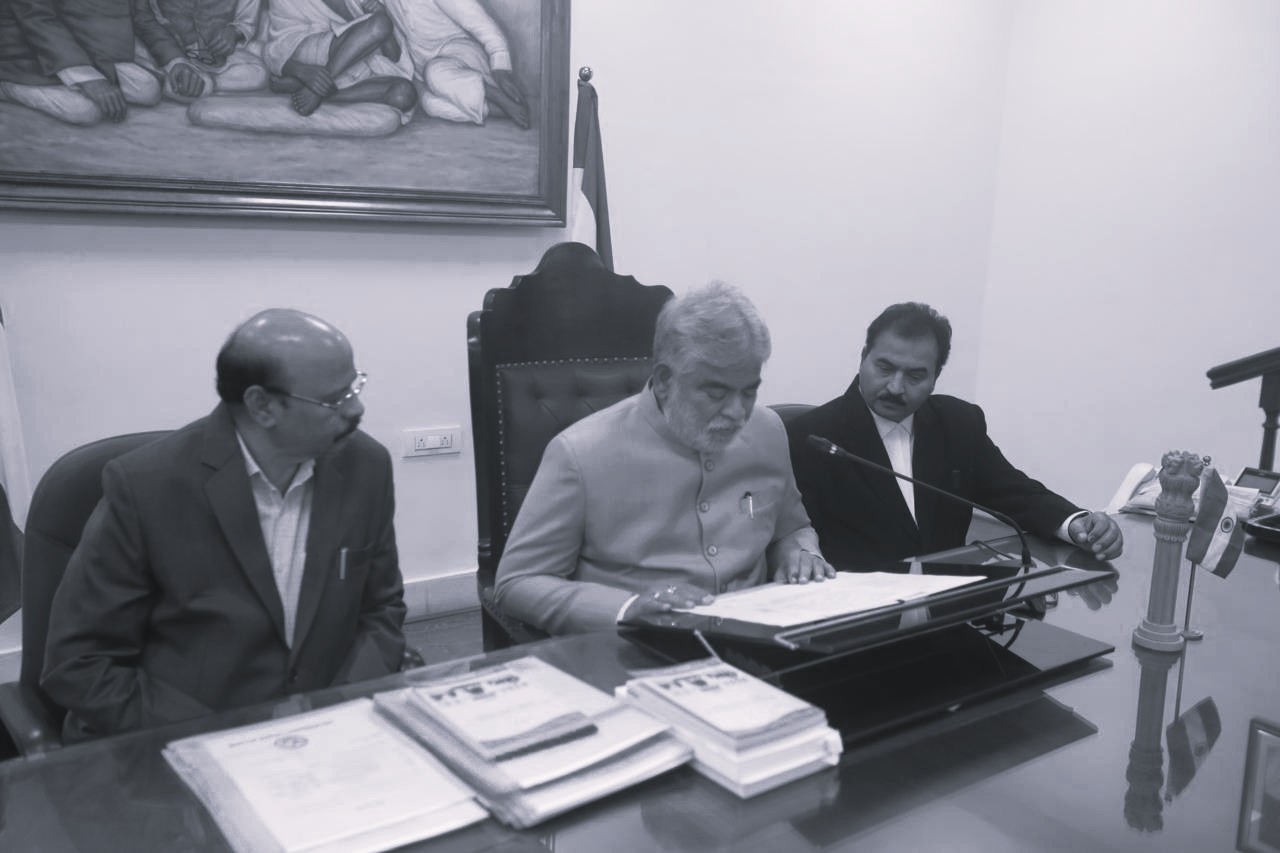
Telangana Speaker Rejects Disqualification Petitions Against Five BRS MLAs
Telangana Assembly Speaker Gaddam Prasad Kumar on Wednesday dismissed disqualification petitions filed against five BRS MLAs accused of defecting to the ruling Congress, while leaving four other cases pending , a move that has deepened political tensions and is likely to trigger further legal scrutiny.
The Speaker rejected petitions against Tellam Venkat Rao, Bandla Krishnamohan Reddy, T. Prakash Goud, Gudem Mahipal Reddy, and Arekapudi Gandhi , citing insufficient evidence to establish that they had formally quit the BRS or joined the Congress. In his ruling, the Speaker held that mere political association, public appearances, or media reports did not meet the legal threshold required under the Tenth Schedule of the Constitution.
The decision follows petitions filed by the BRS alleging that ten of its MLAs had defected after the 2023 Assembly elections. Notices were issued to all ten legislators. While eight submitted explanations, Danam Nagender and Kadiyam Srihari sought additional time, delaying adjudication in their cases. Proceedings against Pocharam Srinivas Reddy and Kale Yadaiah also remain pending.
Among the unresolved cases, Danam Nagender’s is widely seen as the most serious. The Khairatabad MLA contested the 2024 Lok Sabha election from Secunderabad on a Congress ticket , a move the BRS argues constitutes clear and irrefutable evidence of “voluntarily giving up” party membership. In contrast, the remaining cases largely hinge on public campaigning, association with Congress leaders, or participation in party events grounds that the Speaker may again find insufficient for disqualification.
The pending petitions have also drawn attention due to the presence of Pocharam Srinivas Reddy , who served as Speaker of the Telangana Assembly in the previous term . Political observers have noted the irony of a former Speaker now facing disqualification proceedings before his successor, underscoring how dramatically political equations in the state have shifted.
The Speaker’s cautious approach has come under scrutiny following the Supreme Court’s intervention , which recently directed that the long-pending petitions be decided within a stipulated timeframe and even issued contempt notices over delays. This has prompted questions within political circles about why similar judicial urgency was not displayed during earlier mass defections in Telangana, particularly in 2014–19 and 2019–24 , when the then ruling TRS now BRS absorbed several MLAs from Congress, TDP and other parties without triggering disqualifications or by-elections.
With the roles now reversed, the BRS has mounted a fierce campaign accusing the Congress government of undermining democratic norms. Critics, however, point out that the party had earlier benefited from large-scale defections and Speaker rulings that shielded turncoats, raising questions about consistency and institutional memory.
Despite the political heat, there is little appetite across parties for immediate by-elections, which are widely viewed as disruptive and costly. Senior leaders privately acknowledge that MLAs working with the government of the day so long as they are not attempting to destabilise it or engaging in inducement-driven politics can help ensure smoother governance and faster development works in their constituencies.
For now, while five MLAs have been granted relief, the fate of the remaining four—particularly Danam Nagender continues to hang in the balance, with both legal and political consequences likely to unfold in the coming weeks.