
Telangana Relied on RBI for 363 Days, Kavitha Slams Govt Citing CAG Report
Telangana’s financial position has come under sharp focus after the Comptroller and Auditor General (CAG) highlighted an alarming pattern of sustained dependence on the Reserve Bank of India (RBI) for routine expenditure, raising concerns over fiscal discipline and long-term sustainability.
According to the 2024–25 audit report , the state government relied on RBI support for 363 out of 365 days , managing its finances independently for just two days. Such prolonged dependence on short-term borrowing mechanisms indicates a persistent cash flow mismatch rather than a temporary liquidity issue.
To bridge this gap, the government made extensive use of Ways and Means Advances (WMA) , Special Drawing Facility (SDF) , and overdrafts. During the financial year, Telangana availed approximately ₹27,730 crore through SDF and ₹64,188 crore via WMA , while continuing to depend on overdrafts when limits were breached. By March-end, outstanding WMA dues stood at ₹5,842 crore , underscoring the pressure on the state’s cash management.
Despite generating an estimated ₹12,000 crore in monthly revenue , the state struggled to maintain even the minimum required daily balance of ₹1.38 crore , reflecting a widening gap between revenue inflows and expenditure commitments. The audit also signals a broader deterioration in fiscal health, including rising liabilities, mounting debt, and pressure from loss-making public sector undertakings.
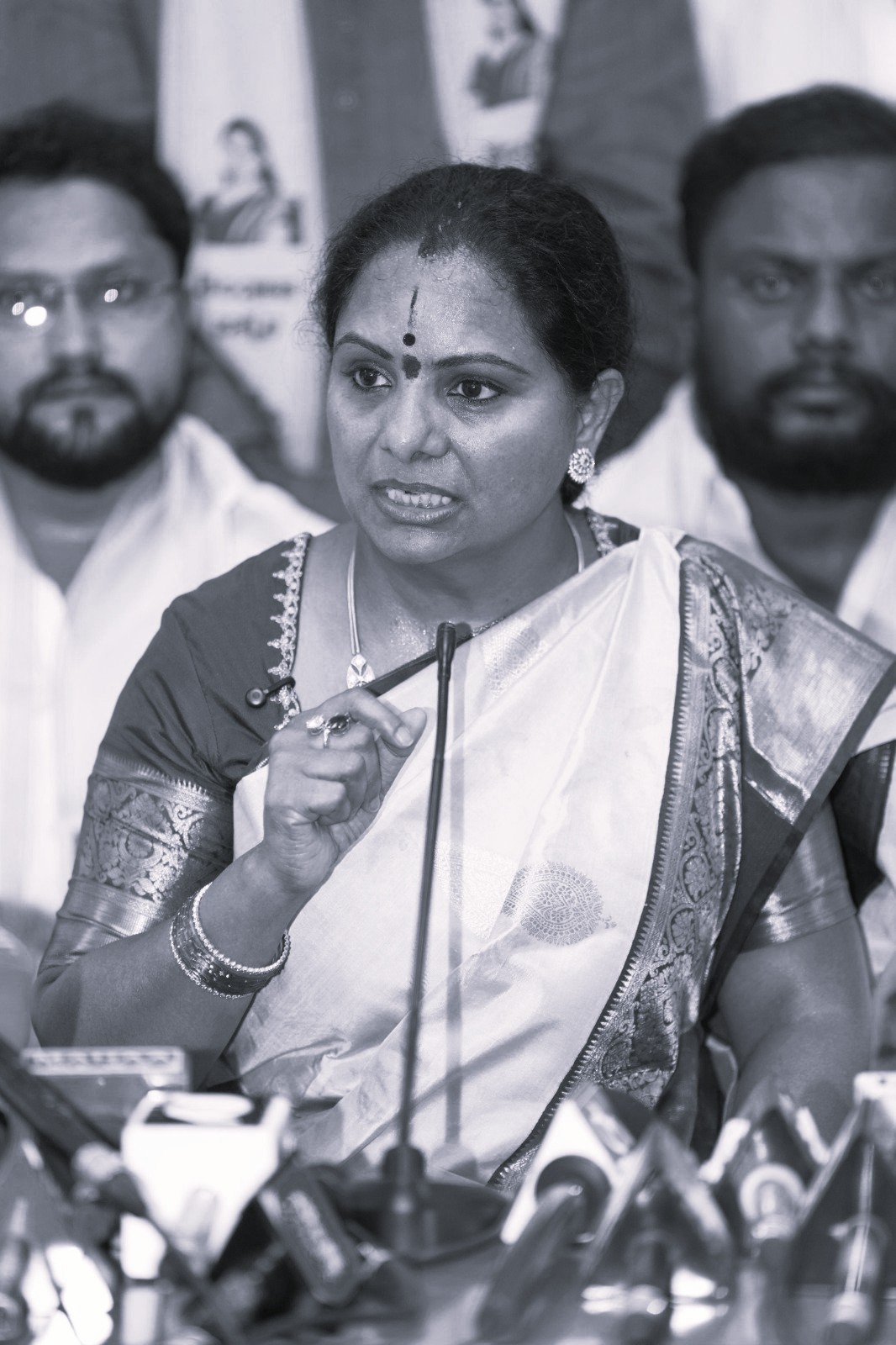
Amid these findings, Kalvakuntla Kavitha emerged as a vocal critic of the government’s financial management. She alleged that the state is burdened with a debt of around ₹8.65 lakh crore , and that nearly ₹1.30 lakh crore was borrowed during the year to sustain operations. She also claimed that the government failed to clear approximately ₹6,000 crore in dues by the end of the financial year.
Kavitha further argued that the cumulative debt translates to an average burden of nearly ₹9 lakh per family , describing the situation as a reflection of deep financial stress. Her remarks have added momentum to the ongoing political debate surrounding Telangana’s fiscal direction.
Critics have also linked the financial strain to growing unrest among sections such as ASHA workers, students, and persons with disabilities , who have been voicing concerns over delays and unmet demands.
The ruling Congress, however, has defended its approach, stating that increased borrowing is part of a broader welfare-driven policy framework. The government has highlighted its ongoing initiatives, including free rice distribution, housing support, free electricity up to 200 units, ₹5 lakh insurance coverage, and free bus travel for women , along with schemes such as Aarogyasri, Kalyana Lakshmi, and Shaadi Mubarak .
As the political exchange intensifies, the CAG report has brought Telangana’s fiscal management into the spotlight. With rising expenditure commitments and continued reliance on RBI support, the state faces a critical challenge balancing welfare priorities with financial stability in the years ahead.