
Telangana Races to Expand Bus Network as Free Travel Scheme Fuels Demand
What began as a welfare promise has quickly turned into a stress test and an opportunity for Telangana’s public transport system. The Mahalakshmi free bus travel scheme for women has reshaped daily mobility across the state, pushing RTC services to near-capacity levels while compelling the government to fast-track expansion and reforms.
In just over two years, the scheme has altered who travels, when, and how often. Buses that once ran with moderate occupancy are now routinely packed, with overall utilization touching 90–98% on several routes. Daily ridership has surged to over 50 lakh passengers , with women forming a dominant share. For many, especially in rural and semi-urban areas, the policy has translated into tangible economic relief and improved access to jobs, colleges, and healthcare collectively saving beneficiaries thousands of crores in travel costs .
But the success has come with visible strain. Overcrowded buses, gaps in connectivity to new residential layouts, and uneven service frequency have emerged as recurring complaints. Recognizing this, the state has moved into a corrective phase.
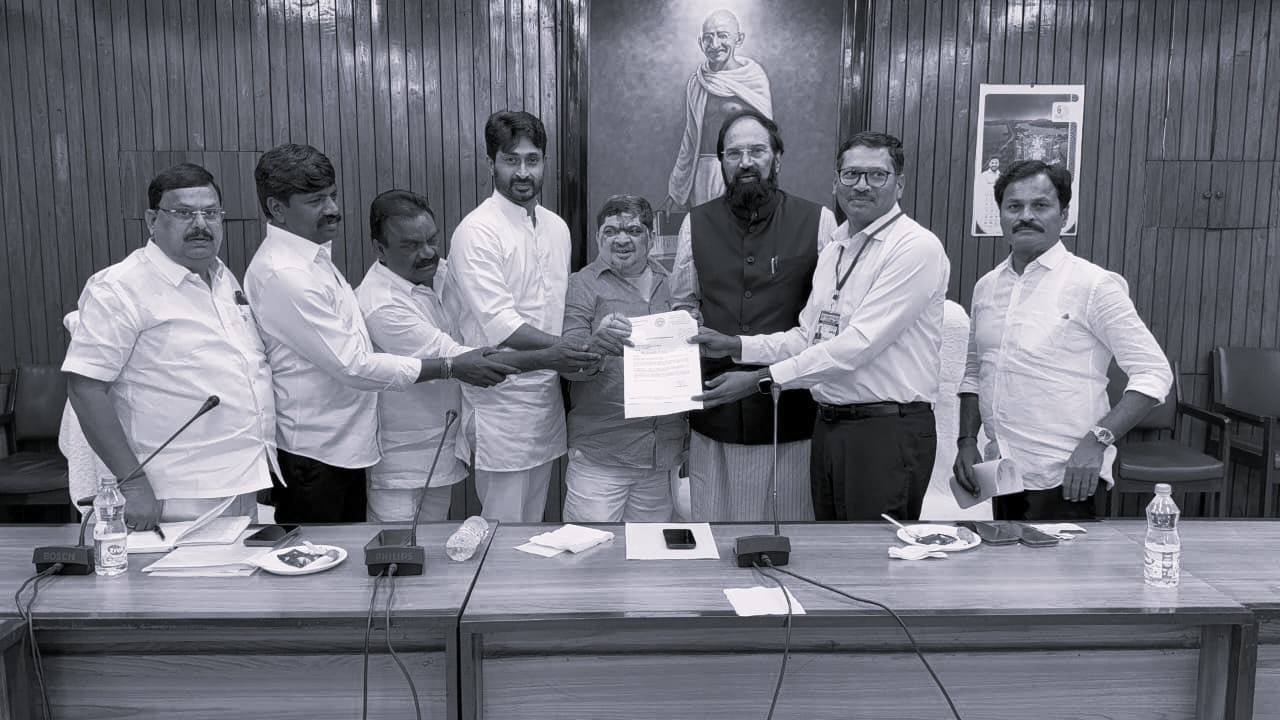
At the centre of this transition are high-level review meetings led by Transport Minister Ponnam Prabhakar , bringing together lawmakers and officials to map ground realities district by district. Representatives from regions including Nalgonda, Medak, Rangareddy, and Hyderabad have flagged bottlenecks ranging from lack of buses in peak hours to missing last-mile links in expanding urban fringes.
The government’s response is taking shape on multiple fronts. Fleet expansion is already underway, with over 2,600 buses added and more procurement in the pipeline. Officials are also exploring electric bus induction to balance rising demand with sustainability goals. At the infrastructure level, stalled modernization works at bus stations like Kodad and Huzurabad are being pushed for completion, while fresh proposals have emerged for upgrading facilities in places such as Narayanakhed and Peddashankaramet .
Equally important are operational tweaks. Plans include increasing bus frequency during school and college hours , restoring night-halt services in remote villages , and building bus shelters along highways and in key gram panchayats . Authorities are also prioritizing connectivity to newly developed colonies and educational hubs areas where demand has grown fastest but services lag behind.
To ensure targeted expansion, officials have been directed to conduct immediate route surveys , identifying high-demand corridors and underserved pockets. While the government has ruled out setting up new depots in the near term, it has made clear that service optimization and network efficiency will be the immediate focus.
Yet, beneath the expansion drive lies a critical balancing act. Transport experts caution that sustaining such a large-scale welfare scheme requires consistent financial backing , as RTC revenues alone may not offset operational costs. The challenge, they note, is to maintain affordability without compromising service quality.
Even so, Telangana’s experiment is increasingly being seen as part of a broader shift in India’s public transport policy landscape. Similar free-travel initiatives in states like Karnataka and Delhi have shown that mobility subsidies can double as social empowerment tools , particularly for women.
As the three-day review concludes and a comprehensive roadmap is expected, Telangana appears to be entering a decisive phase where welfare-driven demand must be matched with systemic upgrades . If managed well, the current strain on RTC could well become the foundation for a more inclusive, accessible, and future-ready public transport network.