
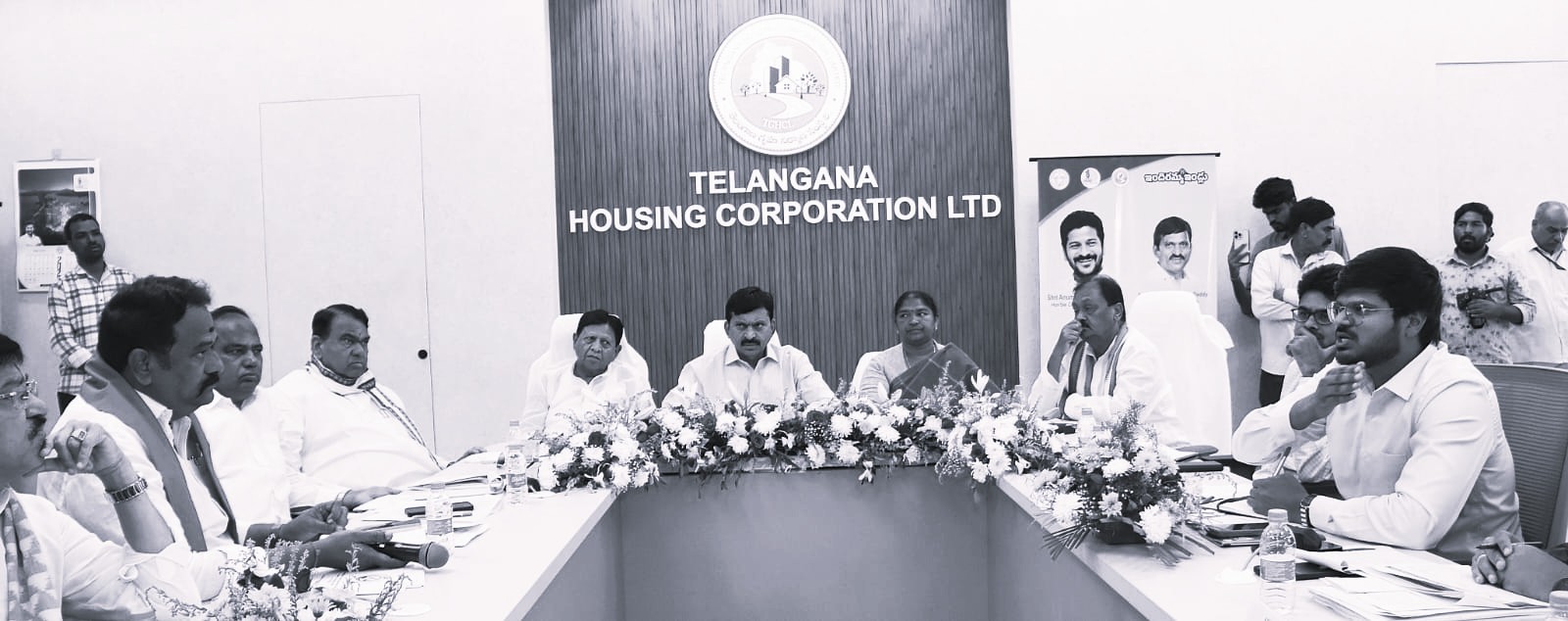
Telangana Pushes 3,500 Homes Per Constituency Under Revamped Housing Plan
The Telangana government has stepped up efforts to fast-track its flagship Indiramma Housing Scheme , positioning it as a central pillar of its welfare strategy while addressing long-standing bottlenecks in implementation. At the core of this renewed push is a decentralised governance approach, with greater decision-making authority being vested in district administrations to improve efficiency and accountability. Announcing the move after a high-level review in Hyderabad, Housing Minister Ponguleti Srinivasa Reddy emphasised that the reforms are aimed at ensuring faster execution, transparency, and timely delivery of benefits to eligible families.
The government has introduced a continuous application process , allowing beneficiaries to apply at any time instead of restricting enrolment to fixed windows. This is expected to widen access and include those previously left out. To maintain regional balance, the state has adopted a uniform allocation model , sanctioning 3,500 houses per constituency irrespective of political considerations. Public representatives have been asked to take proactive responsibility in monitoring progress, while officials have been directed to reallocate houses if beneficiaries fail to begin or complete construction. In a significant administrative correction, the government has also mandated timely release of funds, ensuring that payments are cleared promptly after key milestones such as the basement stage , thereby preventing delays that plagued earlier housing initiatives.
Alongside new construction, the state is focusing on completing pending double-bedroom housing projects inherited from the previous regime. These units will be handed over only after ensuring access to basic infrastructure such as drinking water, electricity, and drainage. In urban areas, where land scarcity is becoming a critical challenge, the government has permitted the adoption of a G+1 housing model , enabling compact homes between 400 and 600 square feet and signalling a shift towards vertical expansion in city planning.
A defining feature of the current policy direction is its integration with land reforms , addressing one of the biggest structural challenges in housing delivery unclear ownership and disputes. The government has initiated comprehensive land surveys and is piloting a streamlined registration system based on updated survey maps. To accelerate dispute resolution, Revenue Divisional Officers (RDOs) have been granted final authority in specific cases, including long-pending informal land transactions, with simplified procedures such as reliance on buyer declarations.
The administration is also investing in strengthening institutional capacity by planning new buildings for Tahsildar offices and establishing modern sub-registrar offices across districts. Joint surveys involving departments like revenue, forest, endowments, and waqf are being undertaken to resolve boundary disputes , which have historically delayed development works. With lakhs of applications already in the pipeline, the programme is expected to generate employment , boost local economies, and enhance social security for vulnerable communities. By combining housing delivery with administrative and land governance reforms, Telangana is attempting a more integrated and sustainable welfare model.