
Telangana Leads India’s Digital Census Push with First Phase Rollout from May 11
Telangana is set to begin the first phase of India’s historic digital Census from May 11 , positioning itself at the forefront of a nationwide transformation in how population data is collected, processed, and used for governance. The upcoming Census 2027 India’s 16th national census is being described as the world’s largest administrative and statistical exercise , and for the first time, it will be conducted entirely through digital platforms .
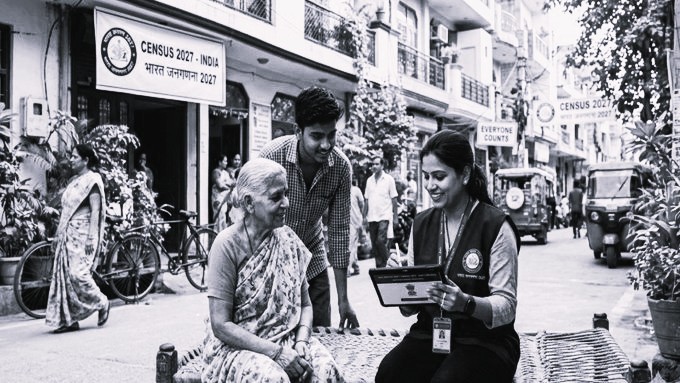
Unlike previous exercises such as the 2011 Census , which relied heavily on paper-based methods, the new model leverages mobile applications, real-time monitoring systems, and cloud-based data storage to ensure faster, more accurate results. Officials say this transition is not merely technological but represents a structural shift in governance , enabling quicker policy decisions and improved targeting of welfare schemes.
In Telangana, the Census will be conducted in two clearly defined phases . The first phase— House Listing and Housing Census will run from May 11 to June 9 , during which enumerators will document housing conditions, infrastructure access, and basic household details. The second phase, scheduled for February 2027 , will capture detailed demographic information, including population characteristics and socio-economic indicators. This phased approach aligns with the national framework designed to ensure comprehensive and structured data collection .
To implement the exercise, Telangana is deploying nearly 88,000 field personnel , supported by a larger trained pool of over 90,000 staff , reflecting the scale and complexity of the operation. Across India, the census will involve over 30 lakh enumerators , highlighting its unprecedented magnitude. The extensive training ensures that officials are equipped to handle both digital tools and field-level challenges , especially in rural and low-connectivity areas.
A defining feature of Census 2027 is the integration of advanced systems such as the Census Management and Monitoring System (CMMS) and dedicated mobile applications that allow enumerators to upload data directly to central servers. These systems support real-time supervision, GPS tagging, and offline data capture , ensuring that even remote regions are accurately covered.
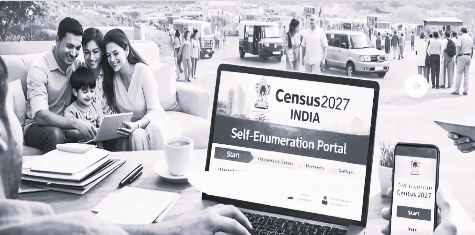
Importantly, the government has introduced a Self-Enumeration facility , allowing citizens to submit their details online before enumerators visit. This option, available for a limited window, is expected to improve public participation and convenience , while also reducing workload on field staff. However, all self-submitted data will be verified during physical visits to maintain accuracy.
Another major development is the inclusion of comprehensive caste enumeration , a move not undertaken in full scale since 1931 . While the first phase will record only broad social categories (SC/ST/Others) , detailed caste data will be collected in the second phase, making this census crucial for social justice policies and resource allocation debates .
Data security has been a central focus of the new system. Authorities emphasize that once information is uploaded, it is instantly encrypted and stored in central servers , and removed from local devices, ensuring compliance with the Census Act, 1948 , which mandates strict confidentiality. This digital architecture aims to build public trust while minimizing risks of data leakage or manipulation.
Beyond enumeration, the Census is evolving into a data-driven governance tool . Under initiatives like “Census-as-a-Service” , the collected data will be transformed into machine-readable, shareable datasets for ministries and policymakers, enabling evidence-based decisions in areas such as urban planning, healthcare, education, and welfare distribution .
Officials underline that the digital Census is not just about counting people it is about creating a granular, real-time socio-economic database that will shape India’s development trajectory over the next decade. With Telangana fully prepared and systems in place, authorities are urging citizens to actively participate, ensuring that no household is left behind in this landmark national exercise.