
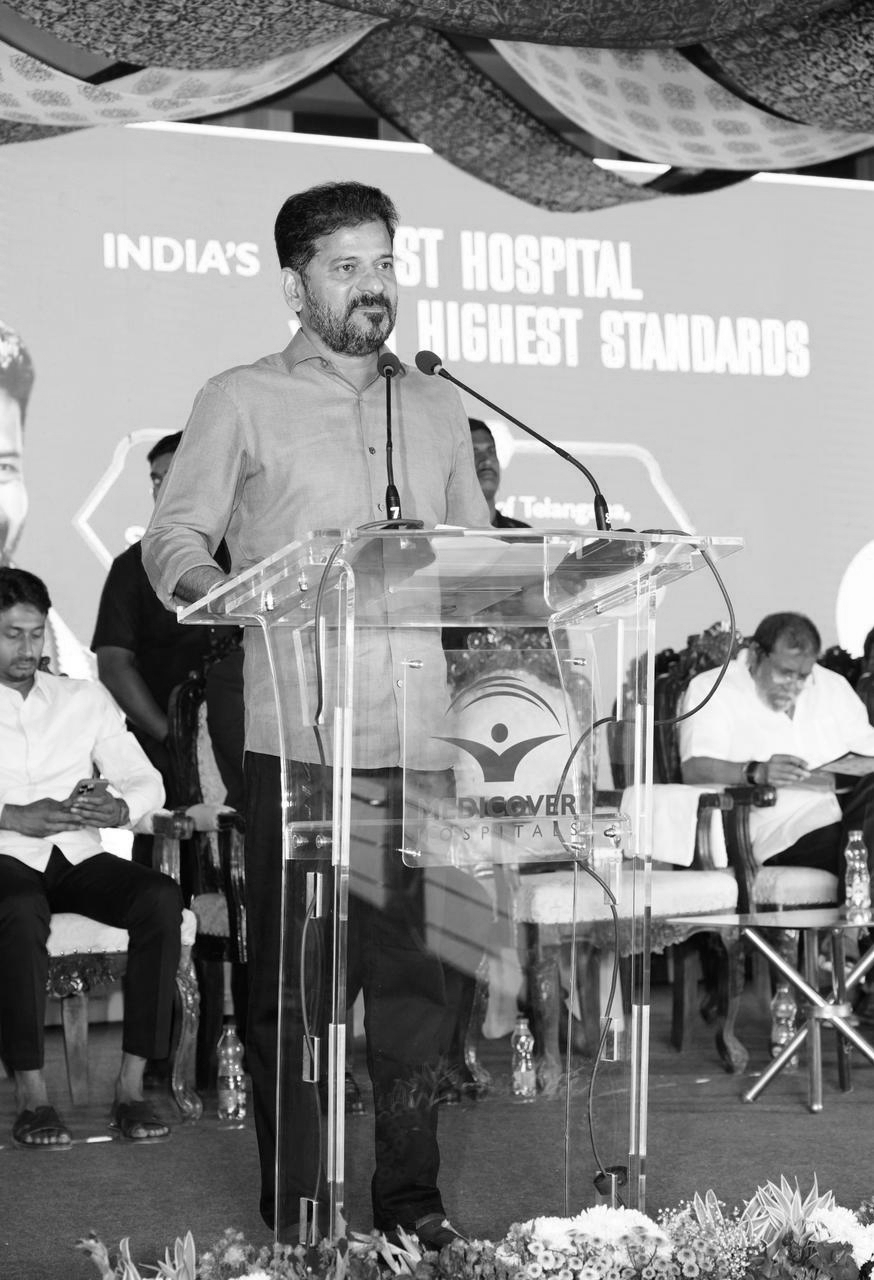
Telangana govt may provide life insurance to 1.15 crore families, focus on health, education
Telangana Chief Minister A. Revanth Reddy on Thursday announced that the state government is contemplating providing life insurance to 1.15 crore families in Telangana, aiming to extend both life and health security to the poor.
Speaking after inaugurating a private hospital here, he said the government has decided to treat nursery to XII as formal school education and will provide transport facilities to students in the Core Urban Region, either free of cost or at 50 per cent of the fare, to encourage admissions.
On health initiatives, Reddy highlighted the launch of digital health cards for 65 lakh women Self Help Group (SHG) members . These cards, which will include detailed health information while ensuring data privacy, will help doctors initiate treatment efficiently. The government also plans to analyse data from the Arogya Sri health scheme, introduced in undivided Andhra Pradesh 20 years ago, to track disease prevalence across the four crore population . Sangareddy district has been chosen for a pilot project , including special focus on cancer treatment in medical college hospitals.
Reddy said the government will spend ₹10,000–11,000 crore to develop medical infrastructure, including constructing new hospitals. He stressed that education, health, and agriculture are the state’s new priorities and urged Indian doctors, both at home and abroad, to serve government hospitals temporarily as a social responsibility , with a dedicated website to facilitate this.
On broader development, the Chief Minister mentioned the promotion of manufacturing to create lakhs of jobs and the transformation of Industrial Training Institutes (ITIs) into Advanced Technology Centres (ATCs) . Highlighting the need for youth to adapt to technology, he said AI will not replace blue-collar jobs but presents opportunities if utilised effectively.
Reddy also reflected on Indian professionals reaching top global positions but noted that ownership of large multinational firms remains limited, calling for greater entrepreneurial ambition and self-reliance.