
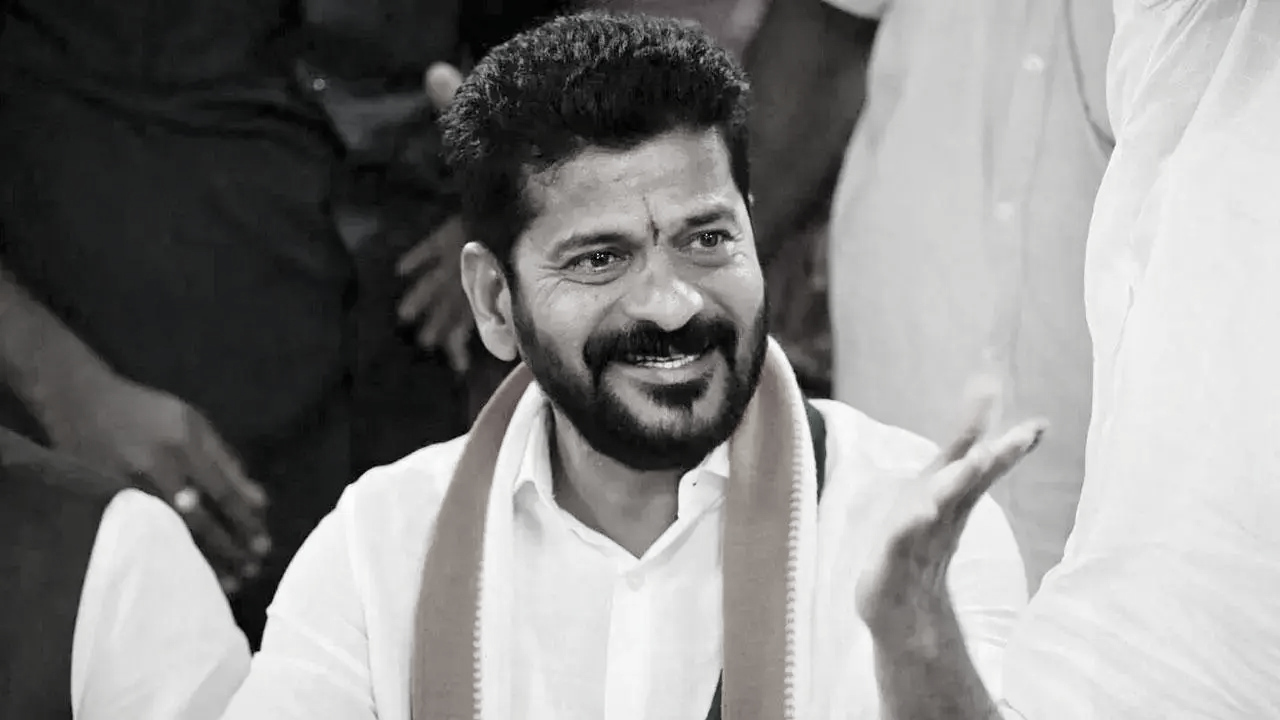
Telangana CM reviews BC reservation case ahead of High Court hearing
Telangana Chief Minister A Revanth Reddy on Tuesday held a crucial meeting at his residence to discuss the Backward Classes (BC) reservation issue, the Chief Minister’s Office (CMO) said.
The meeting was attended by Deputy Chief Minister Mallu Bhatti Vikramarka, State Congress in-charge Meenakshi Natarajan, PCC President Mahesh Kumar Goud, and Ministers Ponnam Prabhakar, N. Uttam Kumar Reddy, Vakiti Srihari, and Ponguleti Srinivas Reddy. Officials said the discussions focused on the legal strategy and arguments to be presented in the Telangana High Court on Wednesday, where the BC reservation case will be heard.
Deputy Chief Minister Mallu Bhatti Vikramarka informed ANI that the Supreme Court recently dismissed a petition filed by Gopal Reddy challenging the state government’s decision to enhance the OBC quota to 42 per cent in local bodies. “In the Supreme Court, our senior advocates presented all facts, and the court dismissed the case in favour of the state of Telangana,” he said.
Meanwhile, BC Minister Ponnam Prabhakar highlighted that the 42 per cent OBC quota was decided after a careful caste survey and enjoys the support of all political parties. He explained that the proposal went through the cabinet, was tabled in the Assembly, converted into an Act, and then sent to the Governor and subsequently to President Droupadi Murmu, where it has been pending for several months.
Prabhakar added, “While the matter is pending with the President, some individuals filed a case in the High Court to stop this. The hearing was postponed to October 8. Some have also approached the Supreme Court despite the High Court case. We are confident of getting justice in both courts, and hope elections will be conducted with 42 per cent reservation.”
The Telangana government had issued the order on September 26 to provide 42 per cent reservation in local bodies for BCs. The CMO stated, “Telangana, which came into existence on 2nd June 2014, emerged from a determined struggle for the aspirations of its people. Inclusive growth and equitable development, particularly for marginalised communities, remain among the state’s key goals.”