
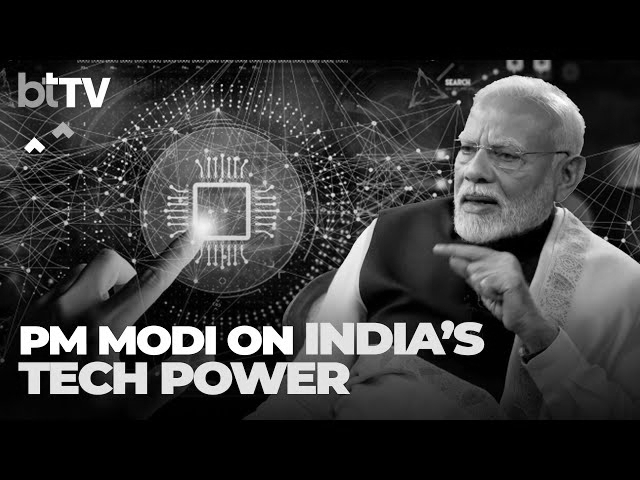
Tech is India’s equality Game-Changer: Modi
Prime Minister Narendra Modi on Friday emphasised that technology has emerged as India’s greatest equaliser, empowering citizens across all sections of society, from street vendors to corporate executives. Addressing an article shared by Minister of Electronics and IT, Ashwini Vaishnaw, on X, the Prime Minister highlighted how digital initiatives under his leadership have transformed governance, enhanced financial inclusion, and strengthened India’s global role.
Through initiatives such as India Stack, the Unified Payments Interface (UPI), the JAM trinity (Jan Dhan, Aadhaar, Mobile), and CoWIN, Modi stated that innovation and inclusion have improved access to essential services. Vaishnaw noted that earlier, acquiring government documents involved multiple visits, long queues, and random fees, whereas today, these services are directly accessible via mobile phones, reflecting the digital revolution during Modi’s tenure.
Vaishnaw further explained that Modi’s approach treats technology as a tool that transcends hierarchy. A street vendor in Mumbai now uses the same UPI system as a corporate executive. This vision of “antyodaya,” or reaching the last person in the queue, has guided digital initiatives aimed at democratizing access for all citizens. Many of these initiatives, initially piloted in Gujarat, laid the foundation for India’s nationwide digital transformation.
As Chief Minister of Gujarat, Modi implemented several technology-driven projects. The Jyotigram scheme, launched in 2003, used feeder separation technology to provide 24×7 electricity to rural industries, helping revive them and reduce groundwater depletion through scheduled farm power supply. In 2012, he initiated the installation of solar panels on the Narmada canal, generating 16 million units of electricity annually, sufficient for 16,000 households, while reducing water evaporation and increasing water availability. The dual-benefit projects demonstrated efficiency and wide-reaching impact, and were later adopted internationally by countries including the US and Spain.
Other initiatives in Gujarat included the e-Dhara system for digitising land records, SWAGAT for citizen access to the Chief Minister through video conferencing, and online tendering to reduce corruption.
In 2014, Modi brought the lessons from Gujarat to the national level. Under his leadership, India Stack, the world’s most inclusive digital public infrastructure, began taking shape. The JAM trinity formed the foundation for this infrastructure. Jan Dhan accounts brought over 53 crore previously financially excluded individuals into the banking system, enabling secure savings, access to credit, and direct receipt of government benefits.
Aadhaar provided citizens with a digital identity, achieving 142 crore registrations to date, simplifying access to government services by eliminating the need for multiple document verifications. The Direct Benefit Transfer (DBT) system reduced intermediaries and leakages, with savings exceeding Rs 4.3 lakh crore, which have been redirected toward building schools, hospitals, and infrastructure projects.
Prime Minister Modi’s emphasis on technology plays a game changing role in driving inclusion, improving governance, and creating scalable solutions that benefit all citizens, particularly those at the grassroots level, marking a significant milestone in India’s digital transformation journey.