
Teachers Who Changed Lives Beyond The Classroom: The Stories We Rarely Tell
A teacher's influence rarely ends when the school bell rings. Long after students leave their classrooms, move to different cities, build careers and start families of their own, certain lessons continue to shape their lives. Sometimes it is a piece of advice given at the right moment, sometimes the encouragement to continue studying despite financial difficulties, and sometimes simply the confidence that comes from having one adult who believed in a child's potential. On Teachers’ Day, while the country celebrates the teaching profession through speeches, ceremonies and awards, there is another side of the story that deserves attention: the thousands of teachers who quietly change lives without their work ever becoming a headline.
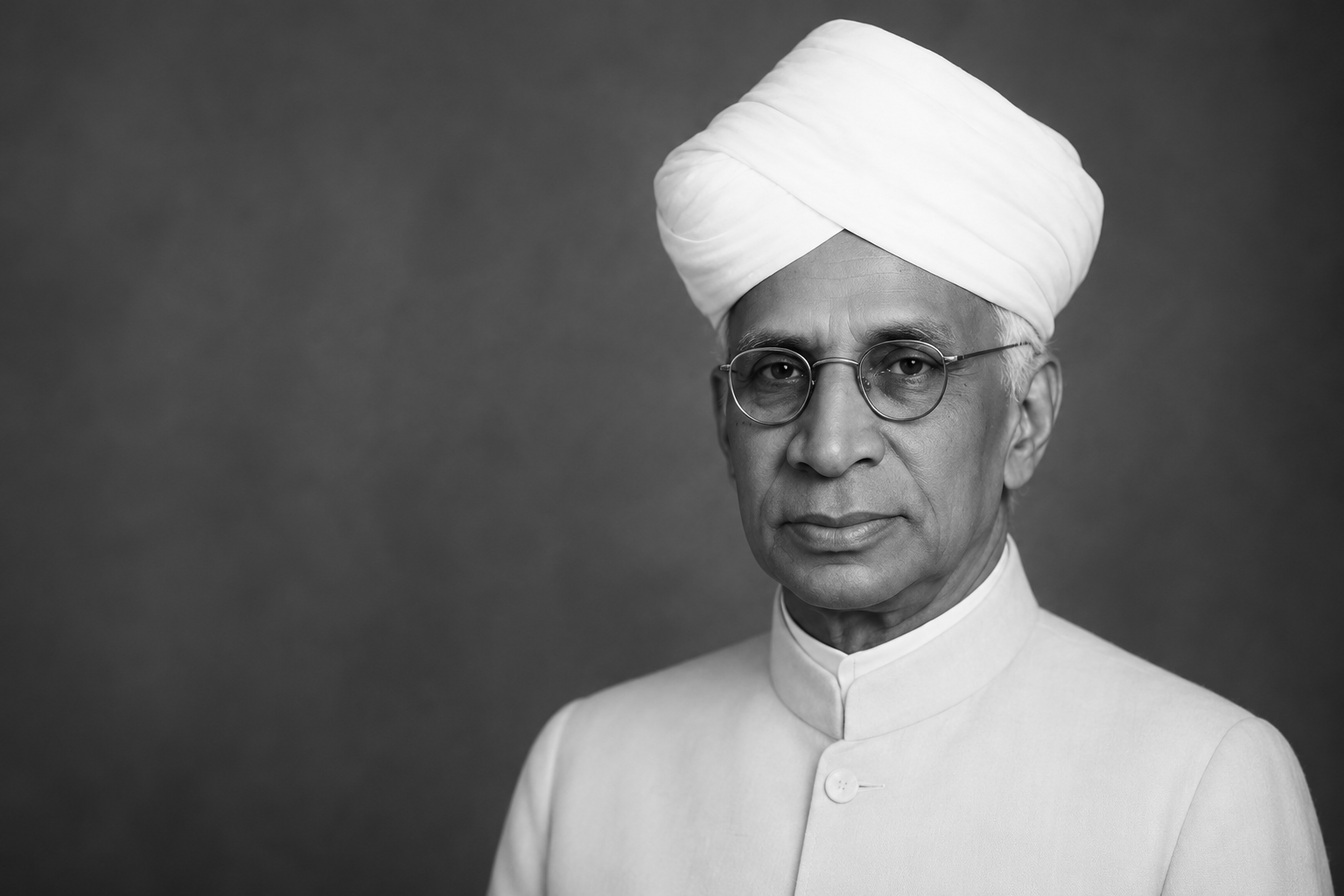
India observes Teachers’ Day on September 5, marking the birth anniversary of former President, philosopher and educator Dr. Sarvepalli Radhakrishnan. The day has traditionally been associated with remembering the importance of teachers in society, but its meaning goes well beyond the life of one eminent educationist. Across government schools, rural classrooms and small towns in Telangana and Andhra Pradesh, teachers continue to perform a role that is much larger than delivering lessons from a textbook. They often become mentors, counselors, career guides, community workers and, for many children, the first people to show them that their circumstances do not necessarily have to determine their future.
For earlier generations, particularly students studying in rural government schools, the relationship between teacher and student was often even more personal. There were no smartphones, search engines, online tutorials or artificial intelligence systems available at the touch of a button. If a child did not understand a mathematics problem, the teacher was the person they turned to. If a family did not know how to approach higher education, scholarships or competitive examinations, the teacher could provide the information. For a first-generation learner whose parents had never attended college, the teacher might be the first person to explain that a university education, professional career or government job was actually possible.
Teachers were also highly visible figures in many villages and small communities. They were often among the most educated people in the locality and were respected not merely because they taught children but because people trusted their judgement. They knew their students' families and could often understand a child's circumstances better than someone looking only at examination marks. When a student stopped attending school, a teacher might speak to the parents. When a talented child considered leaving education because of financial pressure, the teacher could encourage the family to continue. When a student lacked confidence, a few words from the teacher could sometimes make the difference between giving up and trying again.
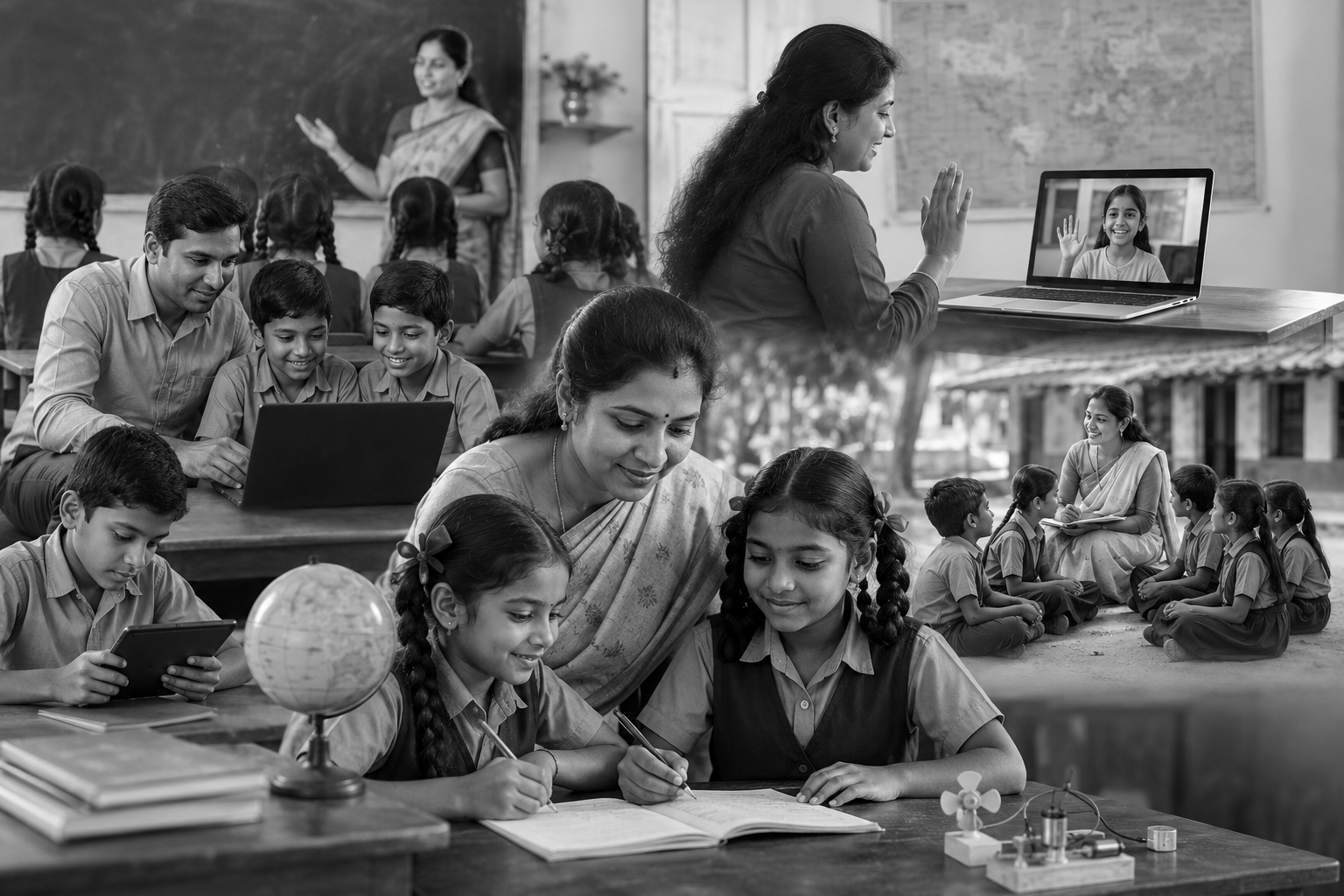
That personal connection has not disappeared, but the challenges facing teachers have changed considerably. Government and rural-school teachers today work with classrooms where students can have very different learning levels. One child may struggle with basic reading and numeracy while another is ready for advanced concepts. Bringing both students forward requires additional preparation and flexible teaching methods. Teachers are also expected to respond to a wider range of needs, including digital literacy, career awareness, emotional support and communication skills, while simultaneously handling administrative responsibilities.
For first-generation learners, the role of the teacher is particularly significant. Parents may understand the value of education but may not know how to guide children through college admissions, scholarships, entrance examinations or career choices. A teacher may therefore become the bridge between the child and a world of opportunities that is unfamiliar to the family. When such a student eventually becomes the first graduate in the household, the achievement belongs not only to the individual. It can change the aspirations of younger siblings and influence how an entire family views education.
Technology has created new opportunities but has also introduced new inequalities. A teacher in a rural school may have access to digital lessons, online resources and educational applications, yet not every student will necessarily have a smartphone, computer or reliable internet connection at home. Teachers must therefore learn to use technology without allowing it to become another dividing line between students. At the same time, they have to compete for attention in a world where children are surrounded by social media, short videos and constant digital stimulation. This has made creativity increasingly important in the classroom.
In such circumstances, some teachers have demonstrated how much can be achieved through determination and innovation. In Telangana's Kamareddy district, Bompelli Bhavani has shown how one teacher can help transform the identity of a government school. When she joined the Mandal Parishad Primary Girls School in Gandhari in 2018, the school had around 40 students. Instead of accepting low enrolment and limited facilities as unavoidable, she worked to improve the learning environment and make the school more attractive to families.
A pre-primary section was introduced, while facilities such as classrooms, a library, computers, toilets and digital learning resources were developed. Over time, enrolment increased to more than 130 students. But the most important change was not simply the number of children entering the school. Bhavani worked to make learning more engaging, particularly in mathematics, by using stories, games, experiments, pictures and activity-based methods. She also encouraged students to participate in yoga, dance, sports, reasoning activities and value-based learning, demonstrating that a school can become a community space rather than merely a place where children complete a syllabus.
Her commitment extended beyond what was required inside the classroom. Prize money she received through a state-level teachers' award was used, along with her husband's contribution, to purchase a computer for the school. Her efforts have now brought national recognition, with Bhavani among the 48 school teachers selected for the National Teachers’ Awards 2026. Her story is a reminder that the transformation of a government school does not always begin with a major infrastructure project. Sometimes, it begins with a teacher convincing children and parents that their school deserves their trust.
In Andhra Pradesh, Kouluri Rajesh represents another important aspect of modern teaching the use of technology to expand opportunities for rural students. A teacher at Mandal Parishad Primary School in Chinamallupeta in Vizianagaram district, Rajesh comes from a family where his father worked as a carpenter and his mother as an Anganwadi worker. Having studied in government institutions himself, he understood the limitations faced by children whose families may not have extensive educational resources.
Rajesh began creating digital lessons, videos, games and learning materials in Telugu and English. His initiatives have reached thousands of students and schools, while his educational resources have also been used to support rural children preparing for entrance examinations to institutions such as Jawahar Navodaya Vidyalayas and model schools. His work demonstrates that technology does not necessarily have to widen the gap between rural and urban education. When used thoughtfully by teachers, it can become a bridge that brings new opportunities to children who might otherwise have limited exposure.
Another powerful example is provided by English teacher Hari Krishna Patcharu, whose work has focused on giving rural students greater exposure to the outside world. For many children, especially those from villages, learning English is not only an academic challenge but also a question of confidence. Students may know the grammar and vocabulary but hesitate to speak because they fear making mistakes. By connecting students with educators and learners from different countries through virtual interactions and pen-pal initiatives, Patcharu helped create opportunities for students to communicate beyond the boundaries of their local communities.
For a child who had rarely interacted with anyone outside the village, speaking with another student thousands of kilometres away could have an impact that went well beyond language learning. Such experiences can encourage curiosity, build confidence and expand a student's understanding of what is possible. A classroom that once seemed geographically isolated can suddenly become connected to the wider world, showing how a teacher can use technology not merely to deliver information but to expand a child's imagination.
In Telangana, Khetavath Thavrya Nayak offers another perspective on the importance of understanding students' circumstances. A first-generation learner himself, Nayak experienced limited educational opportunities during his childhood. His early schooling included a de-notified tribal school in Narasapur of Narayankhed, where only one teacher was available during his initial years. That experience later influenced his approach to teaching children who struggled with foundational literacy and numeracy.
Nayak developed ‘My Slate’, a low-cost learning tool designed to support alphabet recognition, phonetics, pictures, writing practice and basic mathematics. Initially created using simple materials, the tool was later redesigned into a portable version that students could use individually. It supports Telugu and English and can also be used for adult literacy. The innovation is significant not because it relies on sophisticated technology, but because it demonstrates how teachers can develop practical solutions when they understand the specific problems faced by their students.
These stories also challenge the traditional idea that a successful teacher is simply one whose students achieve high marks. Examination results are important, but they cannot measure every form of educational success. A marksheet can show that a student passed an examination, but it cannot show who persuaded that student not to drop out. An enrolment register can show that a child joined school, but it cannot record the teacher who convinced the family to keep the child in education. A score can measure academic performance, but it cannot capture the confidence created when a teacher tells a struggling student that failure does not define them.
The importance of this human connection becomes even more relevant as education moves towards 2035 and artificial intelligence becomes increasingly integrated into classrooms. AI systems can already generate explanations, answer questions and create educational material. In the future, students may have personalised digital tutors, virtual laboratories and learning platforms capable of identifying individual weaknesses. The teacher's role, therefore, may shift from being primarily a provider of information to becoming a mentor who helps students understand, question and apply information.
A machine may explain why an answer is wrong, but a teacher can recognise that a student is afraid to answer because they have lost confidence. An AI system can generate a lesson, but a teacher can understand that a particular child needs a different approach. Technology can identify a learning gap, but a teacher may discover that the underlying problem is financial difficulty, family circumstances or a lack of support at home. As technology becomes more powerful, the human side of teaching may become even more valuable.
The teacher of 2035 may also have to teach students how to use AI responsibly. Children will need to understand how to verify information, recognise inaccurate answers, protect their privacy and distinguish between using technology as a learning aid and allowing it to do the learning for them. For rural schools, AI and digital connectivity could open remarkable opportunities, but only if access becomes more equal. Otherwise, technology could deepen the educational divide instead of closing it.
Despite these changes, the teacher of the future will share something important with the teacher of earlier generations. The tools will change, but the fundamental responsibility will remain the same. The blackboard may become a digital screen, textbooks may become interactive platforms and classrooms may connect students across continents, but children will still need adults who understand them, encourage them and help them make sense of the world.
India's Teachers’ Day is observed on September 5, while World Teachers’ Day is celebrated globally on October 5. The international observance, established by UNESCO in 1994, commemorates the adoption of the 1966 ILO/UNESCO Recommendation concerning the Status of Teachers. The two observances have different histories, but both underline the importance of educators and the teaching profession.
On September 5 this year, President Droupadi Murmu will honour 48 school teachers with the National Teachers’ Awards. Among the awardees are educators from Telangana and Andhra Pradesh whose work reflects the many ways teachers can influence education through innovative classroom methods, technology, community engagement and a deep understanding of students' circumstances.
But the most meaningful tribute to teachers may not take place on a stage. It may happen years later when a former student remembers the teacher who encouraged them to continue studying. It may happen when the first graduate in a family looks back and remembers the person who first convinced their parents that higher education was possible. It may happen when a former student brings their own child to meet the teacher who once taught them.
The greatest achievements of teachers often remain invisible. They are found in students who did not give up, girls who continued their education, rural children who discovered opportunities beyond their villages and families whose aspirations changed because one educator believed in their children.
Teachers of earlier generations worked without smartphones or artificial intelligence. Teachers today are navigating digital inequality, changing expectations and increasingly diverse classrooms. The teachers of 2035 will face technologies and challenges that are difficult to predict.
Yet across generations, the heart of teaching remains remarkably constant.
A teacher does not simply teach a child what is known. A great teacher helps a child believe that something more is possible.
Years later, students may forget the exact lesson written on the blackboard. They may forget their examination marks, the homework they completed or even the name of a particular textbook.
But they are far less likely to forget the teacher who noticed them, encouraged them and believed in their potential before they learned to believe in themselves.
That is the story behind Teachers’ Day that deserves to be told not simply the story of teachers standing in classrooms, but of teachers changing lives beyond the classroom.