
Tax Cuts, Investment Push and AI Drive Nepal’s Economic Revival Plan
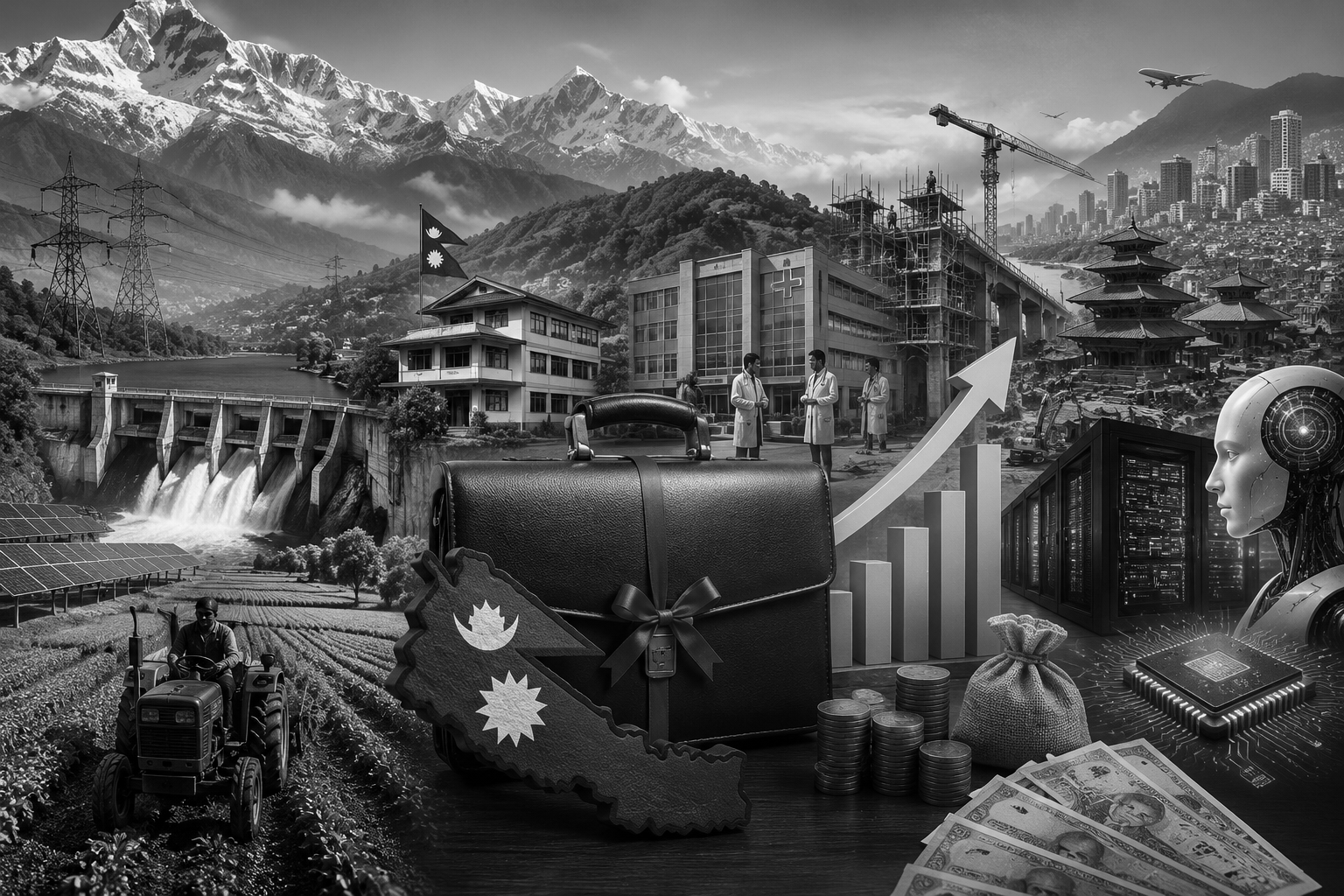
Nepal’s newly elected government has unveiled an ambitious NRs 2.124 trillion budget for fiscal year 2026-27, combining tax relief, infrastructure investment, financial reforms and a bold push into Artificial Intelligence (AI) in an effort to revive the country’s slowing economy and reduce its dependence on remittances.
Presented by Finance Minister Swarnim Wagle , the budget is the first major economic roadmap of Prime Minister Balendra Shah’s government since the Rastriya Swatantra Party (RSP) secured a commanding victory in March elections. The administration hopes the reform-focused package will stimulate growth, attract foreign investment and help Nepal transition toward a knowledge-based economy .
The budget comes as Nepal faces economic headwinds despite relative macroeconomic stability. The country’s Economic Survey projects growth at 3.85 per cent in the current fiscal year, while international institutions have warned that global uncertainty and domestic challenges could continue to weigh on economic performance. Nepal also remains heavily dependent on remittances, which account for nearly a quarter of its GDP, while youth unemployment and labour migration remain persistent concerns.
To boost domestic demand, the government has announced a 21 per cent salary increase for public sector employees and raised the personal income tax exemption threshold from NRs 600,000 to NRs 1 million . It has also introduced a one per cent income tax rate for income up to NRs 1 million, aiming to ease the burden on middle-income households.
The budget allocates NRs 1.270 trillion for current expenditure, NRs 431.10 billion for capital expenditure and NRs 422.64 billion for financial management. Revenue collection is expected to contribute NRs 1.405 trillion , with the remainder financed through grants and borrowing.
Infrastructure remains a key focus area. The government has earmarked NRs 70 billion for transmission lines and substations, while funding has also been allocated for irrigation projects and the Sunkoshi–Marine Diversion Project . Nepal expects its installed electricity generation capacity to increase from around 3,600 MW to 5,535 MW , reinforcing hydropower’s role in future growth.
Agriculture received significant support through NRs 32.36 billion for fertiliser procurement and NRs 2.4 billion for livestock disease control. Meanwhile, education and health sectors have been allocated NRs 218 billion and NRs 101 billion , respectively.
One of the budget’s most notable announcements is the creation of Nepal’s first Sovereign AI Compute Centre in Kathmandu. The government plans to purchase thousands of AI processing units, promote startups and expand digital infrastructure as part of its long-term technology strategy.
Economists say the reforms could provide a much-needed boost to growth, but caution that success will depend on effective implementation, faster project execution and the government’s ability to generate jobs. With a mix of fiscal reforms, infrastructure spending and digital ambitions, Nepal is attempting one of its most comprehensive economic transformations in recent years.