
Tata Steel’s ₹3,200 Cr Ludhiana Plant Anchors India’s Shift to Green Steelmaking
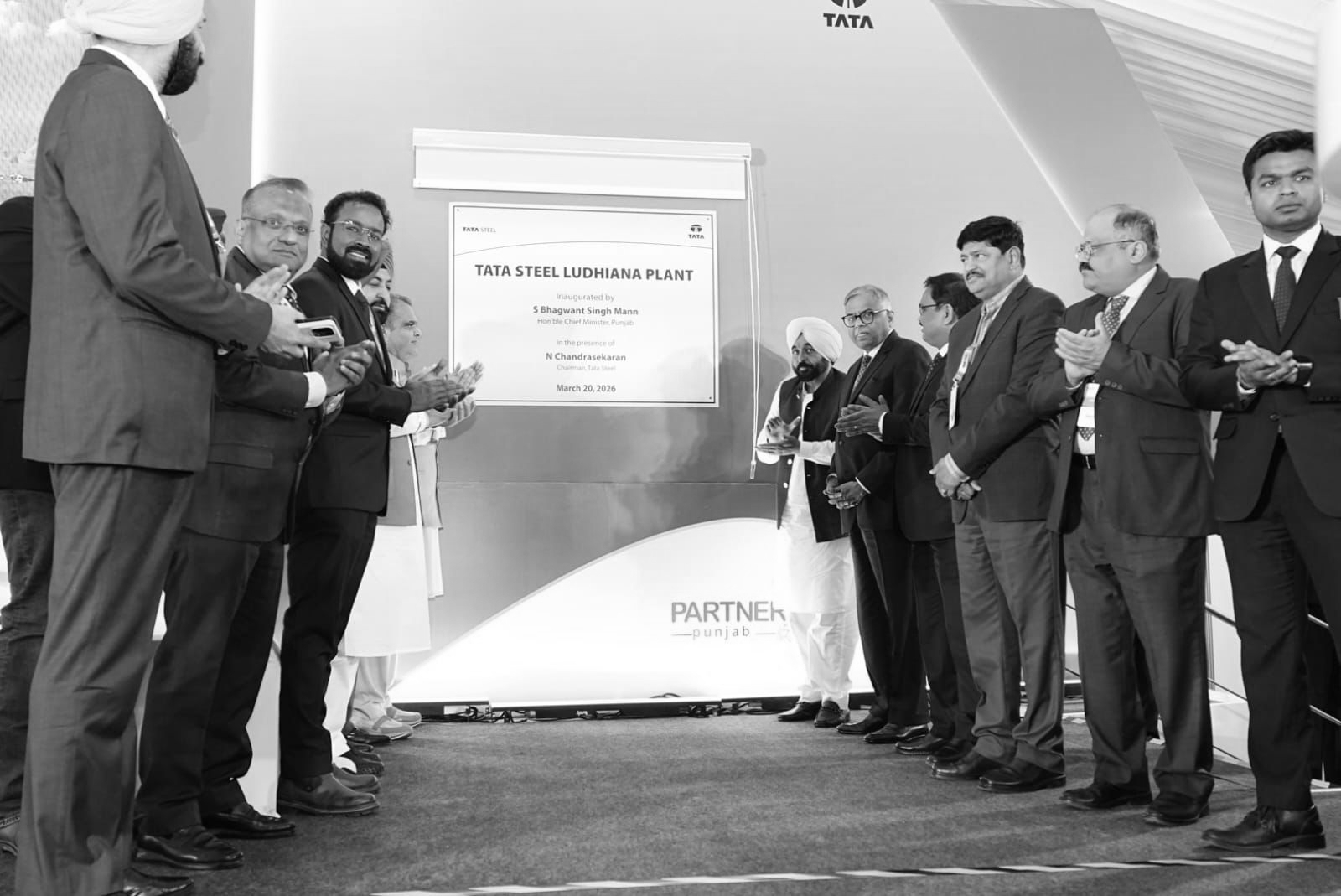
India’s transition toward low-carbon industrial growth received a major push with the commissioning of Tata Steel’s ₹3,200 crore scrap-based Electric Arc Furnace (EAF) plant in Ludhiana. Inaugurated by Punjab Chief Minister Bhagwant Mann , the facility is more than a new production unit it marks a structural shift in how steel is made in India , aligning economic expansion with climate responsibility.
With a capacity of 0.75 million tonnes per annum , the plant departs from traditional coal-intensive blast furnace methods by relying entirely on recycled steel scrap . This enables carbon emissions of less than 0.3 tonnes per tonne of steel , a dramatic reduction compared to conventional processes. Backed by nearly 50% renewable energy , the unit stands as one of the cleanest steelmaking operations in the country, reinforcing the urgency of decarbonisation in a sector responsible for significant global emissions .
Strategically located in Ludhiana’s industrial belt, the project leverages proximity to auto and engineering clusters , ensuring steady scrap availability while reducing logistics costs. This reflects a broader shift toward decentralised steel production , where regional plants serve local demand efficiently. The facility will produce construction-grade rebars under the Tata Tiscon brand , strengthening Tata Steel’s footprint in India’s rapidly expanding infrastructure and housing sectors.
Beyond production, the plant plays a crucial role in advancing a circular economy . By sourcing scrap partly from its recycling unit in Rohtak, Tata Steel is helping formalise India’s fragmented scrap ecosystem, reducing dependence on raw material extraction and imports of coking coal. This integrated recycling-to-production model could serve as a template for future industrial investments.
For Tata Steel, the Ludhiana unit is also a strategic step toward its net-zero emissions target by 2045 . Globally, tightening regulations such as carbon border taxes are reshaping trade dynamics, making low-carbon steel a competitive necessity rather than a choice . Early investments in green technologies position the company to remain resilient in an evolving global market.
However, challenges remain. India’s scrap supply chain is still underdeveloped , electricity sources must increasingly shift to clean energy to maximise environmental gains, and EAF technology is currently better suited for long steel products rather than specialised grades. Despite these constraints, the project underscores a clear direction for the industry.
Ultimately, Tata Steel’s Ludhiana plant represents more than a technological upgrade it embodies a triple transformation of industry, economy, and policy . By combining sustainability, efficiency, and circularity , it offers a compelling blueprint for India’s future manufacturing landscape, where growth is no longer at odds with environmental responsibility.