
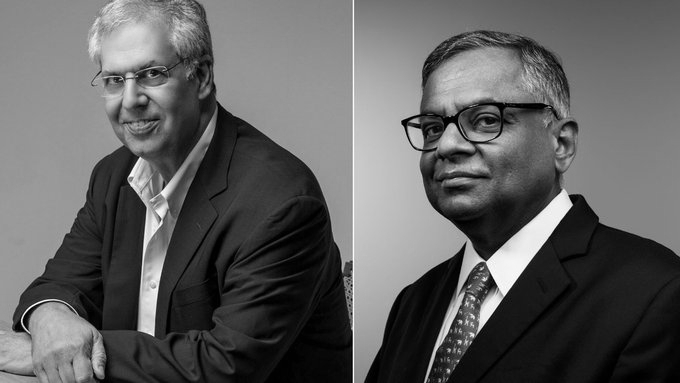
Tata Sons Backs Chandrasekaran Reappointment, Cites Legal Opinions And 2022 Precedent
The battle over N Chandrasekaran’s third term as Tata Sons chairman has entered a sharper legal phase, with Tata Sons defending its September 17 board decision and citing legal opinions from former Supreme Court judges U U Lalit and B N Srikrishna, as Tata Trusts maintains that the reappointment was procedurally invalid.
The dispute took an unexpected turn in August. On August 12, Chandrasekaran informed the Tata Sons board that he did not intend to seek another term after his tenure ends on February 20, 2027. Tata Trusts accepted the decision and moved towards a process to find his successor.
But on September 17, the board voted 4-1 to reappoint Chandrasekaran for another five years. Tata Trusts Chairman Noel Tata voted against the proposal, while fellow Trust nominee Venu Srinivasan supported it. Chandrasekaran did not participate in the vote on his own reappointment.
A central part of Tata Sons’ legal defence is that its Articles of Association require a Selection Committee for appointing a new chairman, but not for extending or reappointing an incumbent chairman. The company’s legal opinions reportedly support this interpretation, with Tata Sons also pointing to Chandrasekaran’s 2022 reappointment as an earlier example of the process being followed without a fresh Selection Committee.
The second dispute concerns the special rights of Tata Trusts’ nominee directors and the use of a casting vote. Tata Trusts argues that its nominee directors were required to provide the necessary affirmative support and that Noel Tata’s opposition meant the condition was not satisfied. It maintains that board chairman Harish Manwani’s casting vote could not override that requirement.
Tata Sons argues that the casting vote was valid because there was an equality of votes among the relevant directors. Legal opinions from Lalit, Srikrishna and senior advocate Sudipto Sarkar support the company’s interpretation. Tata Trusts has cited a contrary opinion from former CJI D Y Chandrachud.
The Trusts has also referred to the Cyrus Mistry case, arguing that Tata Sons had previously defended the special rights of Trust-nominated directors before the Supreme Court.
The dispute comes as Tata Sons faces wider governance questions involving its delayed AGM, RBI’s demand for a listing and a proposal for the SP Group to monetise part of its Tata Sons stake for at least ₹25,000 crore.
The immediate fight is over Chandrasekaran’s future, but the larger issue is how Tata Sons’ Articles of Association define the balance between its board, its majority Trust shareholders and their nominated directors.