
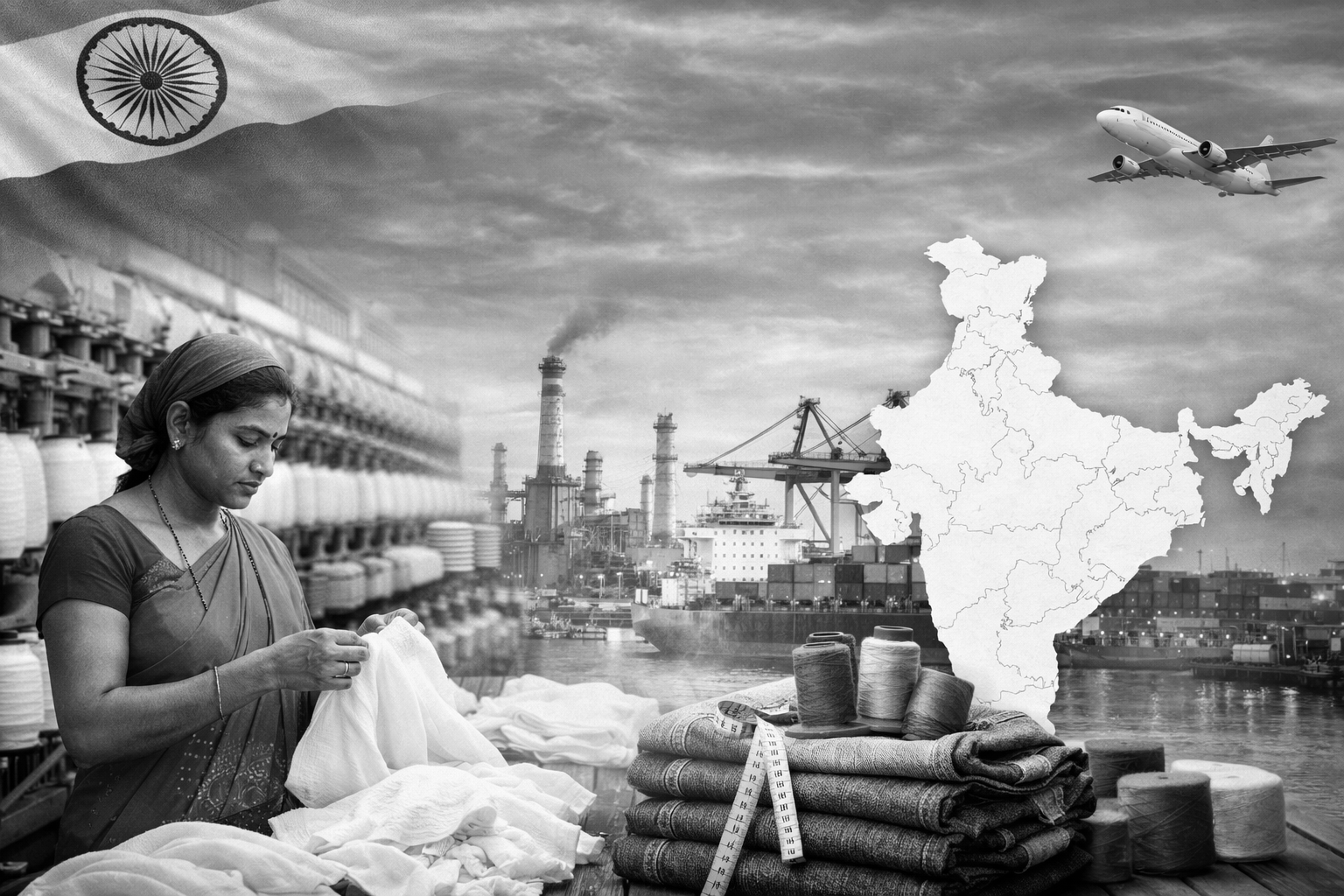
Tamil Nadu Leads India’s Textile Trade with 22% Share of Exports
Tamil Nadu has emerged as India’s top textile-exporting state in FY 2024–25, recording shipments worth USD 7,997.17 million , according to the latest government data. The state accounts for 21.84% of India’s total textile exports of USD 36.61 billion , surpassing Gujarat and Maharashtra to secure the top position.
This achievement marks a 29% growth over the past four years , with exports rising from USD 6.19 billion in 2020–21. The steady increase highlights the state’s strong industrial base and sustained policy push that have driven expansion in the textile sector.
Tamil Nadu’s leadership is anchored in its integrated textile ecosystem , where spinning, weaving, dyeing, and garment manufacturing units operate in close coordination. Key clusters such as Tiruppur, known as India’s knitwear hub, play a pivotal role in boosting exports by ensuring cost efficiency, scale, and faster production cycles. This well-established network has made the state a preferred sourcing destination for global buyers.
Government initiatives have further accelerated growth. Measures such as capital subsidies for modern machinery, dedicated textile policies, and support for industrial clusters have encouraged technological upgrades and investment. The sector also serves as a major employment generator, supporting millions of workers and sustaining allied industries across the value chain.
At the global level, Tamil Nadu is benefiting from shifting supply chains, particularly the “China Plus One” strategy, as international brands diversify their sourcing bases. Expanding opportunities in markets such as Europe, the UAE, and Asia, along with potential trade agreements, are expected to further strengthen export performance.
However, challenges remain. The industry faces intense competition from countries like Bangladesh and Vietnam , which enjoy cost advantages and better trade access. Rising input and logistics costs, along with periodic supply disruptions, continue to pressure margins and operational stability.
Going forward, sustaining this growth will depend on moving up the value chain, especially in technical textiles and man-made fibres , improving infrastructure, and enhancing global competitiveness.
With strong fundamentals and rising global demand, Tamil Nadu is well-positioned not only to maintain its leadership in India but also to evolve into a major global textile manufacturing hub in the years ahead.