
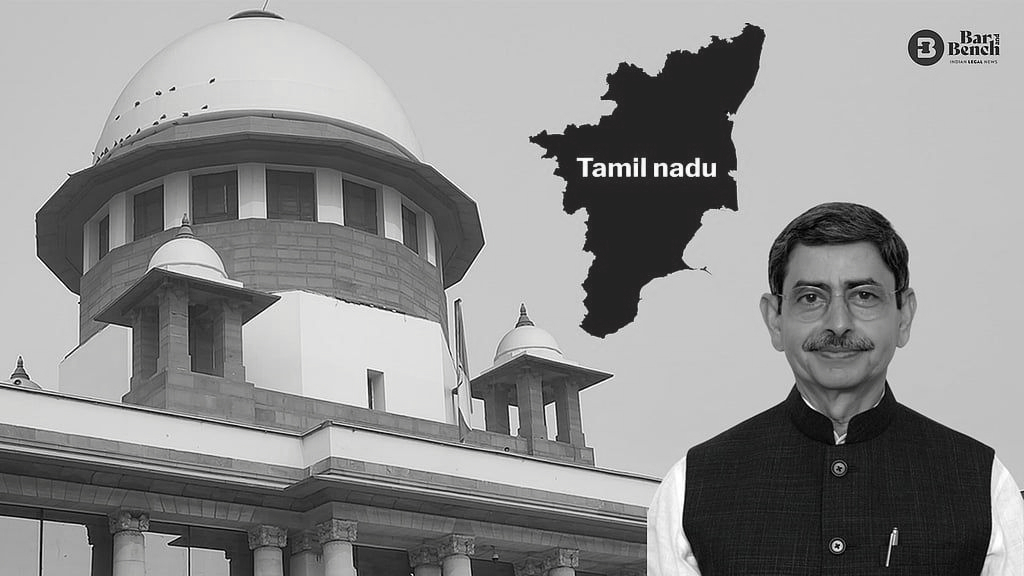
Tamil Nadu govt moves SC against President withholding assent to NEET exemption bill
The Tamil Nadu government has approached the Supreme Court challenging the President’s decision to withhold assent to the state’s NEET exemption bill, calling the move arbitrary, unconstitutional, and a violation of federal principles. The petition argues that the President’s refusal communicated through the Union Home Ministry ignored detailed clarifications submitted by the state and undermined its legislative competence in matters concerning medical admissions.
Filed under Articles 32, 201 and 254(2) of the Constitution, the plea urges the Supreme Court to either declare the President’s withholding of assent invalid and deem the bill as approved, or direct the Centre to place the legislation before the President again for fresh consideration. Tamil Nadu maintains that determining its own admission process is essential to safeguarding equity in medical education, especially for students from rural and disadvantaged backgrounds who are disproportionately affected by NEET.
Background of the Issue
The contested legislation The Tamil Nadu Admission to Undergraduate Medical Degree Courses Bill, 2021 seeks to exempt the state from the National Eligibility-cum-Entrance Test (NEET) for MBBS admissions. Instead, the government proposes admissions based on Class 12 board marks, arguing that NEET favours affluent students who can afford extensive coaching and puts rural, government-school students at a severe disadvantage. The state claims the President’s withholding of assent, without adequate explanation, violates constitutional procedure and disrupts the principle of cooperative federalism.
Previous SC Victory: Strengthening State Power
This is not the first time Tamil Nadu has won a major legal battle over the Governor’s role in state lawmaking. In April 2025, the Supreme Court ruled in State of Tamil Nadu vs. Governor of Tamil Nadu that Governor R. N. Ravi’s prolonged delay in assenting to 10 bills was illegal.