
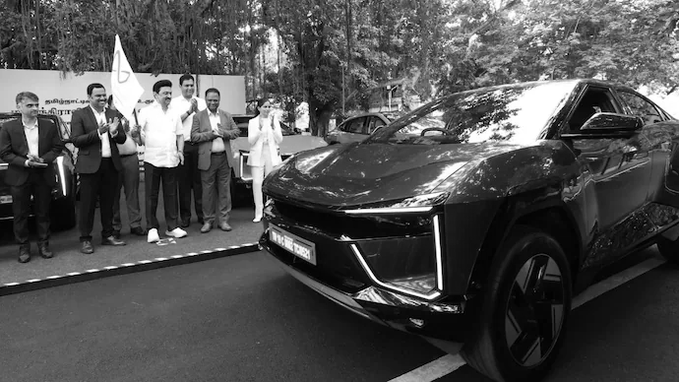
Tamil Nadu extends EV tax exemption till 2027 while Telugu states maintain incentives
Tamil Nadu Industries Minister TRB Rajaa announced that the state government will continue providing 100 per cent exemption on motor vehicle tax for all battery-operated vehicles until December 31, 2027, under the Tamil Nadu Motor Vehicles Taxation Act, 1974. Sharing the government notification, Rajaa said the decision, guided by Chief Minister M K Stalin , reinforces the state’s commitment to promoting electric vehicle adoption, affordability, and large-scale manufacturing. “This shows how pro-industry our government is,” he noted. In a social media post on Tuesday, he added, “Tamil Nadu has extended 100 per cent motor vehicle tax exemption for all electric vehicles till December 31, 2027,” highlighting the state’s sustainability focus.
He pointed out that battery-operated vehicle adoption in Tamil Nadu reached 7.8 per cent in 2025 , but significant challenges remain, particularly in expanding charging infrastructure, making the supply chain greener, and building consumer confidence. Rajaa said the policy not only reduces costs for consumers but also provides long-term certainty for manufacturers, even amid global volatility in clean mobility investments.
The official notification states that, under the powers conferred by sub-clause (b) of clause (1) of section 20 of the Tamil Nadu Motor Vehicles Taxation Act, 1974, the Governor exempts all battery-operated vehicles, both transport and non-transport, from payment of motor vehicle tax from January 1, 2026, to December 31, 2027.
In neighboring Telugu states, Telangana provides 100 per cent exemption from road tax and registration fees for all electric vehicles, including two-wheelers, cars, auto-rickshaws, buses, and electric tractors, valid until December 31, 2026. This policy has contributed to a rise in EV registrations in the state. Andhra Pradesh offers 100 per cent road tax exemption for five years from the date of registration and also provides a direct purchase incentive of up to 10 per cent of the ex-showroom price of electric vehicles until March 2027, aiming to make EV ownership more attractive and affordable.
Despite these incentives, challenges remain across the region. Charging infrastructure is still limited, especially outside urban centres, creating range anxiety for drivers. Operating costs for charging stations are high due to electricity tariffs and fixed charges, while technical limitations in power grids, uneven access, and low utilisation rates for chargers continue to slow adoption. Consumer awareness, particularly for four-wheelers, also remains modest.
With these measures, southern states are working to accelerate the adoption of electric mobility while supporting industry investment, even as infrastructural and awareness-related hurdles remain.