
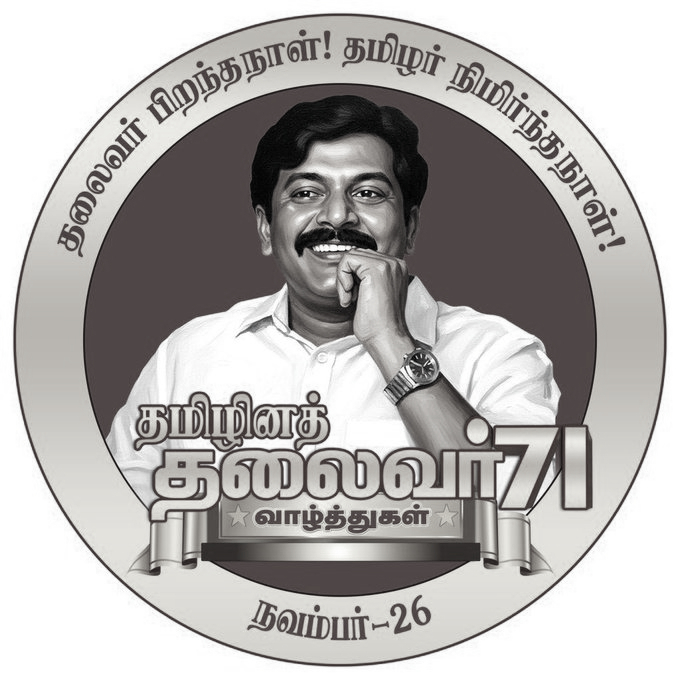
Tamil communities mark Prabhakaran's 71st birthday
Tamil Nadu continues to witness expressions of sympathy for Velupillai Prabhakaran and the Liberation Tigers of Tamil Eelam (LTTE), even decades after the group was held responsible for the assassination of former Indian Prime Minister Rajiv Gandhi in 1991. Prabhakaran, who founded the LTTE in 1976 to fight for an independent Tamil homeland in Sri Lanka, remains a symbolic figure for sections of Tamil nationalist supporters, particularly in rural and coastal regions of the state, where emotional ties with Sri Lankan Tamils run deep.
On his 71st birth anniversary, social media saw posts, tributes and digital posters circulating across Tamil Nadu, with some political leaders and fringe Tamil outfits praising Prabhakaran for leading what they call a struggle for the rights and protection of Eelam Tamils. Tamilaga Vettri Kazhagam (TVK) leader Vijay recently stated that Prabhakaran showed “motherly love” to Tamils, a remark that sparked both praise and criticism. DMK MP Thamizhachi Thangapandian had earlier said she would like to meet Prabhakaran if she had the chance, calling him an impactful leader in Tamil history. Some Tamil nationalist organisations held candlelight vigils and cultural events in parts of Coimbatore, Thanjavur and Chennai, displaying flags resembling that of the LTTE.
The LTTE, under Prabhakaran’s leadership, fought a 26-year-long civil war in Sri Lanka, establishing a de facto Tamil state with its own police, administrative systems, courts and army. However, the group also became globally condemned for using suicide bombers, recruiting child soldiers and conducting deadly attacks on civilians, leading to its ban in India and several other countries. The assassination of Rajiv Gandhi by an LTTE suicide bomber in Tamil Nadu in 1991 remains one of the darkest chapters in India’s political history, making public support for Prabhakaran and the LTTE a highly sensitive issue.
Despite this, sentiments in parts of Tamil Nadu continue to reflect sympathy for the Sri Lankan Tamil cause, driven by cultural and linguistic ties, and stories of alleged oppression and displacement of Tamils during the civil war. Social media platforms over the years have seen symbolic posters, hashtags and digital memorials emerge on Prabhakaran’s birth and death anniversaries. The Sri Lankan government continues to monitor such expressions, and Indian authorities remain cautious about any public glorification of banned organisations.
While mainstream political parties in Tamil Nadu avoid direct endorsement of Prabhakaran or the LTTE, they often express support for the welfare and rights of Sri Lankan Tamils, especially during election seasons. The continuing debate in Tamil Nadu highlights the tension between emotional support for Tamil identity and the legal and moral implications of backing a banned militant group linked to the killing of an Indian Prime Minister.
The phenomenon reflects a complex mix of cultural solidarity, political strategy and unresolved emotional scars from the Sri Lankan civil war, keeping the memories of Prabhakaran and the LTTE alive among sections of the Tamil population, even 16 years after his death.