
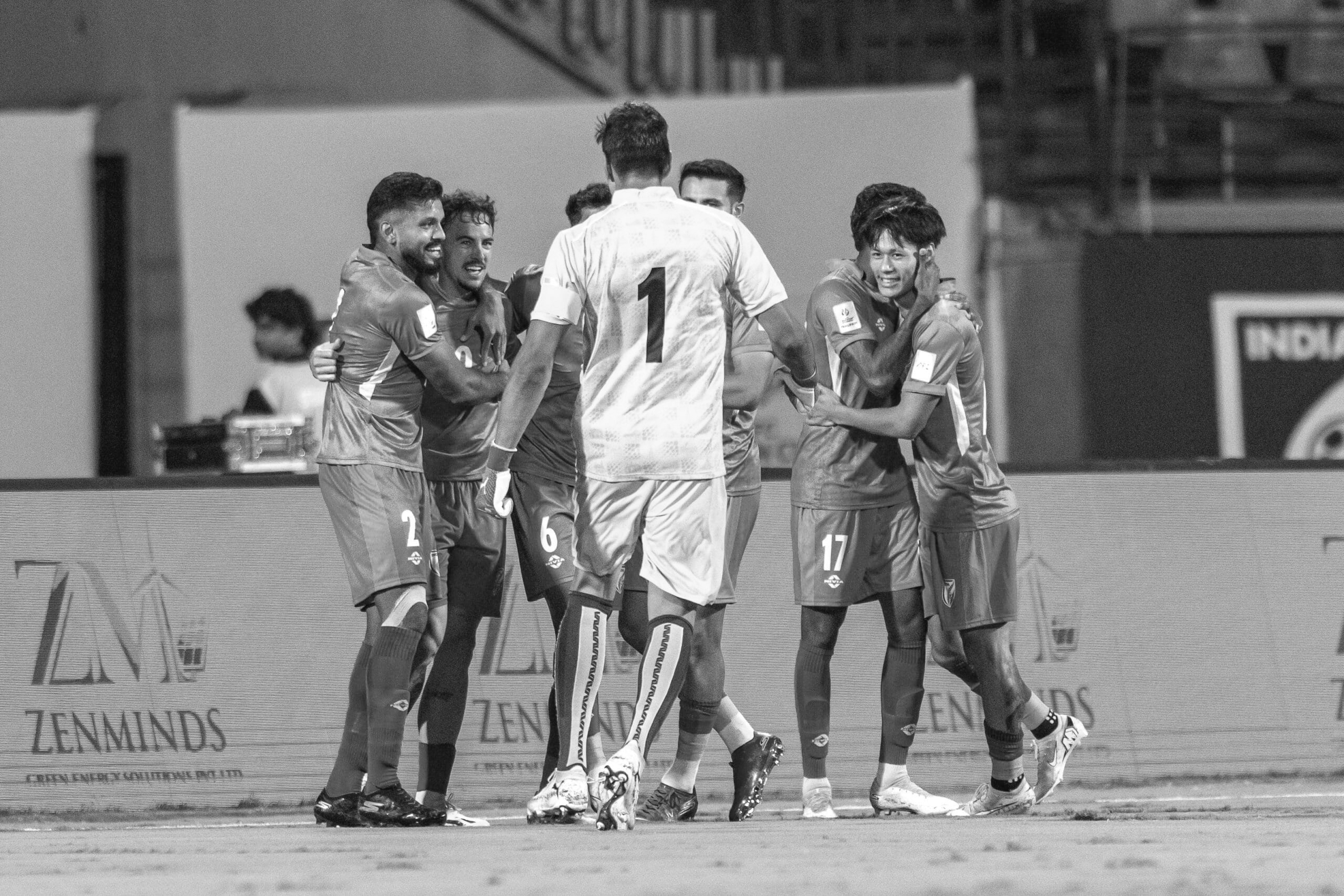
Tajikistan Tour Highlights India’s Push for Global-Level Competition
The India men's national football team will continue their rebuilding phase with two international friendlies against the Tajikistan national football team on June 5 and 9 in Hisor , as Indian football attempts to regain lost ground through increased exposure to stronger international opposition.
The matches, announced by the All India Football Federation , come immediately after India’s participation in the Unity Cup 2026 in London, where the Blue Tigers will face the Jamaica national football team in the semi-final before taking on either the Nigeria national football team or Zimbabwe national football team in the final or third-place playoff.
The overseas schedule reflects a broader shift in Indian football’s strategy following a difficult period marked by declining performances and falling FIFA rankings. India, currently ranked 136th in the world, has struggled to remain competitive at the continental level despite briefly entering the top 100 during the peak years of former captain Sunil Chhetri.
Football analysts have repeatedly highlighted India’s lack of regular exposure to high-level international competition as one of the major reasons behind the national team’s stagnation. For years, the Blue Tigers largely competed within South Asia, where the intensity and tactical quality are significantly lower compared to West and Central Asian football nations.
Under head coach Khalid Jamil , the AIFF has now begun focusing on long-term rebuilding , integrating younger players and scheduling more overseas tournaments to help the squad adapt to faster and more physical styles of football. The federation has also expanded youth competitions and international training camps as part of its wider Vision 2047 roadmap.
Ironically, the return to Hisor also revisits one of India’s rare recent positives. Just eight months ago, India defeated Tajikistan 2-1 at the CAFA Nations Cup to secure the bronze medal during their debut campaign. The match also marked Khalid Jamil’s first game in charge of the national team.
While the friendlies alone may not transform Indian football, they are increasingly seen as vital steps in bridging the gap between domestic promise and international standards. For a team searching for stability and relevance in Asian football, sustained exposure abroad could prove crucial in shaping the next phase of the Blue Tigers’ rebuilding project.