
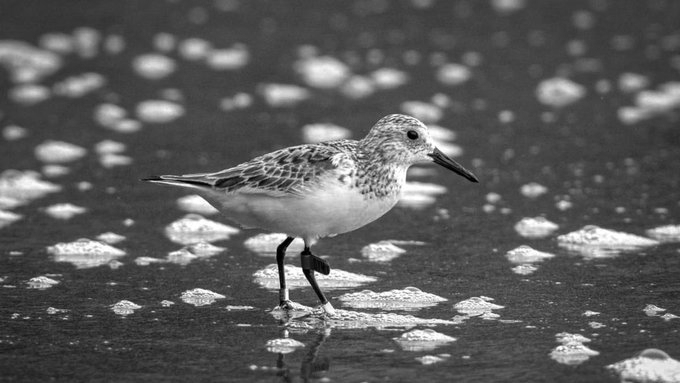
Tagged sanderling seen in Andamans after extraordinary 7,472 km migration from Australia
A rare and remarkable migratory record has been confirmed after a tagged sanderling shorebird that travelled 7,472 km from its tagging site in South Australia was photographed on Narcondam Island in the Andaman and Nicobar archipelago . The sighting underscores both the remarkable endurance of migratory birds and the importance of international flyways for conservation, experts said on Tuesday.
The bird was first tagged at Brown Bay in South Australia on April 13, 2025 , by Maureen Christie as part of ongoing shorebird‑tracking efforts, and was later identified from its distinctive red flag marked “DYM” and a yellow tag . It was photographed in June 2025 on the remote Narcondam Island by G Thikanna, an assistant sub‑inspector with the Andaman Police, according to ornithologist Dr Raju Kasambe of the Bombay Natural History Society.
Sanderlings (Calidris alba) are small, long‑distance migratory wading birds that breed in the high Arctic and winter across vast areas, including South America, Africa, Australia and Asia . They are known for their energetic beach‑foraging behaviour and strong migratory drives.
Dr Kasambe said the sighting is the first recorded re‑sighting of a tagged bird on Narcondam Island , a largely inaccessible volcanic island of ecological importance about 140 nautical miles from Port Blair. Known for its unique biodiversity and endemic species such as the Narcondam hornbill , the island sits within the East Asian‑Australasian Flyway , a major migratory route that connects the Arctic and Asia to Australia, New Zealand and beyond.
“This extraordinary journey highlights not just the vast distances these small birds can cover but also the critical role of international migratory corridors like the East Asian‑Australasian Flyway in supporting survival and breeding success,” Dr Kasambe said. Biologists say such records help scientists **map routes, identify key stopover sites and shape conservation measures for migratory species facing habitat loss and climate pressures.”
Thikanna, a member of the Andaman Avians Club, spotted the bird during a routine shoreline inspection. The sanderling, weighing just 40–100 grams, had completed the leg of its return migration toward northern Asian breeding grounds when photographed.
The discovery has drawn attention within bird‑watching and scientific communities, not only for its demonstration of incredible migratory endurance but also for the need to protect habitats along the flyway that sustain these journeys .