
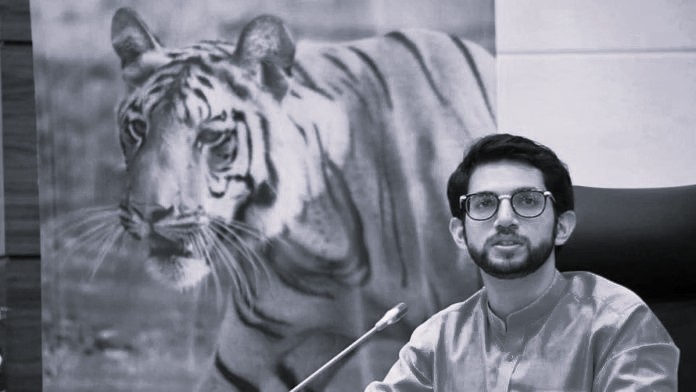
Tadoba-Andhari corridor under threat, Aaditya Thackeray seeks mining ban
Shiv Sena (UBT) leade r Aaditya Thackeray has urged the Centre to reject proposed mining projects in the Tadoba-Andhari Tiger Reserve corridor in Maharashtra’s Chandrapur district, warning that they could cause “unchecked ecological damage”. In a letter to Union Environment Minister Bhupender Yadav , the Shiv Sena (UBT) leader said these projects pose a serious threat to the forests and wildlife in the region.
Thackeray highlighted that Maharashtra’s State Board for Wildlife (SBWL) approved mining projects in the first week of January in Lohardongari , near the Ghodazari Wildlife Sanctuary , and in Marki-Mangli , located within the Tadoba-Andhari Tiger Reserve corridor. He also raised concerns that several SBWL members had opposed the projects but were overruled by the chairperson. According to him, the expected output from these mines is relatively low, and the revenue generated for the state would be minimal compared to the ecological harm they could cause.
Tadoba-Andhari Tiger Reserve is located in Chandrapur district in eastern Maharashtra, near the border with Chhattisgarh . It is one of India’s oldest and most significant tiger reserves, known for its dense forests, rich biodiversity, and large population of tigers and other wildlife. The reserve covers an area of more than 1,700 square kilometres, and its forest corridor is crucial for wildlife movement between different protected zones. The corridor acts as a pathway for tigers and other animals, and it also supports local ecosystems and communities dependent on the forests for water and livelihood.
Experts say mining in and around tiger reserve corridors can have long-term damaging effects. Mining operations involve clearing forests, blasting rocks, and extracting minerals, which leads to loss of habitat, soil erosion, water pollution, and noise disturbance. These changes disrupt the natural movement of animals and reduce the availability of food and water. In addition, mining brings heavy machinery, trucks, and human activity, which increases the risk of human-wildlife conflict. The forest corridor, meant to connect wildlife habitats, may become fragmented, preventing animals from moving freely in search of food, mates, and shelter.
Thackeray has urged the National Board for Wildlife (NBWL), headed by the Prime Minister, to reconsider and reject the projects, saying that allowing mining in the corridor would violate the spirit of wildlife protection laws and threaten the future of the region’s forests and animals. Mining projects in and around protected zones require strict approvals at multiple levels, and final clearance is given only after environmental risks are assessed. He emphasised that protecting forests and wildlife is the mandate of the Environment Ministry, and urged the minister to take decisive action. “The future of our forests and fauna is now in your hands,” he wrote, adding that rejecting the projects would strengthen the ministry’s legacy as a strong conservation force.