
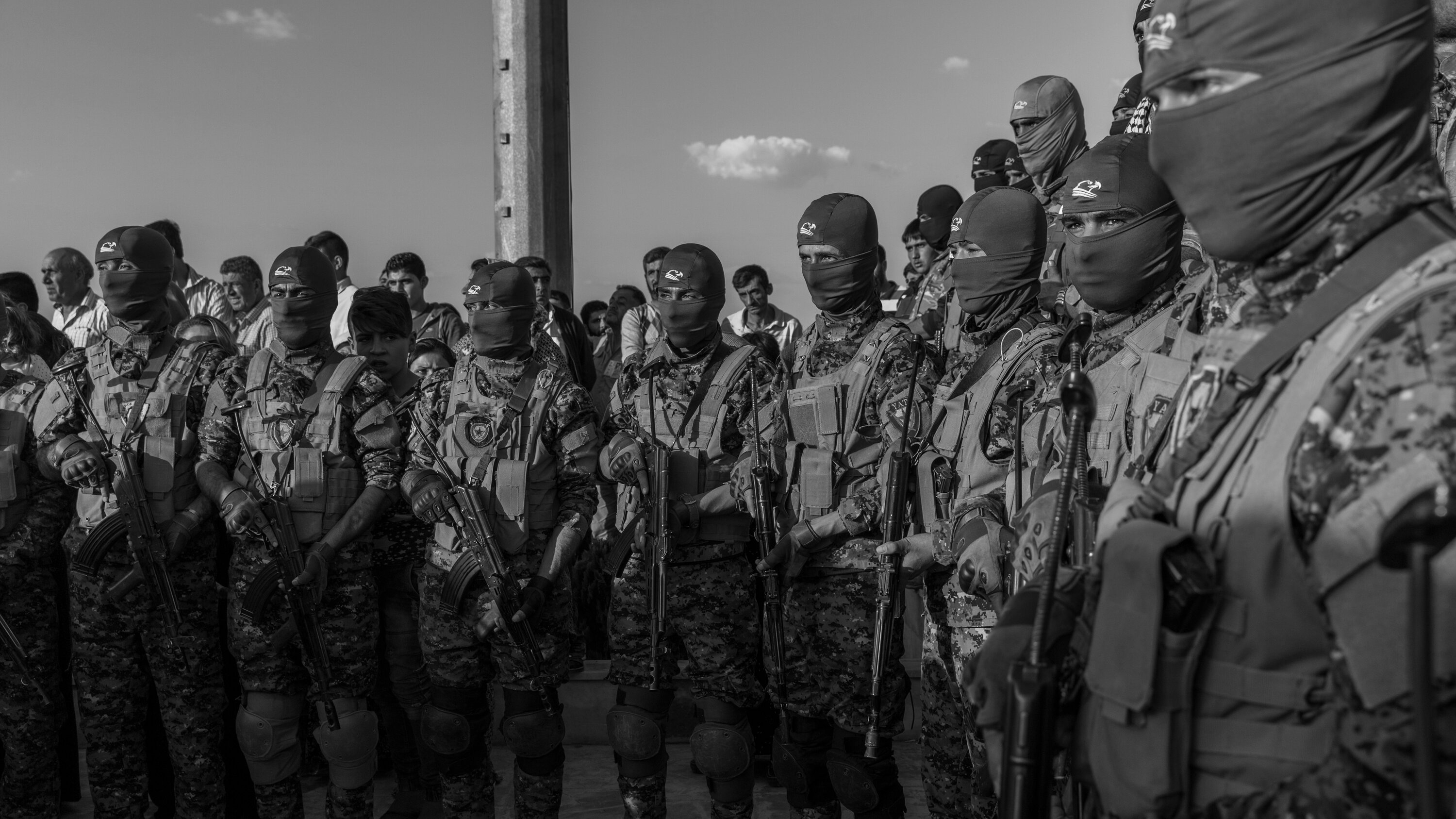
Syria launches military operation in Aleppo against Kurdish-led SDF, displacing 50,000 civilians
Fierce clashes between Syrian government forces and the Kurdish‑led Syrian Democratic Forces (SDF) have erupted in the northern city of Aleppo, prompting mass evacuations, widespread destruction, and heightened fears of a broader escalation in Syria’s fragile post‑war landscape. Authorities on Thursday for a second consecutive day ordered civilians to flee contested Kurdish‑majority districts, including Sheikh Maqsoud, Achrafieh, and Bani Zaid, after the government declared them “ closed military zones ” and opened evacuation corridors ahead of intensified operations.
The escalation, which began on Tuesday, is the deadliest round of violence between the two sides so far and has forced more than 50,000 people to flee their homes in Aleppo province , according to local and international humanitarian estimates. Displaced families are seeking refuge in mosques, shelters, and host communities across the city, while key infrastructure including Aleppo’s airport, major roads, and industries has been shut down.
Casualty figures vary by source, but dozens of civilians and fighters have been killed and wounded. Government health officials reported several civilian deaths and dozens of injuries from shelling, while Kurdish authorities said heavy bombardment by pro‑Damascus forces killed and wounded many, including women and children. Both sides accuse one another of indiscriminate attacks and of targeting civilian neighbourhoods.
The Syrian army has labelled all SDF positions in Kurdish districts as legitimate military targets and says its operation aims to stop what it describes as ongoing rockets, drone strikes, and attacks that have killed civilians and soldiers in recent months. The government has also demanded that Kurdish fighters withdraw from Aleppo neighbourhoods they control, saying the offensive is intended to restore security and open supply routes such as the Aleppo-Azaz road.
The SDF rejects the government’s accusations, blaming Damascus for the escalation and alleging a full siege that has blocked food, medical supplies, and essential goods into Kurdish areas. Kurdish leaders and local activists warn the conflict could spread beyond Aleppo and undermine nationwide stability.
The violence comes amid a stalemate over a March 2025 political agreement under which the SDF was to integrate into the Syrian army by the end of 2025 - a process that has stalled amid disagreements over implementation and control. Recent talks in Damascus between government and SDF officials yielded little progress.
The renewed fighting has also worsened humanitarian conditions in northern Syria, where heavy snow, damaged shelters, and months of conflict had already left thousands vulnerable. Hospitals have reported closures due to damage, and aid delivery has been hampered by insecurity. The United Nations has called for immediate de‑escalation and protection of civilians under international law, urging both sides to resume negotiations.
International reactions reflect broader regional tensions. Turkey, a key backer of the interim Syrian administration, said it stands ready to assist Syria if requested and is closely monitoring the situation, while stressing the operation is being carried out solely by the Syrian army. The United States , historically the SDF’s main partner against ISIS, has kept a cautious distance in public comments but is reported to be involved in mediation efforts to avert wider conflict.
Amid the shelling and displacement, calls for restraint have also come from civil society groups, including religious organizations urging the protection of civilians and an end to attacks on populated areas.